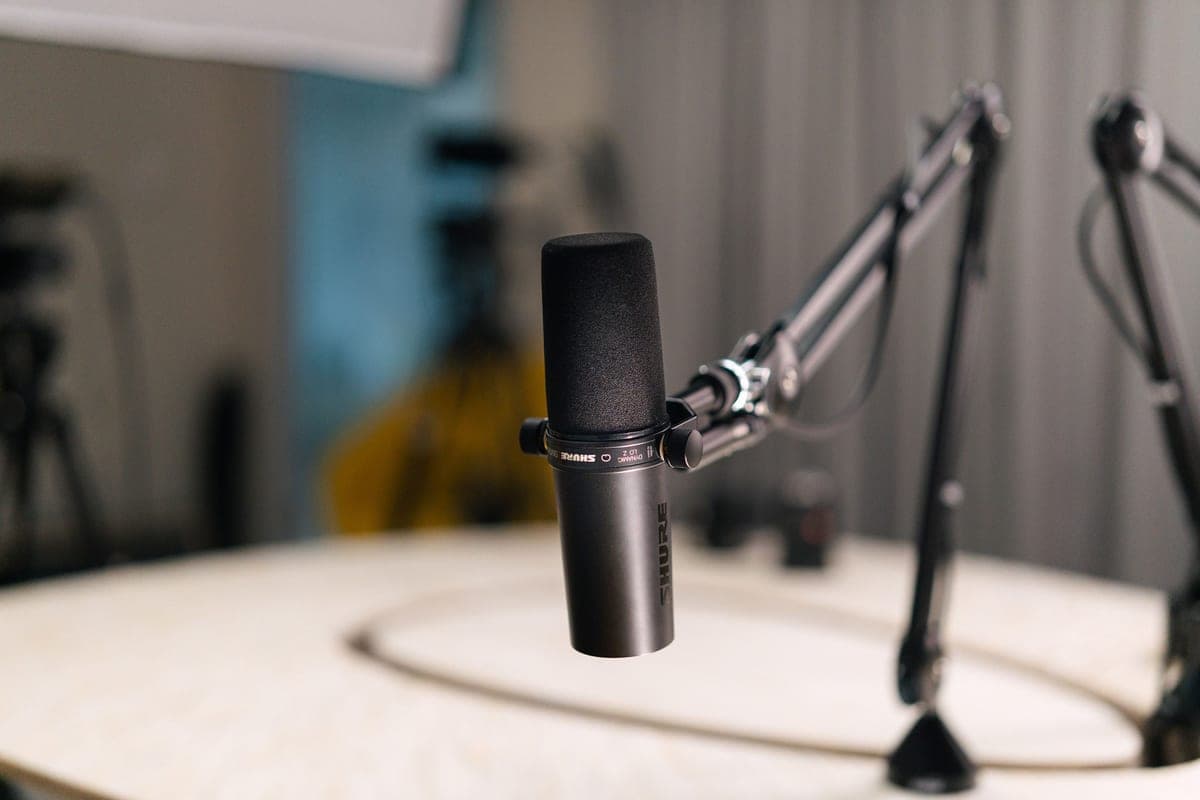
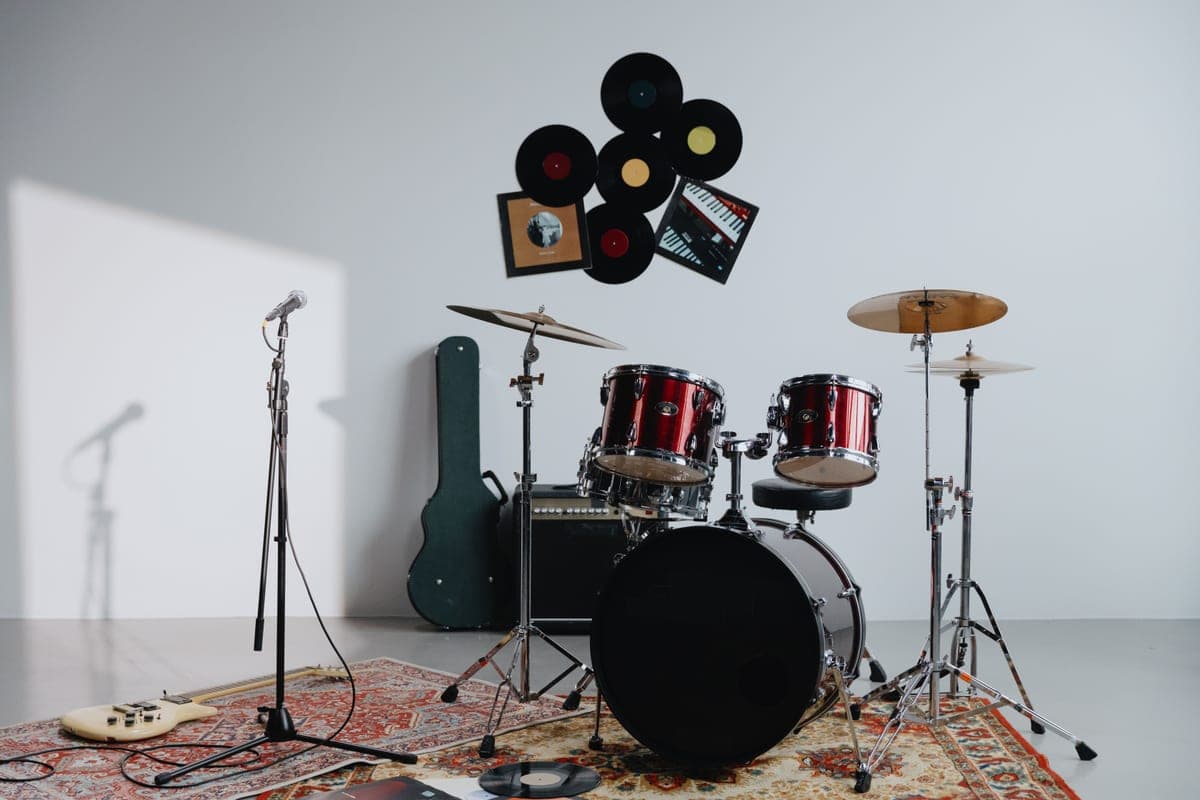
Choose a boom arm if you have a clampable desk edge, sit to record, and want the microphone out of the way between takes. Choose a floor stand if there is no clampable edge, if you record standing, or if you are on a solid floor and a heavy typist — a stand removes the desk path entirely.
The real question is which noise path you have
Neither mount is quieter in the abstract. A desk clamp shares a rigid structure with your keyboard, your elbows and anything you put down; an internal shockmount catches some of that and not all of it. A floor stand shares a structure with your footsteps, and on a suspended timber floor that can be considerably worse than typing.
So the honest way to decide is to work out which noise you actually generate. A heavy typist on a solid concrete floor should use the stand. Someone on an upper floor in a timber-framed building who barely touches the keyboard while recording should use the arm.
Choose a boom arm if
- You have a clampable desk edge, measured against the clamp's jaw range rather than assumed.
- You sit to record and want the microphone swung away between sessions.
- You want internal cable routing, which removes a genuine mechanical noise source.
- You are on a floor that transmits footfall, where the desk is the quieter structure.
- Floor space is scarce — a tripod base is where your chair wants to be.
Choose a floor stand if
- There is no clampable edge: a glass desk, a wall-mounted shelf, a desk too thick for the jaws.
- You record standing, which is common for singing and for energetic delivery.
- You are mounting something heavy enough that a cantilevered arm is marginal — a reflection filter plus a microphone, for instance.
- You need the desk completely clear.
- You are on a solid floor and you type while recording.
What each one gives up
The arm gives up load capacity and adds a desk noise path. Its published 1.2 kg ceiling is generous for an arm and still less than a floor stand's structural capacity, and it requires a desk edge you may not have.
The stand gives up convenience and floor space, and routes the cable externally where it can rub. The K&M 259 also does not publish a load rating, which is a real gap if you are planning to hang a shield on it — see best mic stands.
Total cost of ownership
- Arm: the arm, and a desk edge you already have. Internal routing means no extra cable management.
- Stand: the stand, possibly a thread adapter, and some way to keep the external cable from rubbing.
- Both: a shockmount if the microphone has no internal mounting, and a pop filter whose weight you have accounted for.
Both mounts in detail
Rode PSA1+
Top pickRode · The quietest arm that holds a heavy mic
The right arm for a broadcast dynamic: quiet, and rated for the weight you will actually hang on it. If the arm appearing on camera is your problem, a low-profile arm solves that instead.
Why it is here
- Damped springs and a neoprene sleeve mean it does not creak or ping into a live mic
- 1.2 kg capacity covers an SM7B with a booster and a pop filter hanging off it
- Internal cable routing keeps the XLR out of the shot and out of the way
What it costs you
- 94 g minimum means a very light mic will not hold position
- Arcs up and over, so it can sit in a webcam frame
- Costs more than most of the mics people mount on it
K&M 259
König & Meyer · A desk-height stand when an arm will not fit
The answer when your desk has no clampable edge, or when you record standing. If you can clamp, a damped boom arm isolates footfall better and takes no floor.
Why it is here
- Low-level design reaches mic height from the floor beside the desk, so nothing clamps to the desk at all
- Zinc die-cast base and steel tube — this is a stand you buy once
- Over 30 inches of boom reach
What it costs you
- K&M does not publish a load rating for this model, so a heavy mic plus a shield is guesswork
- Floor stands transmit footfall a clamped arm does not
- Takes floor space
If neither: the third option
If the problem with an arm is that it appears in your camera frame, a low-profile arm travels below your shoulder line and holds 2 kg — see best boom arms. That is the specific case where neither a conventional arm nor a floor stand is the right answer.