Microphones
Dynamic or condenser, and how much gain each one will demand from the interface you already own.
Some links here are affiliate links: if you buy through one, we may earn a commission at no extra cost to you. It never changes the ranking — how this site is funded.
The picks, across the whole category
One per sub-category. Every figure is a published manufacturer spec with its source linked on the product's own page.
| # | Product | Key spec | Score | Price |
|---|---|---|---|---|
| Top pick.1 | 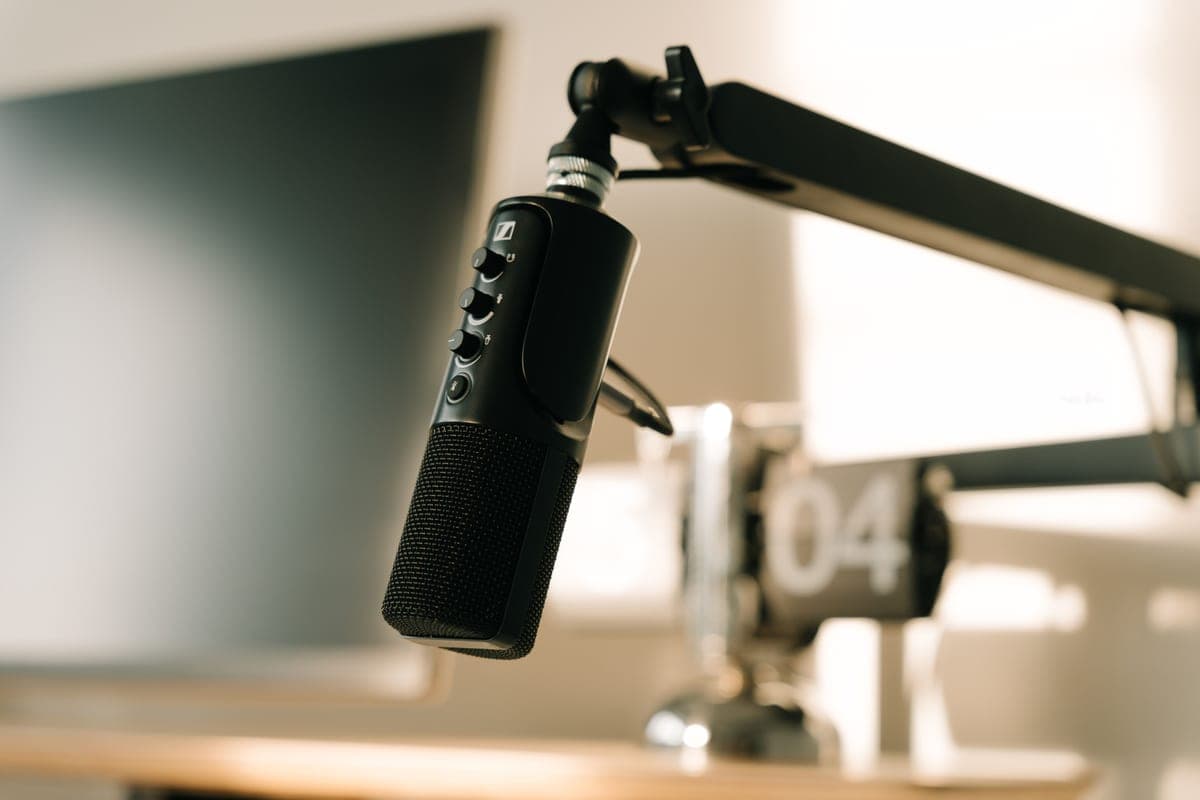 Rode PodMicThe best value in a broadcast dynamic | Sensitivity-57 dBV/Pa | 8.4 | |
| 2 | Shure SM7BThe default upgrade, if your preamp can feed it | Sensitivity-59.0 dBV/Pa | 8.4 | |
| 3 | Shure SM7dBAn SM7B with the booster problem already solved | Built-in preamp+18 dB or +28 dB | 8.9 | |
| 4 | 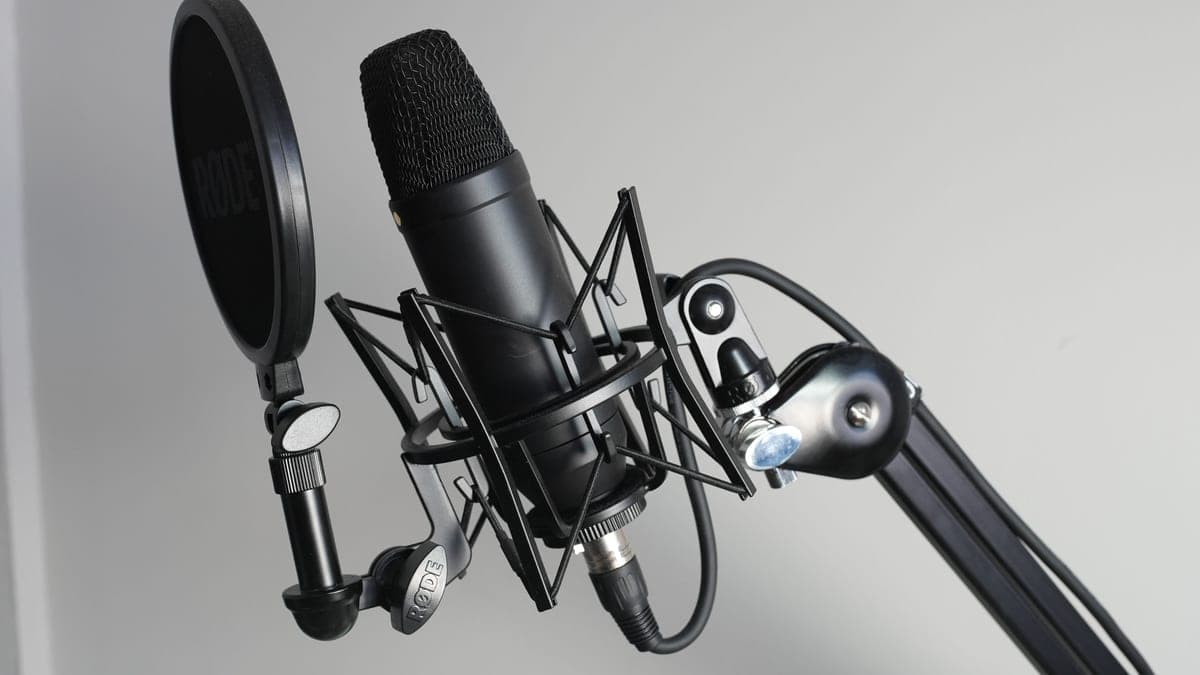 Audio-Technica AT2035The value condenser with the switches you actually need | Self-noise12 dB SPL | 8.1 | |
| 5 | Audio-Technica BP40Tighter pickup than a cardioid in a live room | Polar patternHypercardioid | 8.6 |
Almost every microphone question that actually matters in a home studio is a question about two numbers: how much signal the capsule produces, and how much of your room it hears. Everything else — the frequency chart, the capsule diameter, the name on the grille — is downstream of those two.
Sensitivity is the first number. It is published in dBV/Pa, it is always negative, and more negative means quieter. A Shure SM58 sits at -54.5 dBV/Pa. An SM7B sits at -59.0 dBV/Pa. That 4.5 dB gap is the difference between a microphone that works on a budget interface and one that hisses on it, and it is the single most common reason a first XLR upgrade disappoints. Work out your gain budget before you choose a capsule: how much gain the SM7B needs walks the arithmetic, and how much clean gain you need does it from the interface side.
Room rejection is the second. A dynamic capsule needs a lot of air movement to produce a signal, which means it produces almost nothing from a reflection that has bounced off the wall behind you. A condenser needs very little, which is exactly why it also hears your keyboard, your chair, the fridge in the next room and the flat wall two feet away. That is not a flaw in condensers; it is what makes them the right tool in a treated room and the wrong one in a bare bedroom.
So the honest decision tree is short. If your room is untreated and will stay that way, buy a dynamic and buy enough gain to drive it. If you are prepared to hang two panels at the first reflection points, a condenser will give you detail no dynamic can. If you are still on a USB microphone and unsure whether the jump is worth it at all, start with USB vs XLR rather than a product page.
One thing worth saying plainly, because nobody selling microphones says it: if your current recordings sound boomy, hollow or distant, a new microphone will not fix that. Those are room problems, and a better capsule will reproduce them more faithfully. The upgrade order matters more than the upgrade.
Everything in Microphones
4 roundups, 6 head-to-head comparisons and 4 guides. Roundup cards carry the top pick and its buy link, so you do not have to dig for it.
The Best XLR Microphones for Podcasting in 2026
Six podcast microphones ranked by output level and room rejection, with the gain each one demands from your interface.
Top pick: Rode PodMic 8.4/10
The Best Dynamic Microphones for Vocals
Dynamics ranked for sung and spoken vocals, with the voicing and gain appetite of each one spelled out.
Top pick: Shure SM7B 8.4/10
The Best Budget Condenser Microphones for Vocals
Five condensers ranked on self-noise and filtering, with the room requirement stated up front.
Top pick: Audio-Technica AT2035 8.1/10
Where this fits in the upgrade path
A microphone is one link in a chain, and the weakest link sets the result. Once you have chosen a capsule, the next question is which of the other four links is now holding you back.
- Gain and conversion — a low-output dynamic is only as good as the preamp feeding it. Audio interfaces and preamps covers what 55 dB versus 69 dB actually sounds like, and when an inline booster is the cheaper fix.
- What you hear back — you cannot judge a microphone through the wrong monitoring. Monitors and headphones sorts out what to track on versus what to mix on.
- The room — the biggest single change available to most home setups, and the cheapest. Acoustic treatment starts with the two panels that matter most.
- Mounting and handling — a microphone that picks up desk knocks and arm creaks is a microphone you will fight in every edit. Studio setup covers arms, stands, cables and filters.
- Audio Interfaces & Preamps
Ranked on published gain first, because the gain figure is what decides whether your microphone choice works.
- Monitors & Headphones
What you mix on decides every decision you make. Ranked on the specs that tell you what a small room can honestly reproduce.
- Acoustic Treatment
Ranked on published absorption at 125 Hz, because that is where small rooms go wrong and NRC does not measure it.
- Studio Setup & Accessories
The physical rig, and the upgrade path that tells you which link to fix next rather than which product to buy.