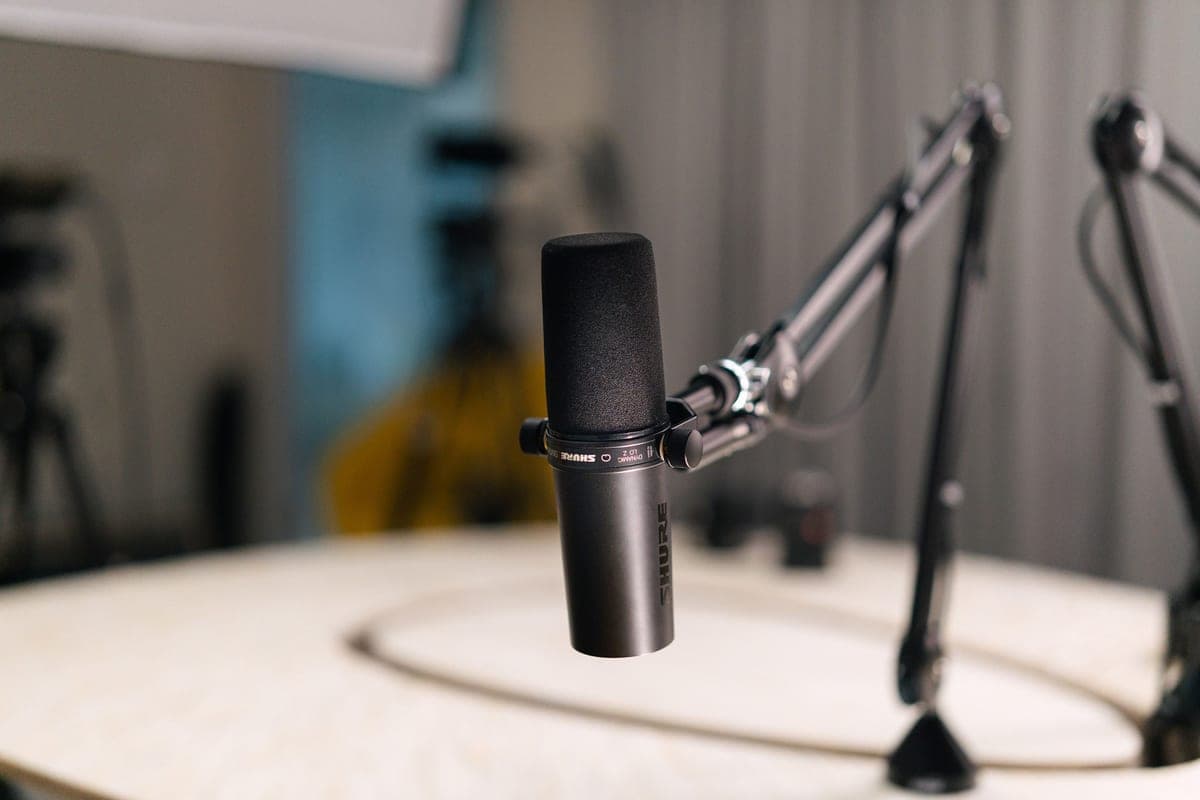
The Rode PSA1+ is the pick for audio-only work: damped internal springs under a neoprene sleeve means it does not creak or ping into a live microphone, and its 94 g to 1.2 kg range covers an SM7B with a booster and a filter. The Elgato Wave Mic Arm LP holds 2 kg and stays out of a camera frame.
Two figures decide this category, and both are published. The load rating tells you whether the arm will hold position with the microphone you actually own plus whatever hangs off it. The mechanism tells you whether it will do so silently, which matters because a live microphone is inches from the joint.
The three mounts, ranked
Rode PSA1+
Top pickRode · The quietest arm that holds a heavy mic
The right arm for a broadcast dynamic: quiet, and rated for the weight you will actually hang on it. If the arm appearing on camera is your problem, a low-profile arm solves that instead.
Why it is here
- Damped springs and a neoprene sleeve mean it does not creak or ping into a live mic
- 1.2 kg capacity covers an SM7B with a booster and a pop filter hanging off it
- Internal cable routing keeps the XLR out of the shot and out of the way
What it costs you
- 94 g minimum means a very light mic will not hold position
- Arcs up and over, so it can sit in a webcam frame
- Costs more than most of the mics people mount on it
Elgato Wave Mic Arm LP
Elgato · Staying out of the camera frame
The pick if you are on camera, because an arm that never enters the frame is worth more than a marginally quieter one. For audio-only work the PSA1+ is the quieter mount.
Why it is here
- 2 kg capacity is the highest here — it will hold anything on this site
- 740 mm of reach crosses a deep desk without a riser
- Travels below your shoulder, so it stays under a monitor and out of a webcam shot
What it costs you
- The low arc puts the arm where your keyboard wants to be
- Not as thoroughly damped as the PSA1+, so knocks transmit more
- Repositioning takes two hands
K&M 259
König & Meyer · A desk-height stand when an arm will not fit
The answer when your desk has no clampable edge, or when you record standing. If you can clamp, a damped boom arm isolates footfall better and takes no floor.
Why it is here
- Low-level design reaches mic height from the floor beside the desk, so nothing clamps to the desk at all
- Zinc die-cast base and steel tube — this is a stand you buy once
- Over 30 inches of boom reach
What it costs you
- K&M does not publish a load rating for this model, so a heavy mic plus a shield is guesswork
- Floor stands transmit footfall a clamped arm does not
- Takes floor space
What we did not pick, and why
- Unbranded spring arms with no published load rating. Weight capacity is the entire specification in this category. A product that will not state it cannot be planned around, and the failure mode — a slow sag over an hour — is the most annoying one available.
- Undamped spring arms. The spring is inches from a live microphone. An undamped one pings when you move it and creaks under load, and both arrive on the recording.
- Desk clamps that require a hole in the desk. They hold better and they are permanent. If your desk is yours to drill, fine; most are not.
- Arms with external cable routing only. A cable slapping the arm is a mechanical noise source. Internal routing is worth having.
Pair it with
- A shockmount, if your microphone does not have one internally. Both the SM7B and PodMic have internal shockmounting; most condensers do not.
- A pop filter sized for the mount. Best pop filters, and note the weight question.
- A cable long enough to route internally with slack. Best XLR cables.
- A desk edge you have actually measured. Clamp jaws have a maximum thickness and a thick desk defeats them.
How to choose
- Weigh what you are mounting. Microphone plus booster plus filter, and compare against the published rating with margin.
- Are you on camera? Yes means low profile, so the arm travels below your shoulder rather than arcing into frame.
- Do you have a clampable edge? No means a floor stand, and the K&M 259 is the answer.
- How often do you reposition? Frequently means a properly damped parallelogram, which holds position and moves silently.
- Check the minimum too. The PSA1+ needs at least 94 g — a very light microphone will not hold position on it.