The K&M 259 is the pick if you cannot clamp to your desk: a low floor stand with a 18.50 to 30.51 inch telescopic boom, a zinc die-cast base and steel construction. If you can clamp, the Rode PSA1+ at 1.2 kg isolates footfall better and takes no floor space.
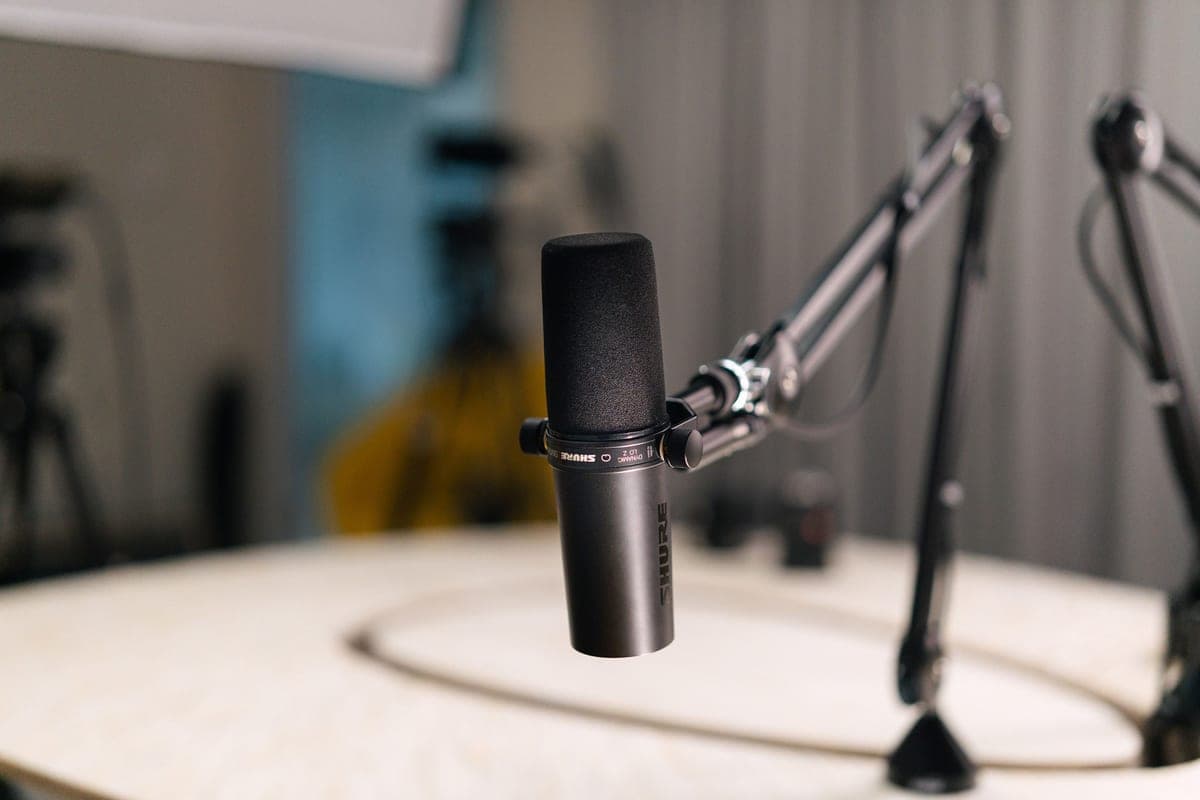
An SM7B is a heavy microphone, and people rarely account for what goes with it. Add a FetHead hanging off the connector and a 10 oz metal pop filter on a 13 inch gooseneck, and you have a genuinely demanding load — most of it cantilevered.
Floor stand or desk clamp: the real trade
A desk clamp puts the microphone on the same rigid structure as your keyboard, your elbows and anything you set down. An internal shockmount catches some of that; it does not catch all of it, and a heavy typist will hear themselves.
A floor stand shares a structure with your footsteps instead, which on a suspended timber floor can be worse rather than better. The genuine advantage of a floor stand is that it needs no clampable edge, works when you record standing, and leaves the desk clear. If you have a solid floor and a thick desk, the floor stand wins; on an upper floor with a clampable edge, the arm does.
The three mounts, ranked
K&M 259
Top pickKönig & Meyer · A desk-height stand when an arm will not fit
The answer when your desk has no clampable edge, or when you record standing. If you can clamp, a damped boom arm isolates footfall better and takes no floor.
Why it is here
- Low-level design reaches mic height from the floor beside the desk, so nothing clamps to the desk at all
- Zinc die-cast base and steel tube — this is a stand you buy once
- Over 30 inches of boom reach
What it costs you
- K&M does not publish a load rating for this model, so a heavy mic plus a shield is guesswork
- Floor stands transmit footfall a clamped arm does not
- Takes floor space
Rode PSA1+
Rode · The quietest arm that holds a heavy mic
The right arm for a broadcast dynamic: quiet, and rated for the weight you will actually hang on it. If the arm appearing on camera is your problem, a low-profile arm solves that instead.
Why it is here
- Damped springs and a neoprene sleeve mean it does not creak or ping into a live mic
- 1.2 kg capacity covers an SM7B with a booster and a pop filter hanging off it
- Internal cable routing keeps the XLR out of the shot and out of the way
What it costs you
- 94 g minimum means a very light mic will not hold position
- Arcs up and over, so it can sit in a webcam frame
- Costs more than most of the mics people mount on it
Elgato Wave Mic Arm LP
Elgato · Staying out of the camera frame
The pick if you are on camera, because an arm that never enters the frame is worth more than a marginally quieter one. For audio-only work the PSA1+ is the quieter mount.
Why it is here
- 2 kg capacity is the highest here — it will hold anything on this site
- 740 mm of reach crosses a deep desk without a riser
- Travels below your shoulder, so it stays under a monitor and out of a webcam shot
What it costs you
- The low arc puts the arm where your keyboard wants to be
- Not as thoroughly damped as the PSA1+, so knocks transmit more
- Repositioning takes two hands
What we did not pick, and why
- Lightweight tripod stands. They tip under a heavy boom, and they tip catastrophically with a reflection filter on them. The physics is simple and the outcome is a broken microphone.
- Desktop tripods. They put the microphone below your mouth, they sit on the noisiest available surface, and they have no reach. They exist for USB microphones on video calls.
- Stands with plastic thread collars. The 5/8 inch thread takes the whole load. A plastic collar strips, and it strips while a microphone is attached.
- Anything without a published height range. You cannot plan a mic position from a product photograph.
Pair it with
- A thread adapter, possibly. The 5/8 inch standard is common in the US; European stands are often 3/8 inch. Check before ordering.
- A shockmount, for anything without internal mounting. Best budget condensers — most ship with one.
- A cable with slack, so the cable is not taking any of the load. Best XLR cables.
- A pop filter whose weight you have accounted for. Best pop filters.
How to choose
- Can you clamp? Measure the desk edge against the clamp's maximum jaw thickness before assuming.
- What floor are you on? A suspended timber floor transmits footfall to a floor stand more than a clamp transmits typing.
- Are you sitting or standing? Standing means a floor stand, or a tall stand rather than the low-profile 259.
- What is hanging off the microphone? A booster and a metal filter push you toward a published load rating.
- How much floor space is there? A tripod base is wider than people expect and it is where your chair wants to be.