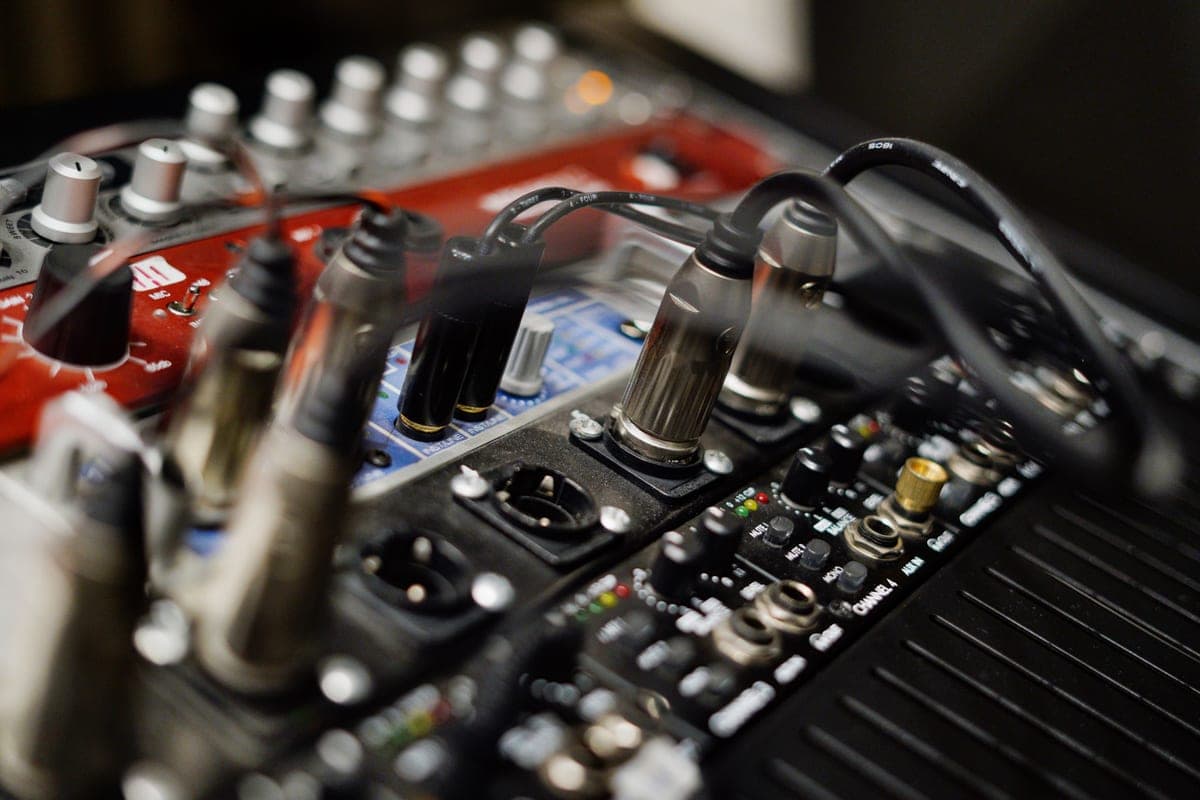
The Triton Audio FetHead is the best booster for most SM7B owners: 27 dB of gain from something the size of a cable barrel, with a 22 kohm input impedance that lets a dynamic capsule behave properly. The Cloudlifter CL-1 is the pick if you own or might own a ribbon microphone, or if your boom arm cannot take the overhung weight.
First, the question worth asking before you buy anything: do you need one? The SM7B's published sensitivity is -59.0 dBV/Pa, which means you want roughly 60 dB of clean gain available. If your interface publishes 64 dB or 69 dB, a booster buys you nothing at all. How much gain does the SM7B need has the interface-by-interface table.
Why impedance is the interesting specification here
The gain figures span 3 dB, which is not much. What genuinely differs is the load each device presents to the microphone. The FetHead presents 22 kohms; the Cloudlifter presents a fixed 3 kohms. A dynamic capsule sees a lighter load at the higher impedance, which affects its damping and, in practice, its low-frequency behavior.
We are not going to tell you one sounds better, because we have not measured either and we do not run a test lab. What we will say is that the difference is a real, documented electrical difference rather than marketing, and that if you have read conflicting opinions about these two products this is what people are actually hearing.
The four boosters, plus the alternative
The three inline options, the desktop box, and the interface that makes all four unnecessary — because sometimes the cheaper total purchase is a different interface.
Triton Audio FetHead
Top pickTriton Audio · The most gain in the smallest package
The pick for most people boosting an SM7B or PodMic: more gain than the alternative, in nothing. Choose the Cloudlifter instead if the mic is on a long unsupported arm or if you own a ribbon.
Why it is here
- 27 dB is 2 dB more than a Cloudlifter, from something the size of a cable barrel
- 22 kohm input impedance lets a dynamic capsule behave the way its designer intended
- No desk space, no second cable
What it costs you
- Hangs off the back of the mic, adding weight and leverage to your boom arm
- Nothing to see — no LED, so a phantom-power mistake is silent
- Not for condensers, which need the phantom power it blocks
sE Electronics DM1 Dynamite
sE Electronics · The most gain of the three inline boosters
Buy it when you need every last decibel — an SM7B into a 55 dB interface is exactly that case. Otherwise the FetHead's 27 dB is the same result for less.
Why it is here
- +28 dB is the highest inline figure here, and 3 dB matters on a 55 dB interface
- Same barrel form factor as a FetHead, so no desk space
- Low-noise Class A design
What it costs you
- Priced above the FetHead for 1 dB more gain
- Same overhung-weight problem as any inline booster
- Max input around -18.5 dBu means it is for quiet sources only
Cloud Microphones Cloudlifter CL-1
Cloud Microphones · The reference booster, and the safest one
The right booster if you own or might own a ribbon mic, or if you want the version that cannot be knocked out of its socket. If neither applies, a FetHead does the same job smaller and cheaper.
Why it is here
- +25 dB turns a 55 dB interface into an 80 dB one for a passive mic
- Blocks phantom power downstream, so a ribbon mic is safe behind it
- A box, not a dongle — it stays put and takes strain off the XLR connector
What it costs you
- Needs two XLR cables and a spot on the desk
- Costs as much as some interfaces
- Does nothing for a condenser, which needs the phantom it blocks
Klark Teknik Mic Booster CT 1
Klark Teknik · The cheapest way to add 25 dB
The budget answer when the gain shortfall is the only problem and the box does not need to last a decade. If this is a permanent part of your chain, the FetHead or Cloudlifter are better long-term purchases.
Why it is here
- Same +25 dB as a Cloudlifter for a fraction of the money
- Suitable for ribbons as well as dynamics
- Inline, so no desk footprint
What it costs you
- Least documented of the four boosters — the published spec sheet is thin
- Build is not in the same class as the Cloud or sE units
- Inline weight on the mic, as always
Focusrite Scarlett 2i2 (4th Gen)
Focusrite · The most gain per dollar in a two-input box
The default answer for someone buying an SM7B or PodMic: it supplies enough clean gain that you never need a booster, which makes it the cheaper total purchase even when it is not the cheaper box. Look elsewhere only if you need MIDI or four outputs.
Why it is here
- 69 dB is the most gain of any interface at this price, and enough for an SM7B with headroom to spare
- 120 dB dynamic range means the converters are not the weak link
- Two inputs, so a second person does not mean a second purchase
What it costs you
- Air mode is a fixed voicing, not an EQ you can dial
- Plastic-and-metal build feels less solid than the SSL or Audient competition
- No MIDI, which matters if you also play keys
What we did not pick, and why
- Rack-mount standalone preamps. They are excellent and they are the wrong answer to this question: you are not trying to add a preamp, you are trying to close a 5 dB gap. A rack preamp costs many times a booster to do it.
- Boosters without a published gain figure. The entire point is closing a specific gap by a specific amount, and a product that will not tell you how much gain it adds cannot be planned around.
- Anything that passes phantom power through. That rules out using it with a ribbon microphone, which is one of the main reasons to own a booster in the first place.
- Stacking two boosters. Not a product, but worth stating: +25 on top of +28 will overload any interface input here. Pick one.
When a new interface is the cheaper fix
If you do not own an interface yet, buy one with enough gain and skip this page entirely — the Scarlett 2i2's 69 dB costs less than a mediocre interface plus a booster. If you already own a 55 dB interface and are happy with it otherwise, a booster is much cheaper than replacing it. The arithmetic is that simple.
There is a third route: the Shure SM7dB builds +28 dB into the microphone, bypassably. One purchase, nothing hanging off the arm, and no second cable.
Pair it with
- A second XLR cable, if you choose the Cloudlifter — it sits between mic and interface, so it needs one on each side. Best XLR cables.
- An arm that can take the weight, if you choose an inline barrel — it hangs off the microphone. Best boom arms.