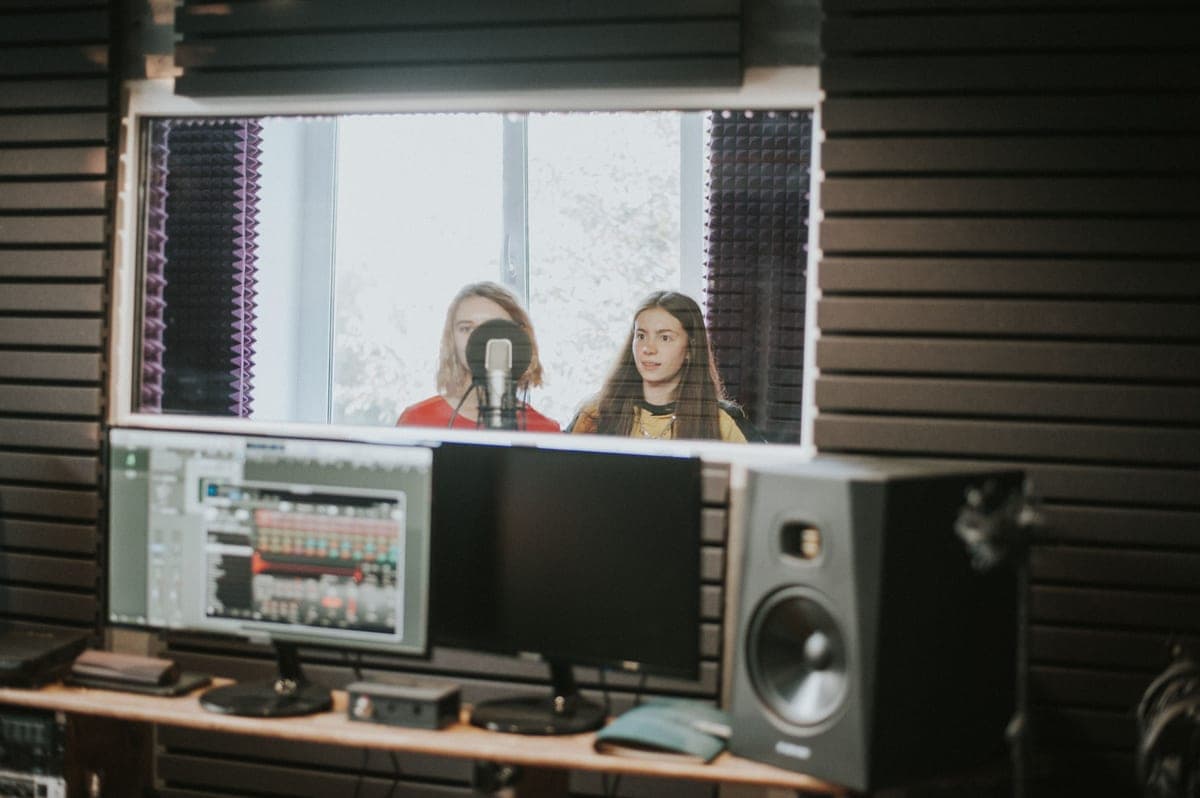
Soundproofing stops sound crossing a boundary and needs mass and decoupling — it is construction, not a purchase. Acoustic treatment changes how a room sounds inside it and needs absorption. If your problem is traffic or a housemate, panels will not help. If your problem is that your voice sounds boxy, soundproofing will not help.
This is the most expensive confusion in home recording, and it is not an accident. Search for soundproofing and you will be sold foam tiles. Foam is an absorber — it changes the sound of the room it is in. It does essentially nothing to the sound passing through the wall behind it, because stopping sound passing through a wall is a function of mass, and foam has almost none.
Why soundproofing a bedroom is not something you can buy
Airborne sound transmission through a single-layer partition follows the mass law, and the National Research Council states it plainly: each time the mass per unit area of the wall is doubled, the transmission loss increases by about 6 dB. A 12 dB improvement therefore requires four times the mass, and 18 dB requires eight times.
Put that against your actual wall. Eight times the mass of a sheet of drywall is not a product you add to a room — it is a wall you build. And 18 dB is roughly the point at which a conversation on the other side stops being intelligible, which is what most people mean when they say soundproofing. That is the whole argument, and it is why the honest answer to “what can I buy to soundproof my bedroom” is usually nothing.
It gets worse, in a useful way. The same source notes that in real buildings sound travels indirectly through the surrounding construction, and that these flanking paths can transmit more energy than the direct path through the wall itself. Your door, your floor, the gap under the door and the ceiling void are all flanking paths. Adding mass to one wall while a 1/2 in gap runs under an interior door is spending money on the strongest link in the chain.
And the one case where absorption does help a barrier is not the case you are in: cavity absorption significantly improves a decoupled assembly — two independent leaves — but is of much less benefit when the layers are rigidly connected, which describes every existing wall in a normal house.
What you can actually buy that reduces noise on the recording
Here is the reframe that saves people money. You almost never need the room to be quieter — you need the microphone to hear less of it. Those are different goals, and the second one is affordable.
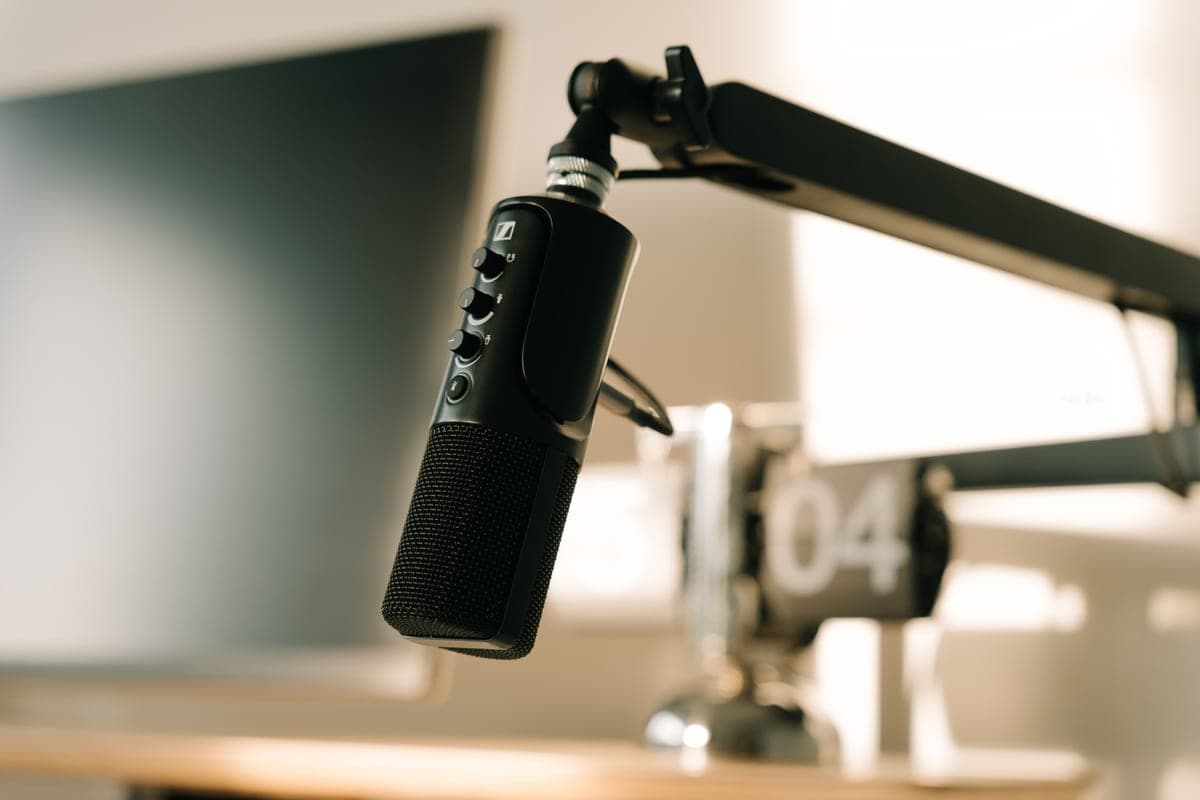
- A low-sensitivity cardioid dynamic, close. This is the single biggest noise-rejection purchase in home recording and it is a microphone, not a building material. The Shure SM7B publishes -59.0 dBV/Pa — it is deliberately insensitive, so you work two inches from it with high gain, and everything further away arrives correspondingly quieter. The cost is that you need an interface that supplies about 60 dB of clean gain: see how much gain does the SM7B need.
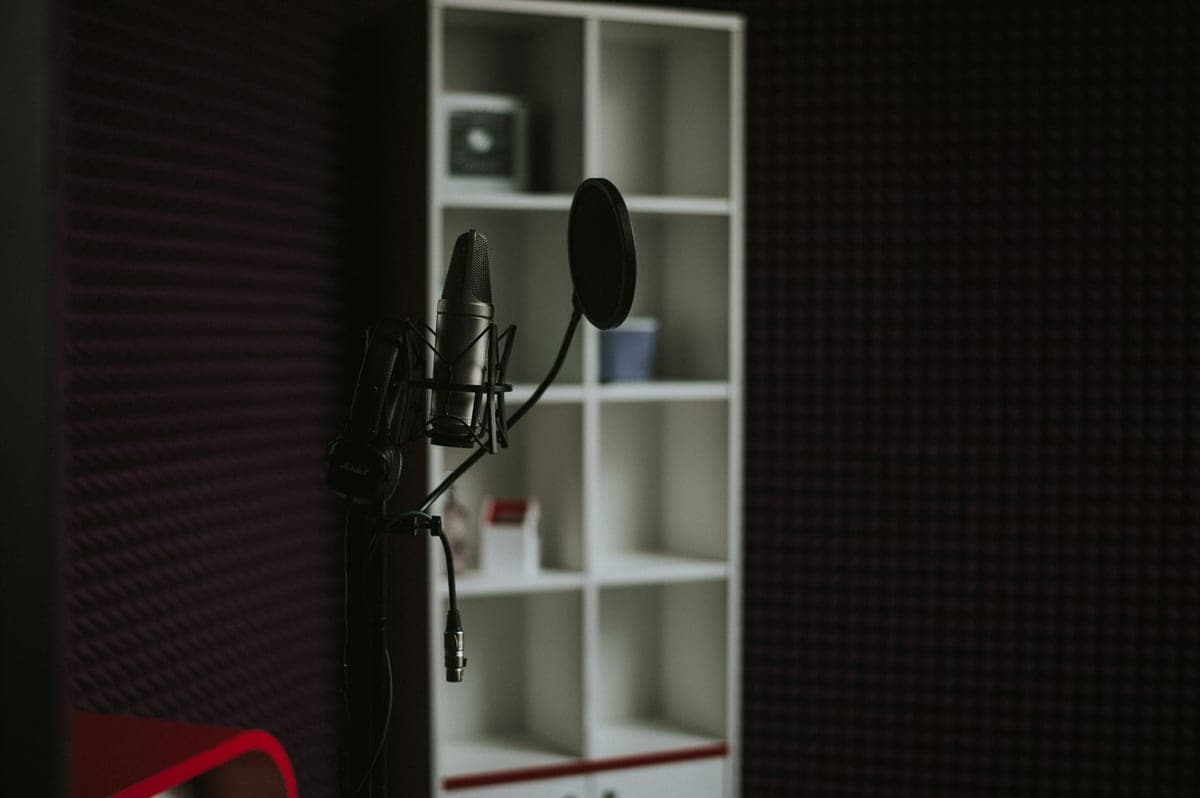
- A reflection filter, if you cannot fix anything to the walls. The sE Electronics RF-X is four acoustic layers with an air gap, and it absorbs the rear-wall reflection that makes untreated vocal takes sound hollow. It is a treatment product, not a barrier — it will not stop the street.
- Seal the door. A gap under an interior door is an open window acoustically, and weatherstrip plus a sweep is the cheapest meaningful transmission improvement available to a renter. It is also the only one on this list that is genuinely soundproofing rather than treatment.
- Panels at the first reflection points and in the corners. This does not reduce outside noise at all. It removes the reflections that make your recording sound like a small room, which is usually the complaint underneath the question.
- Close the loop on your own monitoring. The one noise source you control completely is your headphone mix leaking back into an open microphone. A closed-back pair fixes it: DT 770 Pro vs ATH-M50x compares the two most-bought options.
- Move the session. Recording at 6 a.m. instead of 6 p.m. achieves more isolation than any budget on this page and costs nothing. Professionals do this constantly and nobody writes articles about it.
The products that do each job
Shure SM7B
Top pickShure · The default upgrade, if your preamp can feed it
Buy it if your interface supplies 60 dB or more of clean gain, or if you are budgeting for a booster alongside it. Buy something else if your only interface is a Scarlett Solo and you are not prepared to add hardware.
Why it is here
- Rejects room and computer-fan noise better than any condenser at any price
- Two voicing switches let one mic cover a thin voice and a boomy one
- Internal shockmount and a yoke that actually holds position on a boom arm
What it costs you
- At -59.0 dBV/Pa it is one of the quietest mics sold, so it demands a loud preamp
- Total cost is the mic plus, very often, a booster
- Heavy enough that a cheap desk arm will droop under it
sE Electronics RF-X
sE Electronics · The most absorptive portable shield
Worth it if you cannot fix anything to the walls — a rented room, a shared space. If you can hang two panels, panels at the first reflection points do more for less, and leave your stand alone.
Why it is here
- Four layers with an air gap is a real absorber, not a foam semicircle
- Reduces the rear-wall reflection that makes untreated vocal takes sound hollow
- Mounts on a normal stand with the mic inside it
What it costs you
- Five pounds hung on a mic stand needs a heavy base or it tips
- Treats one reflection path; the ceiling and the floor are untouched
- Makes the mic position fussier to set
GIK Acoustics FlexRange Panel (242)
GIK Acoustics · Published third-party test data, not marketing figures
The pick if you want absorption you can verify rather than believe. If budget forces a choice, two of these at the first reflection points beat eight foam tiles spread across a wall.
Why it is here
- Tested at an independent university lab to a published standard, which almost nothing else in this category is
- 3.625 inches of depth plus a built-in air gap is what actually reaches low-mid frequencies
- Integrated hanging wire means it sits flush without a mounting kit
What it costs you
- Costs several times what a foam kit does for the same wall area
- Ships from the manufacturer, so lead times are longer than an Amazon order
- Heavy enough to need a real fixing, not a command strip
ATS Acoustics Panel (2-inch)
ATS Acoustics · The value finished panel
The best value in a finished panel: 0.95 versus 1.05 NRC is not a difference you will hear, and the money saved buys the corner traps that actually change the room.
Why it is here
- Mineral-wool core at a price close to foam kits
- NRC 0.95 is within a rounding error of panels costing twice as much
- Wide fabric range
What it costs you
- Same 2-inch depth limitation as the rest of this group
- Edges are softer than Primacoustic's resin-hardened ones
- Published data is thinner than GIK's
Owens Corning 703 (DIY panels)
Owens Corning · The most absorption per dollar, if you build
The right choice if you have a weekend and want the most low-frequency absorption your money can buy. If you want it to arrive finished, buy the ATS or GIK panels and accept paying for the labour.
Why it is here
- 0.53 at 125 Hz is more than double what foam manages, and 125 Hz is where small rooms go wrong
- A fraction of the cost per square foot of any finished panel
- Cut and frame it to whatever depth your corners need
What it costs you
- You are building the frames and stapling the fabric
- Rigid fiberglass needs gloves, a mask and a plan for the offcuts
- Bare board must be covered before it goes on a wall you touch
What acoustic treatment does, and what it is worth
Treatment is the half of this comparison that works, is cheap by comparison, and is measurable. A finished broadband panel such as the GIK FlexRange publishes an NRC of 1.05. Mineral wool at 3 in absorbs 0.53 at 125 Hz, which is the frequency band where a small bare room goes wrong and where NRC — which excludes 125 Hz entirely — tells you nothing.
What that buys you, concretely: a vocal take that does not have a short, boxy room printed into it, and a mix position where the low end is consistent enough to make decisions on. How to treat a room for recording is the step-by-step, and acoustic treatment on a budget is the version for people doing it in stages.
Choose soundproofing if
- You own the room and can build. A second leaf of drywall on isolation clips with cavity absorption is a real STC improvement, and it is the kind of project with a permit and a contractor attached.
- The problem is that other people hear you, rather than that you hear them — a drum kit, a loud amp, a late-night podcast in a shared house.
- You have already sealed every gap. Doors, vents, electrical boxes and the perimeter come first, because flanking paths can carry more energy than the wall does.
- You understand that the goal is a number of decibels, not silence. Nothing short of a room-within-a-room gets to silence, and the mass law is why.
Choose acoustic treatment if
- Your recordings sound boxy, hollow, or like a bathroom. This is a reflection problem and panels fix it directly.
- Your mixes do not translate — too much or too little bass depending on where you listen. That is a modal problem and bass traps are the answer.
- You rent. Panels come off the wall when you leave. A second leaf of drywall does not.
- You want the improvement this month. Treatment is incremental: two panels help, four help more, and you can stop whenever the room is good enough.
The one place they overlap
Decoupled construction is where absorption and isolation finally cooperate: in a two-leaf wall, filling the cavity with mineral wool measurably improves transmission loss, which is the same material doing a different job. That is also the only context in which the phrase “soundproofing insulation” is honest. In your existing rigidly-connected wall, the same batt in the same cavity does very little, which is precisely what the building research says.
The practical overlap for a home studio is smaller and more boring: a solid-core door instead of a hollow one is mass where mass is cheapest, and sealing its perimeter closes the biggest flanking path in most bedrooms. Do that before you consider anything structural.
Where the money goes, in order
- A microphone that rejects the room — a cardioid dynamic worked close. This is first because it is the only item that improves the recording without touching the building.
- Two to four broadband panels at the first reflection points behind and beside the microphone.
- Weatherstrip and a door sweep. Tens of dollars, and the only genuine transmission improvement on the list.
- Corner absorption once the reflections are handled, if you mix as well as record. Acoustic panels vs bass traps covers which to buy first.
- Structural isolation last, and only if you own the room and the problem is other people hearing you.