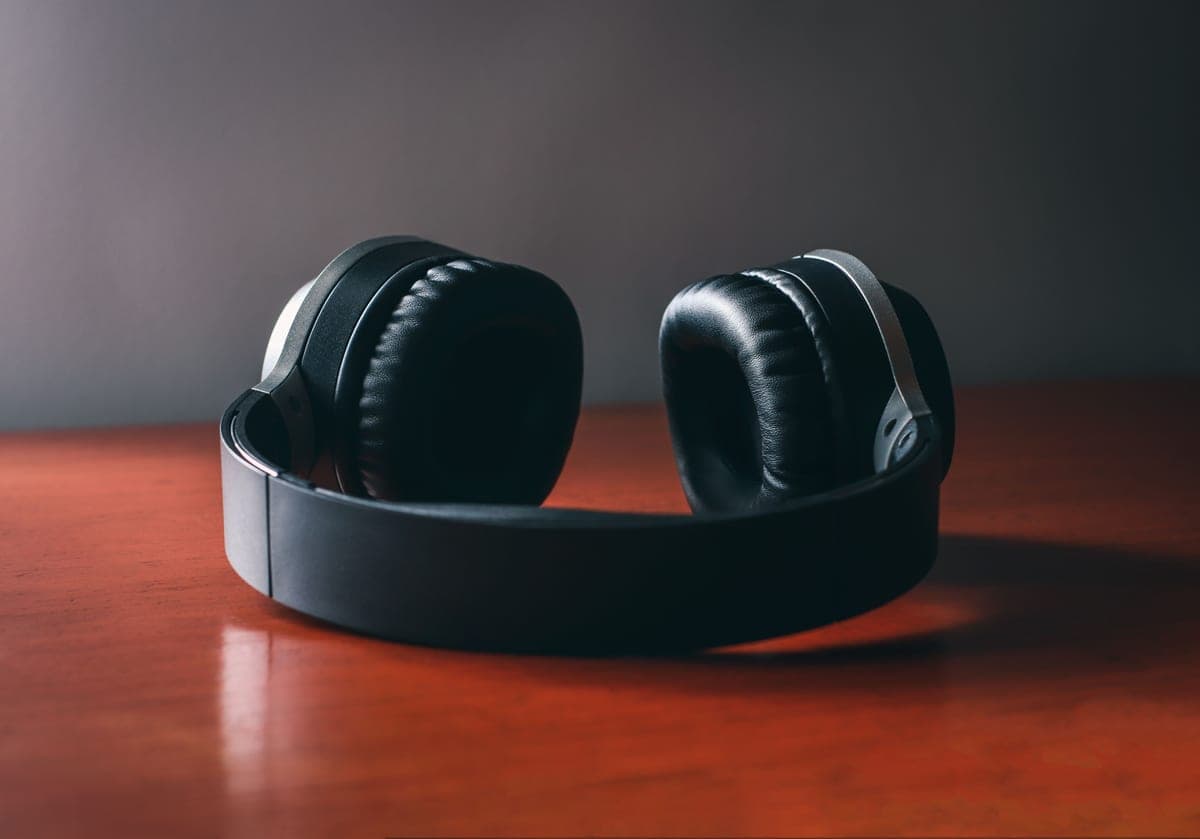
Buy the DT 770 Pro (80 ohm) if these are a studio headphone you will own for a decade — every component is replaceable and the velour pads stay comfortable through a long session. Buy the ATH-M50x if they also have to leave the house: three detachable cables, 287 g, and they fold. Neither is a mixing headphone.
These two get bought more than any other closed-back in a home studio, usually by someone who has just moved to an XLR microphone and discovered that monitoring on speakers while a live microphone is open does not work. That is the correct reason to buy either one. What separates them is not sound quality in the abstract — it is service life, weight, and what each one does to your sense of the low end.
Why we did not compare the sensitivity figures
This is the part most comparisons get wrong, so it is worth being explicit. Beyerdynamic publishes 96 dB for the DT 770 Pro and does not state the reference condition on the product page — a sensitivity figure is only meaningful per milliwatt or per volt, and those two bases give numbers roughly 20 dB apart on the same headphone. Audio-Technica publishes no sensitivity figure for the M50x at all.
So there is no honest way to subtract one from the other, and we do not. What both manufacturers do publish is impedance, which is the figure that actually decides whether your interface can drive them — and that one is clear: 80 ohms against 38 ohms.
What 80 ohms against 38 ohms means in practice
Both are easy loads by studio-headphone standards. The 300 ohm Sennheiser HD 600 is the pair that needs real voltage swing and sounds thin from a weak output; neither of these does. Every interface on this site drives the DT 770 Pro's 80 ohms to a working level, and the M50x at 38 ohms plays loudly from a laptop or a phone dongle.
The practical difference runs the other way. A lower-impedance headphone is more sensitive to whatever the output stage is doing, so the M50x is the one more likely to let you hear a hiss on a cheap headphone amplifier at low listening levels. The DT 770 Pro's 80 ohms is, if anything, the more forgiving load. If you are choosing between them on drivability, you are choosing on a non-issue.
Choose the DT 770 Pro if
- You want to still be using them in ten years. Beyerdynamic's stated policy is that all components are replaceable, and pads, headband and cable are stocked as spares. This is the single biggest difference between these two and the reason the DT 770 Pro keeps being recommended.
- Your sessions are long. Velour pads over a wide headband distribute weight better than the M50x's pleather, despite the DT 770 being the heavier pair at 375 g with its cable.
- You record with a live microphone two feet away. Closed-back with firm clamping is the brief, and this is the better-isolating of the two in practice — though note that Beyerdynamic publishes no attenuation figure, so that is a judgment and not a number we can cite.
- You never take them anywhere. The cable is fixed and straight and they do not fold.
Choose the ATH-M50x if
- They have to travel. 287 g without the cable, a folding yoke, and three detachable cables in the box — a coiled one for the desk and a long straight one for the room.
- A detachable cable is non-negotiable. On the DT 770 Pro a damaged cable is a repair; on the M50x it is a spare you already own.
- You want one pair for tracking and for listening. The bass lift that makes them a poor mixing reference is exactly what makes them pleasant for everything else.
- You want the published numbers to exist. Audio-Technica publishes the driver size, the max input power and the weight; Beyerdynamic publishes none of those three.
The honest problem with both: neither is a mixing headphone
The DT 770 Pro has a lifted top end. It flatters detail, which feels like accuracy and is not — it will make you under-do de-essing, because sibilance sounds more present than it is going to be on anything else. The M50x has a pronounced bass lift, which is the more dangerous of the two faults: mixes made on it come out thin everywhere else, because you were hearing low end that was not in the file.
Both are also closed-back, which compresses your sense of reverb depth regardless of how the frequency response measures. Studio monitors vs headphones for mixing makes the full case. The short version: use either of these to track, and make your mix calls somewhere else.
Both headphones in detail
Beyerdynamic DT 770 Pro (80 ohm)
Top pickBeyerdynamic · Tracking with a live mic in the room
The right headphone for recording, where leakage is the problem you are solving. For mixing decisions, an open-back pair will tell you more truth about depth and reverb.
Why it is here
- Closed-back, so nothing leaks into an open microphone two feet away
- 80 ohms drives properly from any interface headphone output on this site
- Every wear part is a user-replaceable spare, which is why these last a decade
What it costs you
- A lifted top end that flatters detail and misleads on sibilance decisions
- Closed-back soundstage narrows your sense of reverb depth
- Velour pads get warm over a long session
Audio-Technica ATH-M50x
Audio-Technica · A tough closed-back for tracking, not mixing
Use them for tracking and for checking a mix against a consumer-style bass lift. Do not make low-end decisions on them — the K371 costs similar money and measures far flatter.
Why it is here
- Drives easily from anything at 36.6 ohms
- Physically robust, and folds for transport
- Good isolation for tracking next to a live mic
What it costs you
- A pronounced bass lift that makes mixes translate badly
- Narrow soundstage even by closed-back standards
- Pads compress and need replacing sooner than the Beyerdynamic equivalents
If neither: the two pairs worth a look first
We would rather send you to the right product than win the click on this page, so: if the reason you are here is that you want one pair that can track *and* take a mix most of the way, neither of these is the answer and both of the alternatives cost similar money.
- AKG K371 — independently measured as one of the flattest closed-backs at any price, at 36.2 ohms measured, and it folds. The compromise is a plastic build that will not survive what a DT 770 survives. It is the best single-pair answer on this site, and it is covered in best closed-back headphones for recording.
- Beyerdynamic DT 700 Pro X — 48 ohms, 5 to 40,000 Hz, noticeably flatter than the DT 770's lifted treble, with the same replaceable-everything policy and a detachable cable. It costs roughly half again what the DT 770 Pro does and isolates a little less.
What else you need
- Either pair: nothing. Both work from any interface headphone output on this site without an external amplifier, which is the point of choosing a low-impedance closed-back.
- If you also mix: speakers, and a room that lets them work. Best studio monitors under $500 and best acoustic panels.
- If you are tracking a quiet source: the headphone choice matters less than the microphone. Best microphones for acoustic guitar ranks that side of it on self-noise.