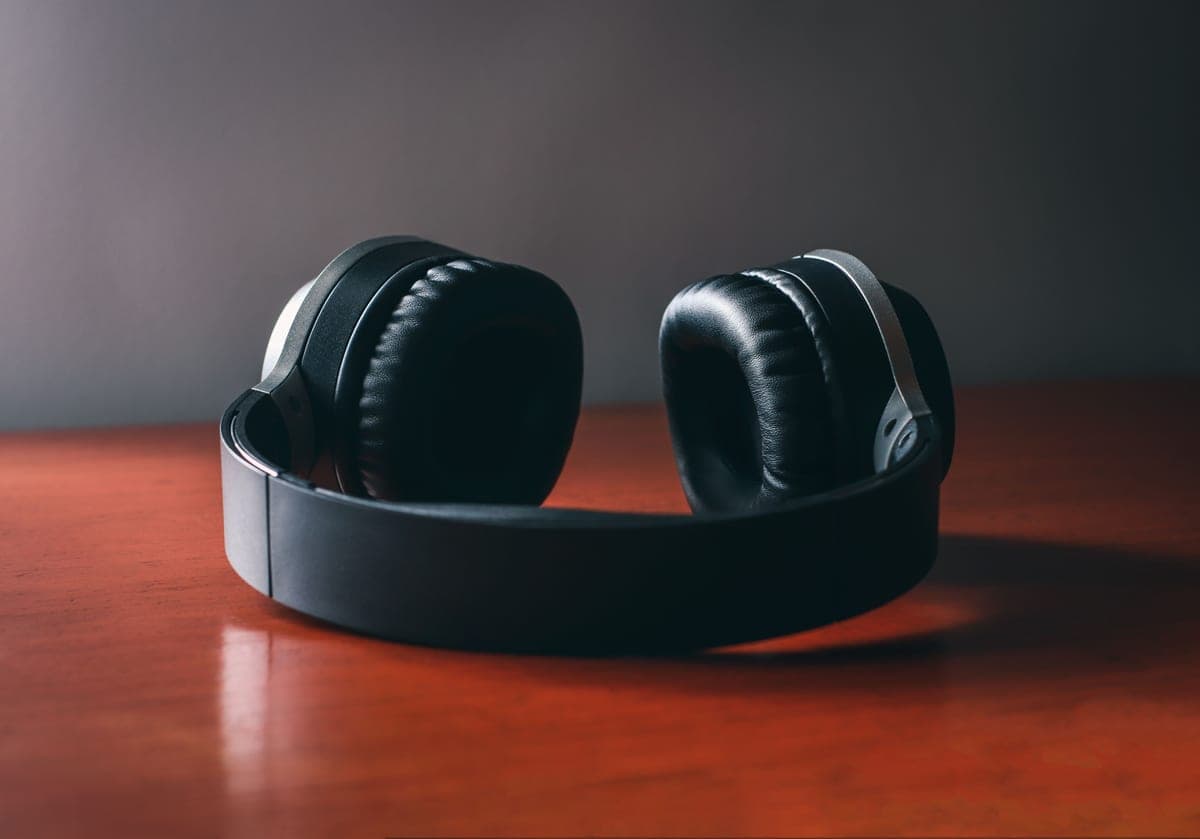
The Beyerdynamic DT 770 Pro (80 ohm) is the one to buy for tracking: closed-back, 80 ohms so any interface drives it, and every wear part replaceable. If your room or your headphone mix is loud, the Sennheiser HD 280 Pro publishes 32 dB of attenuation — the only figure in the category — for far less money.
This page exists because the mixing page answers a different question. There, the ranking is tonal honesty, and the winner is an open-back pair. Here the ranking is isolation — how much of your headphone mix stays inside the cups instead of ending up on the recording — and that single constraint reorders everything.
If you record with a live microphone in the same room as your ears, open-back headphones are not a compromise you can mix your way out of. The leaked click track or guide vocal is printed into the take, at low level, out of phase with nothing in particular, and no plugin removes it. An open-back pair that ruins one session has cost you more than the price difference.
The criteria, in the order they actually matter
- Isolation. How much sound escapes. This is the whole reason you are on this page, and it is the specification almost nobody publishes.
- Impedance. Whether your interface can drive them to a usable level. Every pair here is under 100 ohms, which is deliberate — the high-impedance references belong on the mixing page.
- Voicing honesty. A tracking can does not need to be a mixing reference, but one with a big bass lift will have you tracking vocals too quietly against a mix that sounds fuller than it is.
- Comfort over a long session. Tracking means hours in them, often with one cup half-off. Clamping force matters more here than on a mixing pair.
- Replaceable parts. Pads and cables are the parts that fail. A pair you can rebuild for the price of a coffee outlasts three pairs you cannot.
Closed-back is a spectrum, not a switch
Every pair on this page has a sealed enclosure behind the driver, but they do not isolate equally, and the variation is mostly mechanical rather than acoustic. Three things decide it: how hard the headband clamps, how deep and how compliant the pads are, and whether the enclosure has any vents at all.
That is why the HD 280 Pro both isolates the most and is the least comfortable pair here. Its clamping force is genuinely high, which is exactly what produces the seal that yields 32 dB. The two facts are the same fact. A pair that clamps lightly and feels wonderful — the K371, for instance — leaks more, and the trade is real in both directions.
It also means a worn-out pad set quietly costs you isolation. Pads compress, the seal breaks, and leakage creeps back in over a year or two without you noticing a specific day it got worse. This is the practical reason the Beyerdynamic picks are ranked as highly as they are: replaceable pads are not a durability nicety here, they are how you keep the specification you paid for.
One more thing worth knowing before you choose. A condenser microphone will hear leakage that a dynamic microphone will not, because it is more sensitive and picks up more of the room. If you are tracking with a condenser rather than a dynamic, weight isolation more heavily than you otherwise would, and turn the headphone mix down before you blame the headphones.
The seven closed-backs, ranked for tracking
Ranked on fitness for recording, not on overall sound quality. Each pick states who it is for and who should skip it.
Beyerdynamic DT 770 Pro (80 ohm)
Top pickBeyerdynamic · Tracking with a live mic in the room
The right headphone for recording, where leakage is the problem you are solving. For mixing decisions, an open-back pair will tell you more truth about depth and reverb.
Why it is here
- Closed-back, so nothing leaks into an open microphone two feet away
- 80 ohms drives properly from any interface headphone output on this site
- Every wear part is a user-replaceable spare, which is why these last a decade
What it costs you
- A lifted top end that flatters detail and misleads on sibilance decisions
- Closed-back soundstage narrows your sense of reverb depth
- Velour pads get warm over a long session
Sennheiser HD 280 Pro
Sennheiser · The only published isolation figure in the category
Buy them when leakage is the actual problem — a loud headphone mix, a noisy room, a condenser two feet away. Do not buy them as your only pair if you also mix, because the voicing will mislead you.
Why it is here
- 32 dB of attenuation is the highest published figure on this page, and almost nobody else publishes one at all
- 64 ohms with a 113 dB maximum SPL plays loud from any interface output on this site
- Costs a fraction of the Beyerdynamic picks while isolating better than either
What it costs you
- Strong clamping force that most people find uncomfortable before the second hour
- Mid-forward and bass-shy voicing — these are a tracking tool, not a mixing reference
- The coiled cable is captive, so a cable fault is a repair rather than a swap
AKG K371
AKG · The closed-back that measures closest to a target curve
The best single-pair compromise on this site: closed enough to track with, flat enough to make real mix decisions on. Choose the DT 770 instead if durability matters more than measured flatness.
Why it is here
- Independently measured as one of the flattest closed-backs at any price
- 36 ohms and 117.9 dB SPL means anything drives it loudly
- Folds flat, with three detachable cables
What it costs you
- Plastic build that does not inspire the confidence a DT 770 does
- Clamping force is light, so it moves if you do
- Closed-back still compresses your sense of reverb depth
Beyerdynamic DT 700 Pro X
Beyerdynamic · A closed-back you can also make mix calls on
The pick if you want one closed-back that tracks honestly and can take a mix most of the way, and your interface has a modest headphone output. If budget decides, the DT 770 Pro does the tracking job for less.
Why it is here
- 48 ohms is the easiest-to-drive closed-back here — a bus-powered interface or a phone dongle manages it
- Noticeably flatter than the DT 770's lifted treble, so mix decisions survive better
- Detachable cable plus the usual Beyerdynamic replaceable-everything parts policy
What it costs you
- Costs roughly half again what the DT 770 Pro does for a smaller gain than the price implies
- Isolates less than the DT 770 Pro, which is the trade for the flatter voicing
- Beyerdynamic publishes no attenuation figure, so isolation cannot be compared on paper
Audio-Technica ATH-M40x
Audio-Technica · The flat-voiced budget closed-back
The one to buy if money is tight and you want a closed-back that does not lie to you about low end. Step up to the DT 770 Pro when isolation or longevity starts costing you takes.
Why it is here
- Voiced far flatter than the ATH-M50x it sits below, which makes it the better monitoring choice of the two
- 35 ohms and a 1,600 mW power handling figure means nothing you own will struggle or damage it
- Two detachable cables in the box, one coiled and one straight
What it costs you
- Isolates less than the DT 770 Pro or the HD 280 Pro, so a loud headphone mix can still leak
- Pads are shallow and compress within a year of regular use
- Audio-Technica publishes no attenuation figure for it either
Sony MDR-7506
Sony · The broadcast standard for hearing problems
Buy them as the pair you check edits and noise on, not the pair you mix on. If you only own one set of headphones, the K371 is the better choice.
Why it is here
- Forward, slightly harsh presentation that makes clicks, hum and sibilance obvious
- 63 ohms drives from anything, including a camera
- Decades of parts availability and a price that has barely moved
What it costs you
- Not flat, and not pleasant — this is a fault-finding tool
- Coiled cable is fixed, not detachable
- Thin pads that flake with age
Audio-Technica ATH-M50x
Audio-Technica · A tough closed-back for tracking, not mixing
Use them for tracking and for checking a mix against a consumer-style bass lift. Do not make low-end decisions on them — the K371 costs similar money and measures far flatter.
Why it is here
- Drives easily from anything at 36.6 ohms
- Physically robust, and folds for transport
- Good isolation for tracking next to a live mic
What it costs you
- A pronounced bass lift that makes mixes translate badly
- Narrow soundstage even by closed-back standards
- Pads compress and need replacing sooner than the Beyerdynamic equivalents
What we did not pick, and why
- Any open-back pair, at any price. This is the one page on the site where the specification rules them out entirely rather than putting them in second place.
- Active noise cancelling headphones. ANC attenuates the room coming in; it does nothing about your mix leaking out, which is the problem here. It also processes what you hear while you make performance decisions.
- Wireless headphones. Latency makes monitoring your own voice unusable, and codec processing changes what you are hearing while you track.
- In-ear monitors. They isolate superbly and are genuinely the right answer for loud tracking, but fit and hygiene make a single recommendation irresponsible, and a well-fitted set costs more than the whole page.
- Closed-backs with a deliberate consumer bass lift, beyond the ATH-M50x we included as the honest cautionary case. They make you track vocals too quietly against a mix that is lying to you about low end.
Pair it with
- An interface that drives them, and ideally two of them. Best audio interfaces for a home studio. The SSL 2+ MKII has two headphone outputs, which stops being a nice-to-have the moment a second person sits down.
- A microphone whose pattern helps rather than fights you. Best XLR microphones for podcasting — a tighter pattern aimed away from your ears rejects some leakage for free.
- Room treatment, which reduces what the mic hears generally. How to treat a room for recording.
- A second pair for everyone else in the room. Two-person podcast setup covers the headphone-splitting problem properly.
How to choose
- Is leakage already a problem you can hear in your takes? If yes, buy on isolation and take the HD 280 Pro, uncomfortable or not. If you are buying pre-emptively, the DT 770 Pro is the better long-term pair.
- Will this also be the pair you mix on? If it has to be both, the K371 is the best compromise on this site, and the DT 700 Pro X is the better-built version of the same idea for more money.
- What is your interface's headphone output like? Everything here works from a bus-powered box. If that is your situation, the 35 ohm ATH-M40x and the 48 ohm DT 700 Pro X have the most headroom to spare.
- How many hours at a stretch? Over three hours, the DT 700 Pro X and the DT 770 Pro are the only two here most people forget they are wearing.
- Are you tracking or fault-finding? The MDR-7506's unflattering presentation makes mouth clicks, hum and sibilance obvious in a way a pleasant pair will hide from you until the edit.