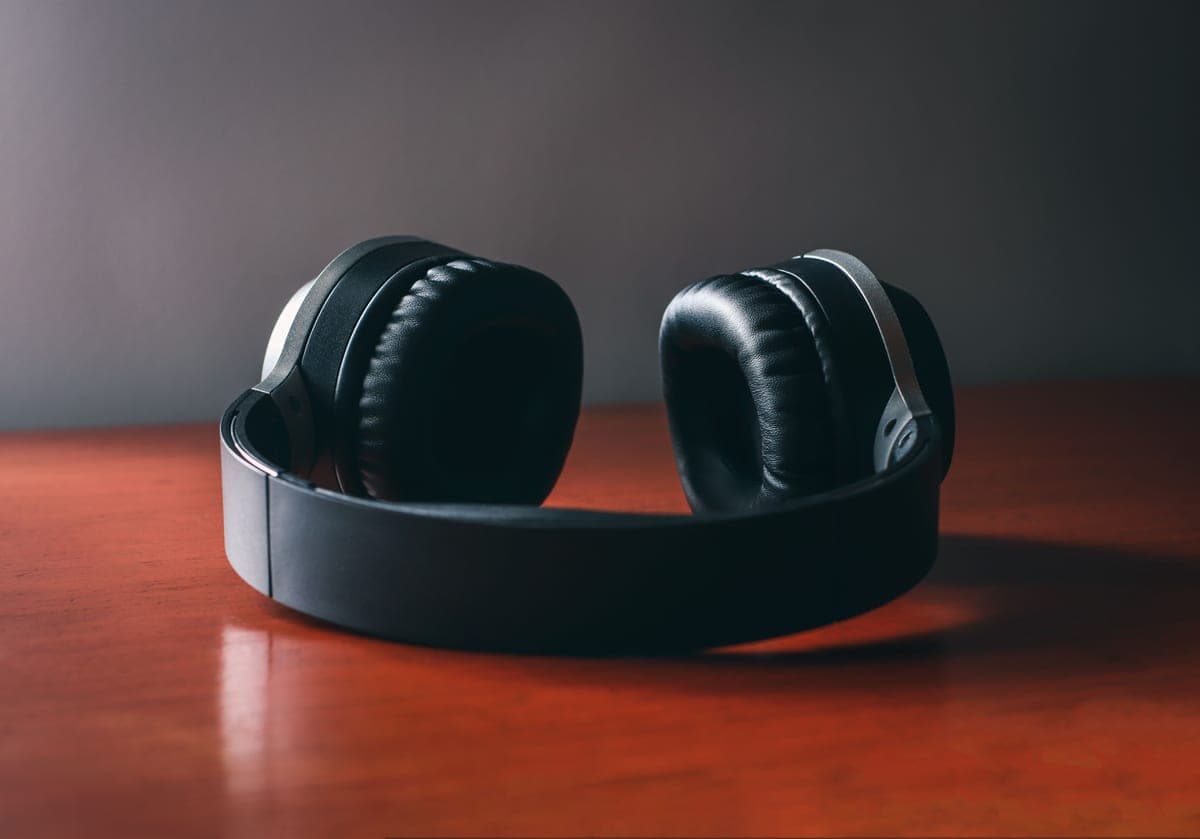
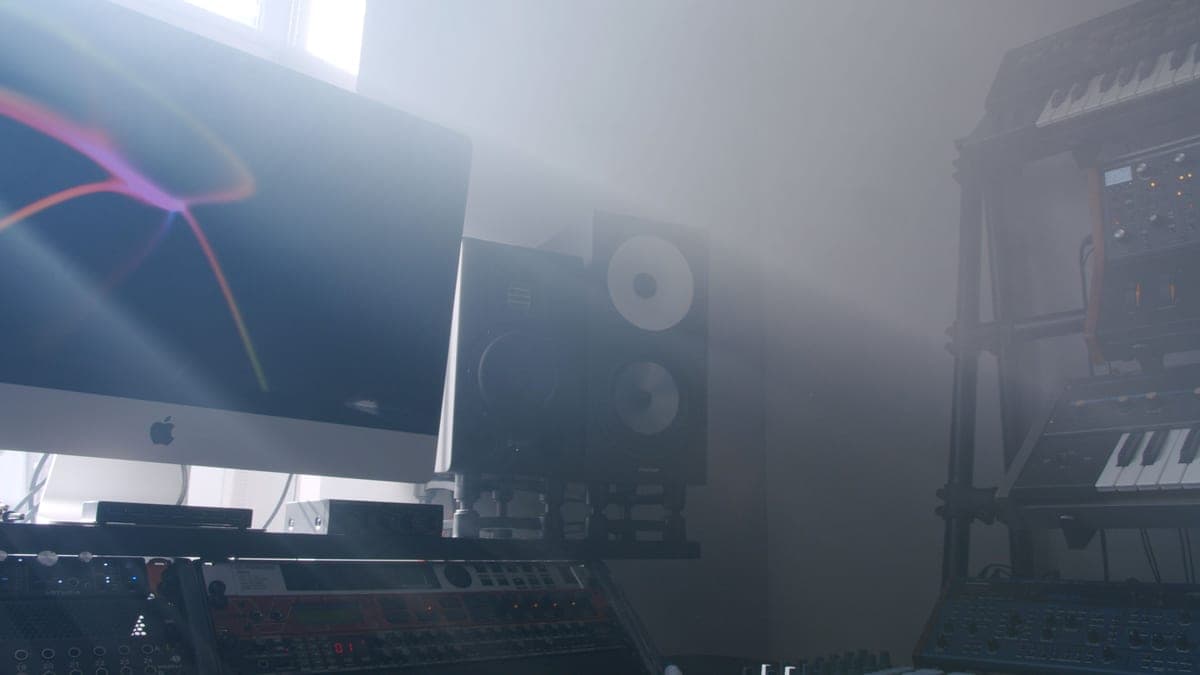
In an untreated room, buy headphones first. Room modes cause 10 dB or more of variation below 200 Hz at your listening position, which is far larger than any difference between monitors — and headphones remove that variable entirely. Monitors become the better tool once the room is treated.
That is the opposite of the usual advice, and the reasoning is arithmetic rather than preference. A 3.5 m room has its first standing wave near 49 Hz, with peaks and nulls either side. No monitor in our roundup differs from another by anything like 10 dB. So in a bare room, the room is your monitor and the speakers are a detail.
Headphones sidestep the room completely. What they give up is a natural stereo image and the physical sensation of low frequencies — real limitations, but knowable and workable ones, which a room's modal behavior is not.
What each one gets wrong
Monitors, in an untreated room
- Standing waves. A 10 dB peak at one frequency and a null at another, both at your seat. You will mix against them and the result will not translate.
- First reflections. Side-wall energy arriving milliseconds after the direct sound smears your sense of stereo and midrange detail.
- Desk coupling. A monitor on a desk radiates through the desk. Stands fix this.
- Placement compromise. Most desks cannot accommodate a proper triangle with clearance from the wall. Studio monitor placement gets as close as possible.
Headphones, in any room
- No crossfeed. Your left ear hears only the left channel, which never happens with speakers. Stereo width reads wider than it is, so you under-use it.
- No physical low end. You hear 40 Hz but you do not feel it, which makes low-end level decisions harder. Use reference tracks and an analyzer.
- Reverb reads closer. Without a room contributing, added reverb sounds more present than it will on speakers. Mixes made on headphones often arrive dry.
- Fatigue. Sound pressure directly at your ear is more tiring, and fatigue makes you turn things up.
The workflow that actually works
- Do the detail work on headphones — edits, noise, sibilance, anything requiring resolution. The room cannot interfere.
- Check balance on monitors, once you have them and the room allows it. Speakers reveal balance problems headphones hide.
- Check low end against reference tracks on both. A commercial track you know well in the same genre is the most reliable instrument you own.
- Check on something consumer — a phone speaker, car, laptop. This catches the mistakes both of the above miss.
- Never make a final low-end decision on one system. In a home studio, neither is trustworthy alone.
What to buy for each situation
Open-back, closed-back, and the monitor for a treated room
The open-back mixing reference, the closed-back that can also handle tracking, and the monitor to buy once the room is treated.
Sennheiser HD 600
Top pickSennheiser · The long-standing mixing reference
Buy it for mixing if your interface can drive 300 ohms — the SSL 2+ and MOTU M2 can, a bus-powered budget box may struggle. Do not buy it as your only pair if you also track with a live mic in the room.
Why it is here
- The midrange presentation most mixing engineers have calibrated their ears against
- Open-back, so reverb depth and stereo width read honestly
- Fully serviceable — pads, cable and headband are all replaceable
What it costs you
- 300 ohms needs a headphone output with real voltage swing; a weak one sounds thin and quiet
- Open-back leaks straight into any live microphone, so it is useless for tracking
- Low end rolls off early by modern standards
AKG K371
AKG · The closed-back that measures closest to a target curve
The best single-pair compromise on this site: closed enough to track with, flat enough to make real mix decisions on. Choose the DT 770 instead if durability matters more than measured flatness.
Why it is here
- Independently measured as one of the flattest closed-backs at any price
- 36 ohms and 117.9 dB SPL means anything drives it loudly
- Folds flat, with three detachable cables
What it costs you
- Plastic build that does not inspire the confidence a DT 770 does
- Clamping force is light, so it moves if you do
- Closed-back still compresses your sense of reverb depth
Yamaha HS5
Yamaha · The flat midrange reference for a small room
The right monitor for an untreated or lightly treated small room, precisely because it does not pretend to have low end your room could not reproduce honestly anyway. If you need to hear below 74 Hz, add a treated room before you add a bigger speaker.
Why it is here
- The honest -3 dB figure of 74 Hz tells you what it will not do, which is rarer than it should be
- Midrange is flat and unflattering, which is the entire job of a monitor
- Small enough to sit at ear height on a desk without dominating the room
What it costs you
- Nothing below about 74 Hz, so you mix low end by trust rather than by ear
- Unforgiving — a rough mix sounds rough, which some people hate
- Rear port needs clearance from the wall
The budget version of this decision
If you have a fixed amount to spend on monitoring and your room is bare, the highest-return split is: a good pair of headphones, then two acoustic panels, then monitors. Buying monitors first and treatment later means every mix you make in between is made against your walls.