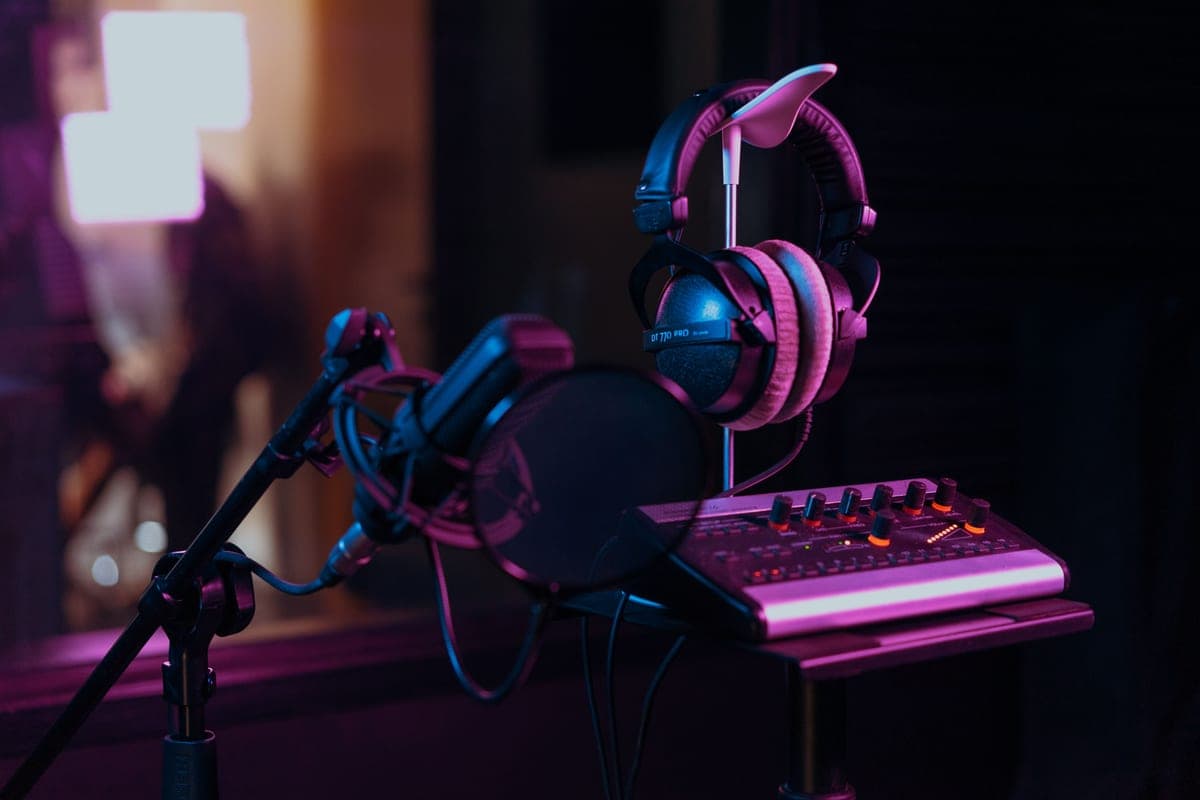
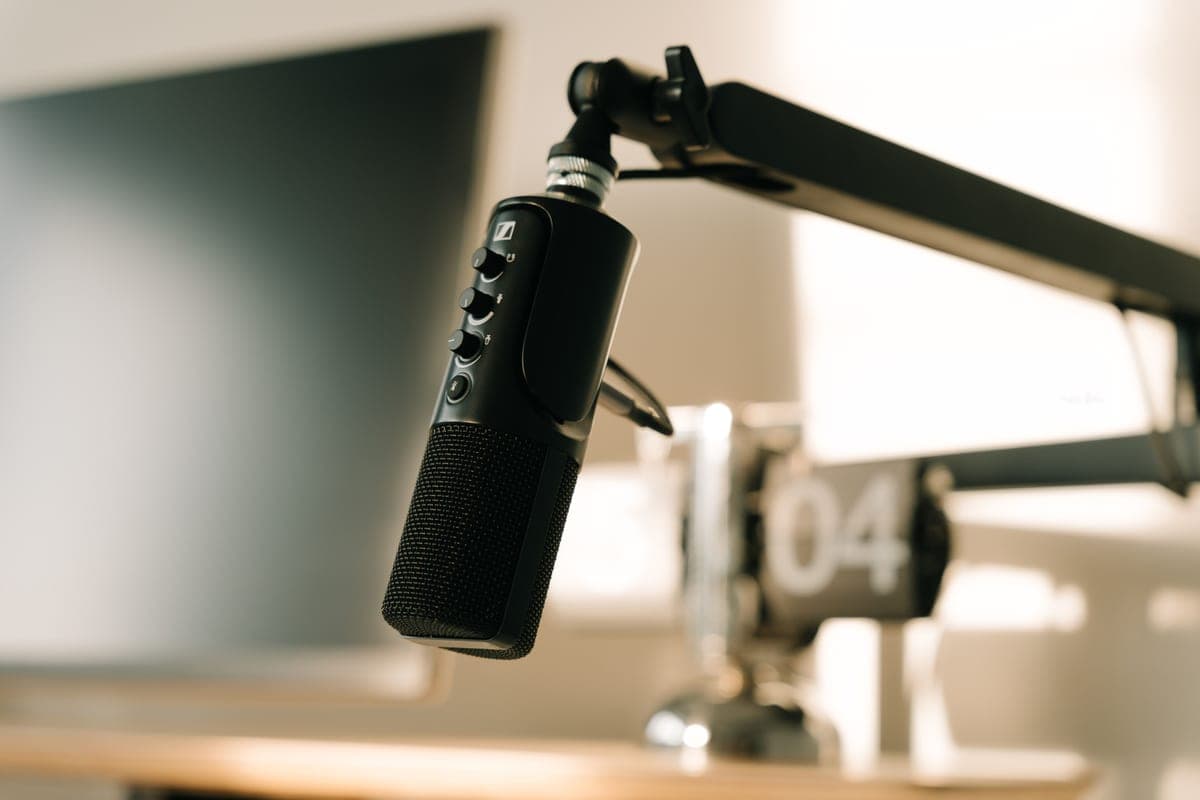
- Two microphones with strong room rejection. Two open condensers in one room hear each other and each other's headphones. Dynamics are the right choice here, and it is not close. Best dynamic microphones for vocals.
- An interface with two mic preamps AND two headphone outputs. The second half is the one people miss. Best 2-channel interfaces.
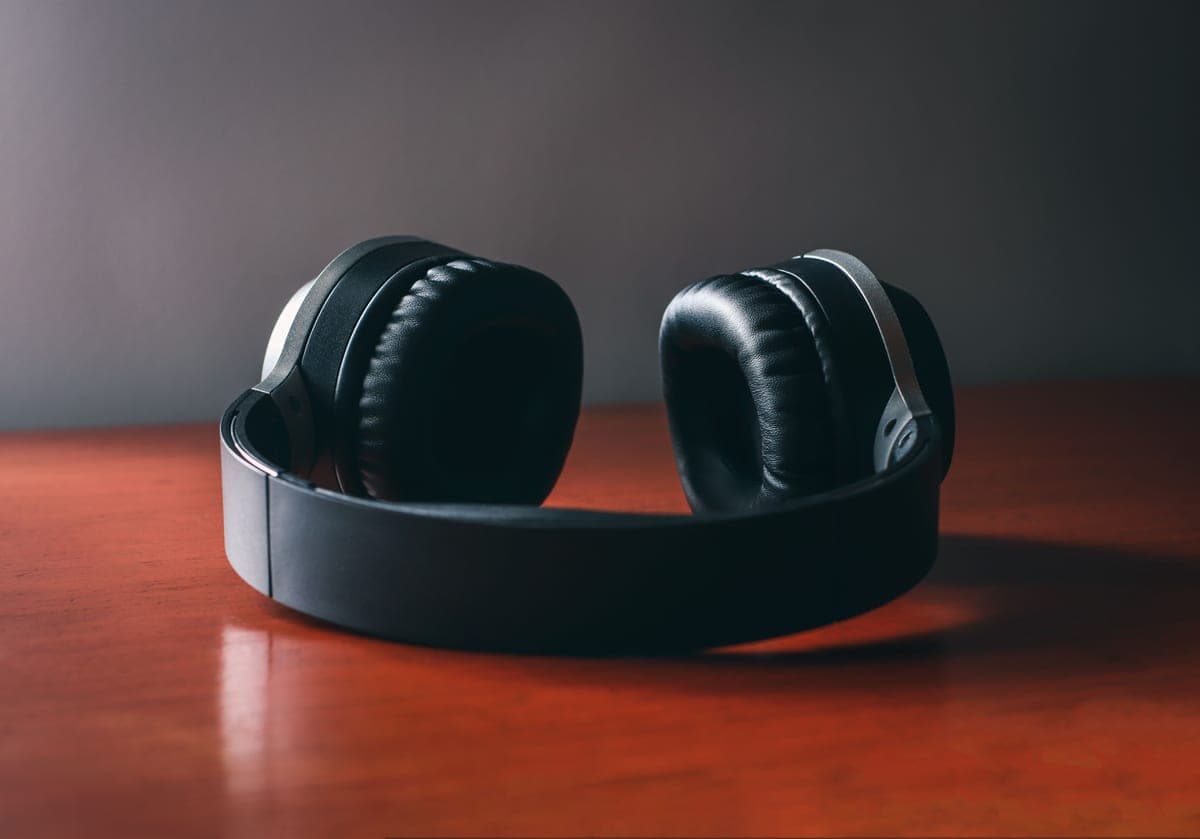
- Two sets of closed-back headphones. Open-backs leak your guest's mix into your microphone. Best headphones for mixing.
- Two mounts. Arms or stands rated for the microphones. Boom arm vs desk stand.
- Two cables, long enough to reach across a table with slack. Best XLR cables.
- Something absorptive between and behind you. Two people in one room doubles the sound energy hitting the walls. Best acoustic panels.
The headphone-output problem, stated plainly
Almost every two-input interface at the budget end has exactly one headphone output. You will discover this when your co-host sits down and cannot hear you. The workarounds are a passive splitter — which gives both of you an identical mix at an identical level, and drops level into low-impedance headphones — or simply recording without your guest being able to hear themselves, which makes for a worse conversation.
The SSL 2+ MKII has two independent headphone outputs alongside its two mic preamps at 64 dB of gain. That combination is genuinely uncommon at this price and it is the reason it is the pick for this specific job, despite the Scarlett 2i2 having more gain.
Microphone placement for two people
- Close. A hand's width each. Distance is what lets bleed in, and closeness is free.
- Angled away from each other, so each microphone's null points at the other person. On a cardioid the null is directly behind, so pointing the backs of the microphones toward each other is wrong — angle them so each rejects the other source.
- Not across a bare table. The table is a large reflective surface between you. Put something soft on it, even a cloth.
- Not symmetrically about the room's center line if you can avoid it, because that is where the lowest standing wave is least helpful.
- Both wearing closed-backs before you set any levels, so what you measure includes the leakage you will actually have.
Recording as separate tracks, non-negotiably
Record each microphone to its own track. If your guest gets excited and clips for ninety seconds, a separate track is a fix in the edit and a summed stereo mix is a lost episode. This is the main reason an interface beats an analog mixer for this job — see audio interface vs mixer.
It is also why you should not use onboard processing that prints into the recording. Capture clean, decide later.
What to buy
The core of a two-person rig
The interface with two preamps and two headphone outputs, the value dynamic to buy two of, and the closed-back headphone to buy two of.
SSL 2+ MKII
Top pickSolid State Logic · Two headphone outs and a console voicing
Buy it for the second headphone output if you record with anyone else in the room — that single feature is worth the premium. For solo work the 2i2 gives you more gain for less money.
Why it is here
- 64 dB of gain clears an SM7B without a booster
- Two independent headphone outputs is the feature that makes a two-person recording workable
- The 4K switch is a real, usable top-end lift rather than a marketing mode
What it costs you
- Costs meaningfully more than a 2i2 for 5 dB less gain
- Four outputs are wasted if you only own one pair of monitors
- Larger footprint than the rest of this group
Rode PodMic
Rode · The best value in a broadcast dynamic
The pick for most people upgrading from a USB mic: it gets you 90 percent of the broadcast-dynamic sound without the booster arithmetic. Choose the SM7B instead if your voice is already bass-heavy and you want the bass-rolloff switch.
Why it is here
- At -57 dBV/Pa it needs about 2 dB less gain than an SM7B, which is enough to matter on a 58 dB interface
- Internal pop filter means one less thing clamped to your arm
- All-metal body at a fraction of the SM7B's price
What it costs you
- Voiced with more low-mid weight than the SM7B, so a boomy voice can get boomier
- No voicing switches, so you fix tone in the DAW rather than on the mic
- Still low enough output that a 55 dB interface will be working hard
Beyerdynamic DT 770 Pro (80 ohm)
Beyerdynamic · Tracking with a live mic in the room
The right headphone for recording, where leakage is the problem you are solving. For mixing decisions, an open-back pair will tell you more truth about depth and reverb.
Why it is here
- Closed-back, so nothing leaks into an open microphone two feet away
- 80 ohms drives properly from any interface headphone output on this site
- Every wear part is a user-replaceable spare, which is why these last a decade
What it costs you
- A lifted top end that flatters detail and misleads on sibilance decisions
- Closed-back soundstage narrows your sense of reverb depth
- Velour pads get warm over a long session
When two becomes three or four
At three or more people, an interface stops being the right tool, because you need three or four headphone feeds as well as three or four preamps. That points at a podcast recorder — the Zoom PodTrak P4 has four of each at a price no interface matches, and runs on AA batteries.
Remote guests
A remote guest is a different problem and a simpler one: they record on their end, you record on yours, and you sync in the edit. What you need locally is a single-person setup plus a way to hear them, which your interface's headphone output already provides. Nothing on this page applies except the microphone choice.