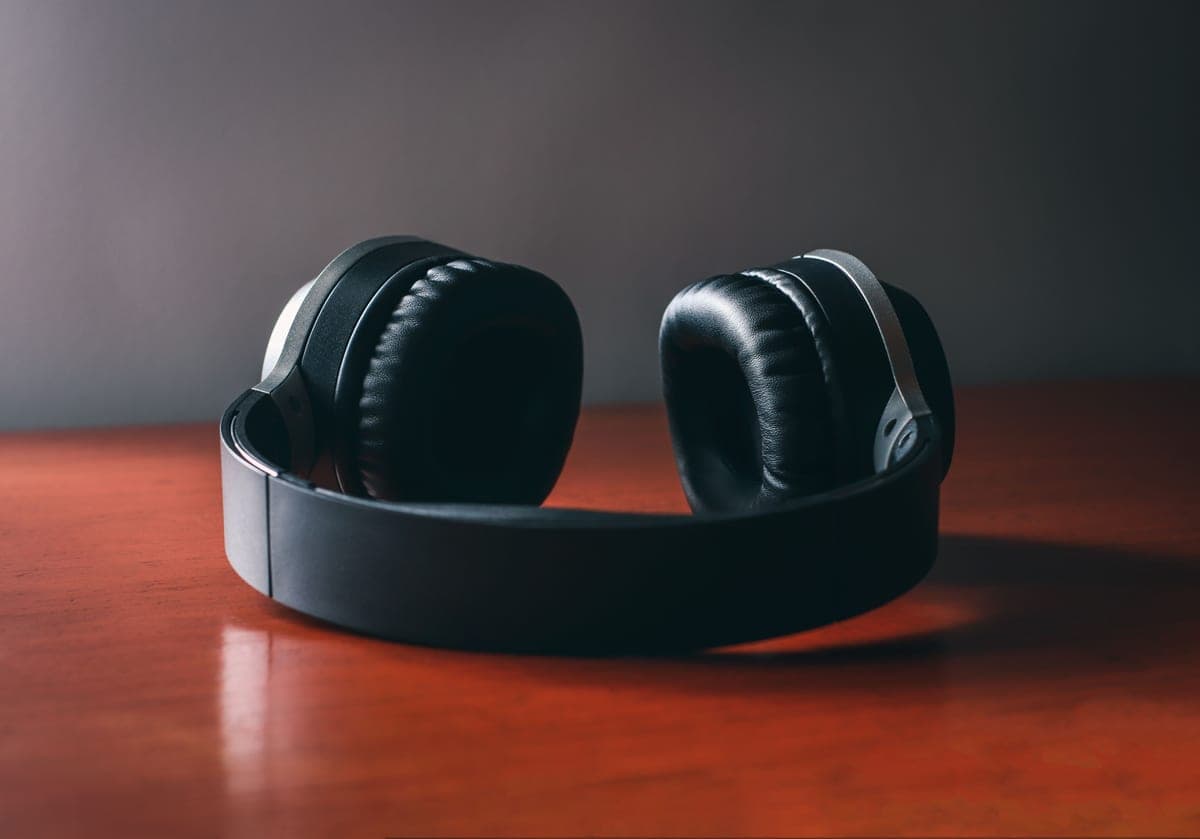
The Sennheiser HD 600 is the best open-back for mixing if your interface can drive 300 ohms — it remains the midrange reference most engineers have calibrated against. If it cannot, the Beyerdynamic DT 900 Pro X at 48 ohms gets you open-back honesty from a laptop output, and the Sennheiser HD 490 Pro at 130 ohms and 105 dB SPL sits between them.
Open-back headphones exist for one reason: the earcup is not sealed, so there is no pressure chamber behind the driver and no cup resonance to colour the low end. Reverb depth and stereo width read more honestly as a result. The trade is total — they leak in both directions, so they are useless for tracking with a live microphone in the room.
What to look for in an open-back mixing pair
- An impedance your output can drive. First, because nothing else matters if the pair never reaches a usable level. 48 ohms works from anything; 300 ohms needs real voltage swing.
- A midrange you can learn. Mixing on headphones is a calibration exercise. The pair whose midrange thousands of engineers have internalised has a practical advantage over a technically flatter one nobody references.
- Comfort over hours, not minutes. Headphone mixing sessions end when your head hurts. Clamp force and weight are specifications here, not luxuries.
- Replaceable parts. Pads flatten and change the frequency response. A pair you can re-pad is a pair that keeps its calibration.
- One fixed voicing. Swappable pads that change the tonality give you two references, which is one more variable than a mix decision wants.
What is not on the list is a frequency-response range. A 12 Hz to 39 kHz figure tells you almost nothing about how a pair of headphones presents a mix, and all three of these are capable far beyond the audible band.
The three open-backs, ranked
The reference, the modern alternative that laptops can drive, and the easiest load here. Ranked on mixing usefulness with the drive requirement called out on each.
Sennheiser HD 600
Top pickSennheiser · The long-standing mixing reference
Buy it for mixing if your interface can drive 300 ohms — the SSL 2+ and MOTU M2 can, a bus-powered budget box may struggle. Do not buy it as your only pair if you also track with a live mic in the room.
Why it is here
- The midrange presentation most mixing engineers have calibrated their ears against
- Open-back, so reverb depth and stereo width read honestly
- Fully serviceable — pads, cable and headband are all replaceable
What it costs you
- 300 ohms needs a headphone output with real voltage swing; a weak one sounds thin and quiet
- Open-back leaks straight into any live microphone, so it is useless for tracking
- Low end rolls off early by modern standards
Sennheiser HD 490 Pro
Sennheiser · A modern open-back that laptops can drive
The pick if you mix on a laptop or a modest interface and the HD 600's 300 ohms would leave you short of level. If your interface has a strong headphone amp, the HD 600 gets you most of the way for much less.
Why it is here
- 130 ohms and 105 dB SPL means it plays loud enough from modest outputs, unlike the HD 600
- Ships with two pad sets that genuinely change the voicing for mixing versus listening
- Lighter than the HD 600 over a long session
What it costs you
- Costs considerably more than the HD 600 it is voiced against
- Two pad sets means two references, which is one more variable than you wanted
- Open-back, so still no good for tracking
Beyerdynamic DT 900 Pro X
Beyerdynamic · Open-back detail with no amplifier requirement
The right open-back if you want mixing honesty from a laptop or an interface with a weak headphone amp. The HD 600 is still the more neutral midrange if you can drive it.
Why it is here
- 48 ohms is the easiest open-back here to drive — a phone dongle manages it
- Detachable cable with two lengths in the box
- Beyerdynamic spare-part support, same as the DT 770
What it costs you
- Slightly bright, in the family tradition
- Open-back rules out tracking with a live mic
- Beyerdynamic does not publish a full response spec for this model in the same detail as the DT 770
Why the HD 600 still wins
Two reasons, and neither is measurement. First, its midrange presentation is the most widely internalised reference in the category — if a mix translates on an HD 600, there is a very large body of shared experience saying it will translate elsewhere. Second, it is fully serviceable: pads, cable and headband all replace, so the pair you learn stays the pair you own.
The cost is 300 ohms at 97 dB, which is a genuine load. The low end also rolls off early by modern standards, which is a real limitation and a smaller one than it sounds — the bottom octave is the part of a mix least reliably judged on headphones in any case.
When to pay more for the HD 490 Pro
When your output is modest. 130 ohms and 105 dB SPL means it plays loud enough from a laptop or a bus-powered interface, which the HD 600 may not. It is also lighter over a long session.
It costs considerably more than the HD 600 it is voiced against, and it ships with two pad sets that genuinely change the tonality — useful for listening, unhelpful for calibration. Pick one set and stay on it.
Open-back or closed-back?
If you only buy one pair and you also track with a live microphone, buy closed-back. Open-back leakage goes straight into a cardioid dynamic a hand's width from your face, and a bleed problem on a vocal take is worse than a slightly coloured mix reference.
If you already own a usable closed-back for tracking, an open-back is the better second purchase than a better closed-back — see best closed-back headphones for recording for that half of the shelf, and best headphones for mixing for the field across both designs.
What we did not pick, and why
- The AKG K371. Measures closest to a target curve of anything we cover, and is closed-back. It is the better single-pair choice, and not an open-back.
- The Beyerdynamic DT 700 Pro X. Flatter than the DT 770 and also closed. Same reasoning.
- Planar magnetic open-backs. A real step up in resolution and a real step up in amplifier requirement, at prices outside this site's range.
- Open-backs for tracking, at any price. Not a ranking decision — a physical one. They leak.