Buy the Adam Audio T5V if your room is small and untreated and your work is voice or acoustic material: a 5-inch woofer excites fewer room modes, and the 1.9-inch U-ART ribbon tweeter resolves sibilance and reverb tails a dome cannot. Buy the Kali LP-6 V2 if you have corner traps in and need real low end — 47 Hz at +/-3 dB from a 6.5-inch driver, with boundary EQ switches that are the only honest answer to a speaker near a wall.
Two of the most recommended monitors under the mid-tier, and they are solving different problems. Kali's pitch is bandwidth and placement flexibility. Adam's is resolution at the top. Neither is a mistake; buying the wrong one for your room is.
Read the tolerances before you compare the numbers
45 Hz looks lower than 47 Hz, so the Adam looks like it reaches deeper. It does not necessarily: Adam's figure is quoted at -6 dB and Kali's at +/-3 dB, which is a stricter test. Kali also publishes a -10 dB figure of 39 Hz, which is the number most manufacturers would have printed on the box and called the headline.
The honest reading is that the 6.5-inch Kali reaches lower in a room that can support it, and that the difference is smaller than the raw figures suggest. Whenever two monitors quote different tolerances, the comparison is about physics — driver size and cabinet volume — not about who wrote the better spec sheet. 5-inch vs 8-inch studio monitors covers what driver size actually buys.
Why the smaller woofer can be the better buy
This is the part that feels backwards. In a small untreated room, more low-frequency output is not an advantage — it is more energy going into room modes, the standing waves between parallel walls that make bass wildly loud at one listening position and absent two feet away. You then mix against a bass response that is your room's, not your monitor's.
A 5-inch driver simply excites less of that. You lose real information below about 50 Hz and you gain a midrange you can trust, which for voice work is the entire job. Best studio monitors for an untreated room is the longer argument, and it is the one most home studios should read before buying either of these.
Boundary EQ is the Kali's best feature
The LP-6 V2 has switches on the back that compensate for where the speaker actually sits — against a wall, on a desk, in a corner. That is not a gimmick, it is an acknowledgement that almost nobody has their monitors on stands in free space, and that a rear-ported 6.5-inch cabinet near a wall produces a large low-frequency boost that no amount of mix experience corrects for.
Set honestly, the switches make the LP-6 work in placements where a larger monitor has no business being. Left at the default in a bad placement, the extra low end makes your mixes worse than the smaller Adam would have. The feature only helps if you use it.
Both monitors, and the flat reference people cross-check against
Kali Audio LP-6 V2
Top pickKali Audio · The most low end per dollar, with boundary EQ
The best value here if you set the boundary EQ honestly and have corner traps in. In a bare bedroom with the switches left at default, the extra low end makes your mixes worse, not better, and the HS5 is the wiser buy.
Why it is here
- 47 Hz at +/-3 dB is real low end, not a marketing figure
- Boundary EQ switches on the back are the only honest answer to a speaker jammed against a wall
- 115 dB max SPL means huge headroom for a desk speaker
What it costs you
- That low-end reach is a liability in an untreated room — you will chase room modes, not mix decisions
- 6.5-inch driver in a small room needs the boundary EQ set correctly or it is worse than an HS5
- Paper cone is more fragile than the alternatives
Adam Audio T5V
Adam Audio · Detail at the top, from a ribbon tweeter
Buy it if your work is voice and acoustic material where sibilance and reverb decisions matter, and you will listen at moderate levels. If you mix loud, or find bright speakers tiring, the HS5 is the safer reference.
Why it is here
- The ribbon tweeter resolves reverb tails and sibilance detail a dome cannot
- 45 Hz from a 5-inch cabinet is excellent
- Response to 25 kHz means no audible top-end rolloff at all
What it costs you
- That top-end detail is fatiguing over a long session until you adapt to it
- 20 W on the tweeter is modest if you mix loud
- Ribbon tweeters are less robust than domes if you clip them
Yamaha HS5
Yamaha · The flat midrange reference for a small room
The right monitor for an untreated or lightly treated small room, precisely because it does not pretend to have low end your room could not reproduce honestly anyway. If you need to hear below 74 Hz, add a treated room before you add a bigger speaker.
Why it is here
- The honest -3 dB figure of 74 Hz tells you what it will not do, which is rarer than it should be
- Midrange is flat and unflattering, which is the entire job of a monitor
- Small enough to sit at ear height on a desk without dominating the room
What it costs you
- Nothing below about 74 Hz, so you mix low end by trust rather than by ear
- Unforgiving — a rough mix sounds rough, which some people hate
- Rear port needs clearance from the wall
What the ribbon tweeter actually does
The T5V's U-ART tweeter is a folded ribbon rather than a dome, and it runs to 25 kHz. In practice it resolves the decay of reverb, the shape of sibilance and the detail of room tails in a way a dome at this price does not. For voice-over, podcast editing and acoustic recording — where the decisions you make are mostly about sibilance, breaths and ambience — that is the most useful kind of resolution you can buy.
The cost is fatigue. Bright, highly resolving monitors are tiring across a long session until you adapt to them, and the T5V's 20 W on the tweeter is modest if you work loud. If you find detailed speakers wearing, this is not the pair for you.
Which to buy
- Small or untreated room, voice-led work: T5V. Less room excitation, more top-end detail where your decisions live.
- Treated room with corner traps, music production: LP-6 V2. The low end becomes usable information rather than a problem.
- Monitors jammed against a wall and no way to move them: LP-6 V2, specifically for the boundary EQ switches.
- You work loud, or bright speakers tire you: LP-6 V2, or the flatter Yamaha HS5.
What matters more than either choice
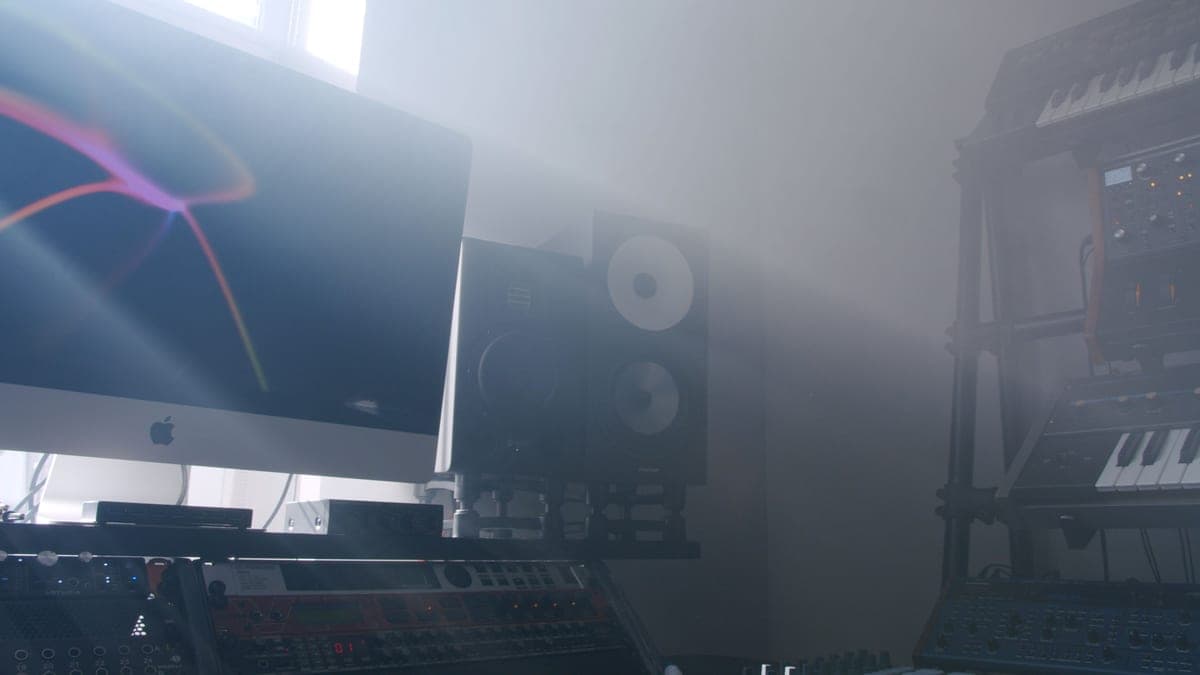
Placement. A monitor on the desk surface, below ear height and angled at your chest, is working against itself no matter which badge is on it — the desk couples to the cabinet and the tweeter is off axis. Get the tweeter to ear height, point it at your head, pull the cabinet off the desk, and you will hear a bigger change than the difference between these two speakers.
Studio monitor placement is the order of operations, and monitor isolation pads vs stands covers how to get there. After that, two bass traps in the corners does more for the low end than upgrading from a 5-inch to a 6.5-inch driver.