The Auralex ProPanel is the best acoustic panel for a home office: a published NRC of 1.05 and a Class A fire rating per ASTM-E84, in a finished fabric-wrapped format that reads as wall art rather than studio equipment. The ATS Acoustics Panel (2-inch) is the value pick at NRC 0.95 with the same Rockwool AFB core, and the Primacoustic Broadway is the one to buy if the panels will be moved.
A home office is a different acoustic problem from a recording room, and the difference is what you are trying to achieve. A studio wants a controlled decay for a microphone. An office wants speech intelligibility — on your calls, on the recordings you make at your desk, and for your own concentration — in a room that still has to look like a room people work in.
That shifts the priorities. Deep corner bass trapping, which dominates a studio treatment plan, is mostly unnecessary here because speech energy lives above 100 Hz. What you need instead is broadband midrange absorption at the first reflection points, in a format with a finish and a mounting system you can actually live with.
The 125 Hz column is the one to read carefully. The ATS panel absorbs 0.12 at 125 Hz and 0.67 at 250 Hz — which is to say a 2-inch panel does almost nothing in the bottom two octaves, and the published figures say so plainly. For office speech that is fine. If your problem is a hum from the floor below or a boomy voice on recordings, a thicker panel or a corner trap is the answer instead. Acoustic panels vs bass traps covers the distinction.
The four panels, ranked for an office
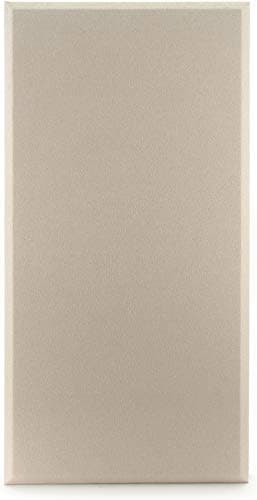
Auralex ProPanel (2-inch)
Top pickAuralex · A finished panel from the best-known brand
A sound choice for first reflection points where appearance matters. Do not expect a 2-inch panel to fix corner bass, whatever its NRC says — that is a measurement of the 250 Hz to 2 kHz band only.
Why it is here
- NRC 1.05 is the highest mid-band figure of any 2-inch panel here
- Beveled fabric-wrapped edges look finished on a visible wall
- Widely stocked, so it arrives quickly
What it costs you
- Two inches of depth will not reach the low-mid buildup that makes small rooms sound bad
- Auralex is best known for foam, and buyers routinely confuse the two product lines
- No independent lab named on the published data
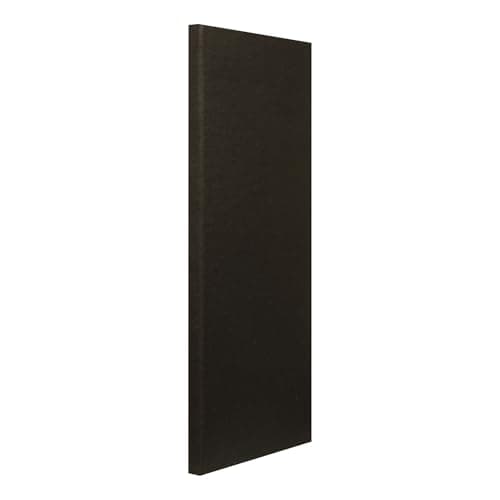
ATS Acoustics Panel (2-inch)
ATS Acoustics · The value finished panel
The best value in a finished panel for flutter echo and first reflections, and the money saved buys the depth that actually changes the room. Read its own `125 Hz` figure before you buy four of them to fix boxiness: at `0.12` it will not, and the 4-inch version of the same panel reaches `0.65`.
Why it is here
- Mineral-wool core at a price close to foam kits
- NRC 0.95 is within a rounding error of panels costing twice as much
- Publishes its figure at `125 Hz` as well as its NRC, which is the honest way to describe a thin panel
What it costs you
- `0.12` at `125 Hz` is the 2-inch depth limitation stated plainly — this is a high-frequency device
- Edges are softer than Primacoustic's resin-hardened ones
- Not fire rated, which rules it out of some rented rooms
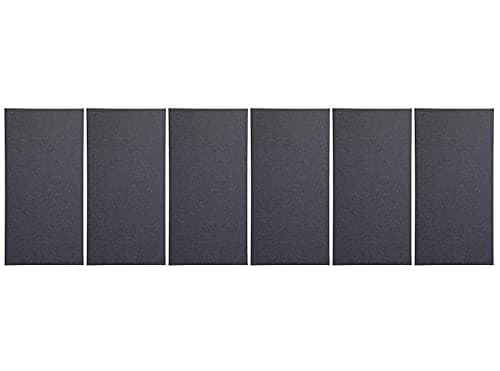
Primacoustic Broadway Broadband Panel (6-pack)
Primacoustic · Rigid-edge panels that survive being moved
The right buy if you are treating a whole room at once, want a finished durable panel and cannot build your own — six panels is enough for both first-reflection points plus the wall behind you. Note that NRC 1.00 at 2 inches is not a low-frequency claim: corners still need depth, so pair it with something thicker.
Why it is here
- 6 lb/ft3 density is at the high end of what is used for broadband absorption
- Resin-hardened edges mean the corners survive handling, unlike bare mineral wool
- Class A/1 fire rating, which matters if the room is rented
What it costs you
- The 2-inch version's NRC of 1.00 says nothing about what it does below 250 Hz
- Sold only as a six-panel set, so it is the largest single outlay on this page by a wide margin
- Color range is limited
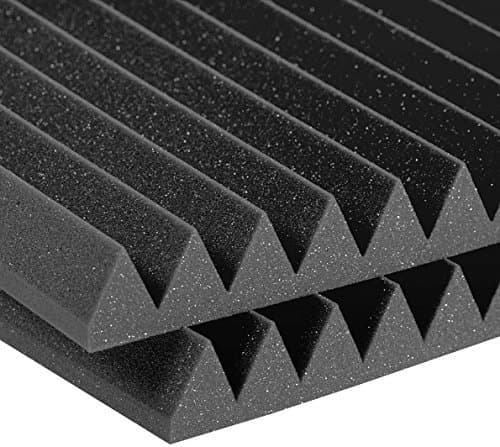
Auralex Studiofoam Wedges
Auralex · Killing flutter echo, and nothing more
Buy it only if your specific complaint is a hard, flappy echo in a tiled or bare room. If your complaint is that your voice sounds boxy or your mixes have too much bass, this is the wrong product and mineral wool is the right one.
Why it is here
- Genuinely effective above roughly 1 kHz, which does tame slap echo in a hard room
- Light, so it mounts with adhesive rather than fixings
- The real Auralex product, with published performance data, unlike the unbranded kits
What it costs you
- 0.23 at 125 Hz is less than half what mineral wool of the same depth achieves
- The low-mid buildup that makes a bedroom sound boxy is exactly what it does not touch
- Foam yellows and crumbles over years
What NRC is, and what it hides
Noise Reduction Coefficient is an average of a material's absorption at 250, 500, 1,000 and 2,000 Hz, rounded to the nearest 0.05. A value of 1.00 means the panel absorbs essentially all the energy arriving at it across those four bands.
Two things follow from that definition. First, NRC is a genuinely good single number for speech work, because those four bands are where intelligibility lives. Second, it tells you nothing at all about 125 Hz or below, because 125 Hz is not in the average — which is why a foam panel can read respectably on a product page and do nothing about a boomy room.
So for an office, NRC is the right figure to compare, and the ProPanel's 1.05 against the ATS panel's 0.95 is a real if modest difference. For anything involving low frequencies, ignore NRC entirely and look for a published figure at 125 Hz. Do acoustic foam panels work is the long version of that argument.
Where to put four panels in an office
- The wall behind your screen, directly in front of where you sit. This is the surface your voice hits and returns from on every call, and treating it does more for intelligibility than any other single panel.
- The wall behind your head. The second half of the same path — sound leaves your mouth, hits the far wall, comes back past you, hits the wall behind you and returns again. One panel here kills the longest reflection in the room.
- The nearest side wall, at seated ear height. If the desk is against one wall, this is the hard surface closest to your mouth.
- Above the desk, or on the ceiling. The surface people forget, and often the hardest one in a room with a rug on the floor. Acoustic treatment for ceiling covers mounting.
Four panels placed like that will noticeably change how the room sounds on a call and how your voice records. Four panels spread evenly around the room for symmetry will do considerably less, which is the most common way an office treatment budget gets wasted.
Why foam is last, and why it is on the list at all
Auralex Studiofoam Wedges publish 0.23 absorption at 125 Hz at 3 inches of thickness. Against a mineral wool panel at 0.53 or more, that is not competitive, and it is the reason foam has a poor reputation among people who read test data.
It is on this list because it does one job well and cheaply: killing flutter echo, the fast slapback you hear when you clap in a bare room with two parallel hard walls. In a small office with no soft furnishings that flutter is a real contributor to speech fatigue, and foam is the cheapest way to remove it. What it will not do is make your voice sound less boxy on a recording. Acoustic foam vs mineral wool panels has the comparison with figures.
What we did not pick, and why
- Corner bass traps. The right purchase for a mixing room and overkill for office speech, which lives above the band they work in. Best bass traps.
- Hexagonal and patterned foam tiles. Sold on appearance, with no published absorption data in most cases. If a manufacturer will not state an NRC, there is a reason.
- Soundproofing products. Panels absorb reflections inside the room; they do not stop noise entering or leaving it, and nothing on this page will quiet a neighbour. Soundproofing vs acoustic treatment is explicit about that.
- Portable vocal shields. A good tool in front of a microphone and not a room treatment. Best reflection filters.
Pair it with
- A dynamic microphone, if you record at this desk. It hears less of whatever the panels do not catch. Best microphones for YouTube is the desk-recording field.
- A rug, and anything soft. Free absorption you may already own.
- A reflection filter, if you cannot mount anything on the walls at all. Do reflection filters work.
How to choose
- Best absorption with a finish you can live with: Auralex ProPanel. NRC 1.05 and a Class A fire rating.
- Same core, less money: ATS Acoustics Panel (2 in). NRC 0.95, with published figures at 125 and 250 Hz so you know its limits.
- Panels that will be moved or taken with you: Primacoustic Broadway. Resin-hardened edges survive rehanging.
- Flutter echo only, on the smallest budget: Auralex Studiofoam Wedges. Accept that it does nothing below 250 Hz.
If this office is also where you record, read treating a bedroom studio next — the panel count goes up, the positions change, and the 125 Hz column stops being something you can ignore.