The Rode PodMic is the best microphone for most YouTube channels: at -57 dBV/Pa it is hot enough for a modest interface, it is a dynamic so it ignores the untreated room you are filming in, and it has an internal pop filter and shockmount so nothing else needs buying. If your interface publishes 60 dB of gain or more, the Shure SM7B is the upgrade.
Microphone roundups written for YouTube almost always rank on frequency response, which is the wrong first question. A YouTube voice track is recorded in a room with no treatment, with a fan running and a camera a metre away, and it is then played back through a laptop speaker, a phone speaker or cheap earbuds. The microphone that wins that chain is the one that hears the least of your room, not the one with the flattest chart.
That pushes the answer toward dynamic capsules, and it pushes hard. A dynamic needs a lot of air movement to generate a signal, so a reflection arriving off the wall behind you — quieter than your voice and three feet further away — produces almost nothing. A condenser produces a usable signal from it, which is exactly why a condenser sounds glorious in a treated room and hollow in a bare one. Dynamic vs condenser microphones has the full argument.
Note the BP40 at -48 dB and the AT2035 at -33 dB: both are far hotter than the SM7B, and the AT2035 is hotter by roughly 26 dB. That number is the whole reason the condenser keeps appearing in cheap-interface recommendations, and it is also why the condenser is the riskiest pick on this list for a bare room.
The five microphones, ranked for a YouTube voice track
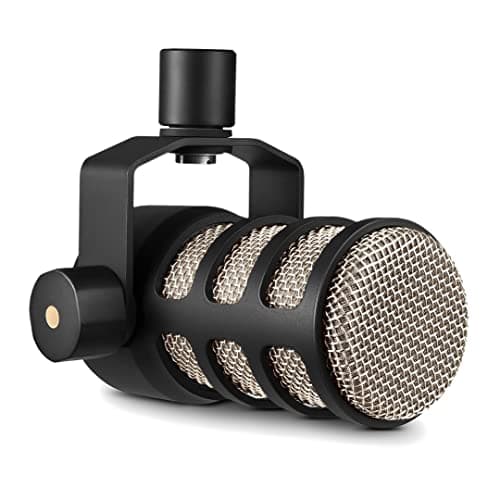
Rode PodMic
Top pickRode · The best value in a broadcast dynamic
The pick for most people upgrading from a USB mic: it gets you 90 percent of the broadcast-dynamic sound without the booster arithmetic. Choose the SM7B instead if your voice is already bass-heavy and you want the bass-rolloff switch.
Why it is here
- At -57 dBV/Pa it needs about 2 dB less gain than an SM7B, which is enough to matter on a 58 dB interface
- Internal pop filter means one less thing clamped to your arm
- All-metal body at a fraction of the SM7B's price
What it costs you
- Voiced with more low-mid weight than the SM7B, so a boomy voice can get boomier
- No voicing switches, so you fix tone in the DAW rather than on the mic
- Still low enough output that a 55 dB interface will be working hard
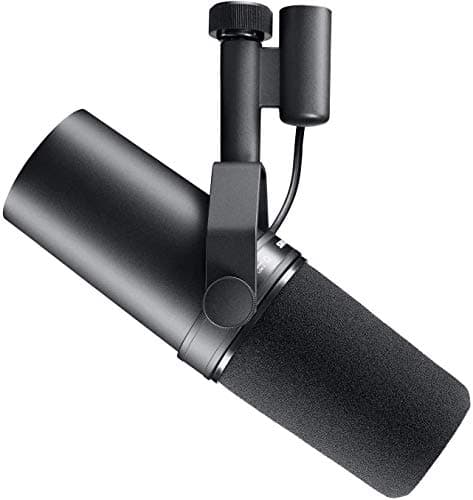
Shure SM7B
Shure · The default upgrade, if your preamp can feed it
Buy it if your interface supplies 60 dB or more of clean gain, or if you are budgeting for a booster alongside it. Buy something else if your only interface is a Scarlett Solo and you are not prepared to add hardware.
Why it is here
- Rejects room and computer-fan noise better than any condenser at any price
- Two voicing switches let one mic cover a thin voice and a boomy one
- Internal shockmount and a yoke that actually holds position on a boom arm
What it costs you
- At -59.0 dBV/Pa it is one of the quietest mics sold, so it demands a loud preamp
- Total cost is the mic plus, very often, a booster
- Heavy enough that a cheap desk arm will droop under it
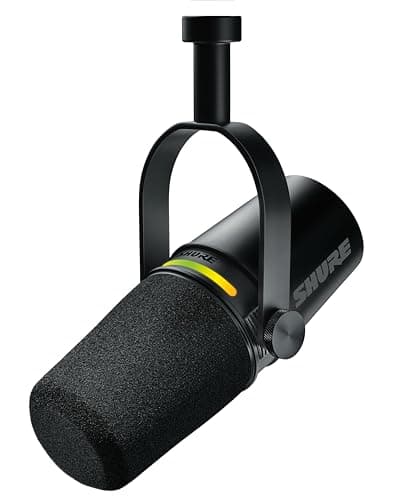
Shure MV7+
Shure · Keeping a USB fallback while you move to XLR
The honest transition mic: it works on your laptop today and on your interface next month. If you know you are committing to XLR and never going back, the same money buys a better-sounding pure-XLR dynamic.
Why it is here
- -55 dBV/Pa is roughly 4 dB hotter than an SM7B, which removes the booster question entirely
- USB side keeps working when you travel without the interface
- DSP and the LED panel are genuinely useful for a solo host with no engineer
What it costs you
- Frequency response stops at 16 kHz, so it is voiced for speech rather than music
- The DSP features only exist on the USB path, not the XLR path
- You are part-paying for a converter you stop using the day the interface arrives
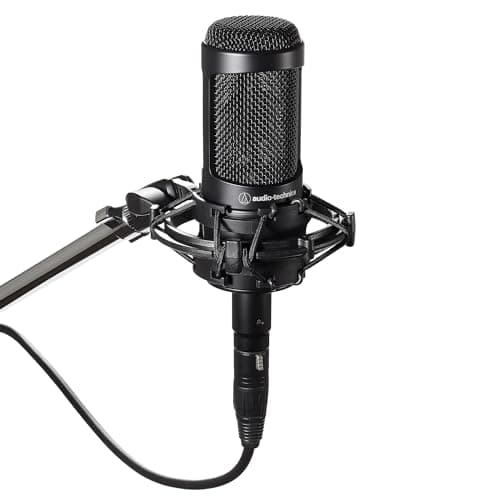
Audio-Technica AT2035
Audio-Technica · The value condenser with the switches you actually need
The condenser to buy if you are choosing on value: the high-pass filter and the 8 dB quieter noise floor are worth more in a real room than anything else in this price band. Skip it if you have not treated the room, in which case a dynamic is the better purchase.
Why it is here
- 12 dB self-noise against the AT2020's 20 dB is an audible 8 dB of quiet for a small price step
- The 80 Hz high-pass is the single most useful switch on a desk-mounted condenser
- Ships with a real shockmount, not a plastic clip
What it costs you
- Still a condenser, so the room rules apply
- Slightly forward upper midrange that some voices find harsh
- The 10 dB pad is mostly irrelevant for voice work
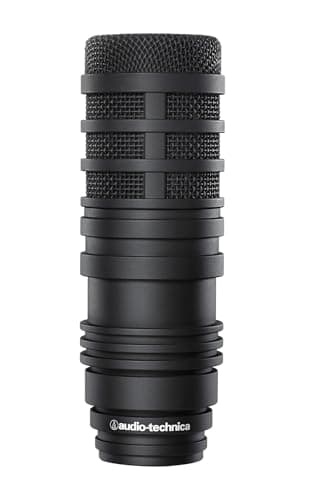
Audio-Technica BP40
Audio-Technica · Tighter pickup than a cardioid in a live room
The pick when your problem is a live-sounding room and a weak preamp at the same time: the narrow pattern and the hot output solve both. Avoid it if you or your guests cannot stay on-axis.
Why it is here
- At -48 dB it is dramatically hotter than an SM7B and needs no booster on anything modern
- Hypercardioid pattern narrows the pickup further than the cardioid competition
- Switchable 100 Hz rolloff at 6 dB/octave for close work
What it costs you
- 632 g needs a serious arm or stand
- Hypercardioid punishes sloppy mic technique — step off-axis and you vanish
- Voiced large and forward, which is not every voice's friend
Whether the microphone is in frame changes the answer
This is the one genuine difference between choosing a microphone for YouTube and choosing one for a podcast: on YouTube the microphone is usually visible, and visible changes two things. First, you can mic much closer than you would for an off-camera setup, which raises your voice level relative to the room and makes a quieter capsule workable. Second, it becomes a prop, and a broadcast dynamic on a boom arm reads as a deliberate choice in a way a plastic desk stand does not.
If the microphone must stay out of shot, the calculation inverts. Off-camera means further away, further away means more room in the recording, and more room means a dynamic is not a preference any more but a requirement. The BP40's hypercardioid pattern earns its place here: a tighter pickup angle than a cardioid, so a microphone at the edge of frame hears less of the space around it.
Either way the mount matters more than people expect. A 632 g BP40 on a cheap spring arm will droop by the second take — best boom arms for microphones covers load ratings, and boom arm vs desk stand covers which one stays out of shot.
Check your interface's gain figure before you choose
Every microphone on this list except the AT2035 is a dynamic, and dynamics are quiet. The SM7B at -59.0 dBV/Pa is the quietest thing here and needs roughly 60 dB of clean gain to sit at a usable level for speech. A Focusrite Scarlett 2i2 publishes 69 dB and clears it easily. A 55 dB box does not, and the result is hiss you will hear on every quiet sentence.
The PodMic at -57 dBV/Pa and the MV7+ at -55 dBV/Pa are 2 dB and 4 dB hotter respectively, which is exactly the margin that makes them safe on interfaces that would struggle with the Shure. If you already own the interface, read its published figure first and then pick the capsule — how much clean gain do you need lists the figure for every interface on this site, and best audio interfaces for the Shure SM7B lists only the boxes that clear it.
What we did not pick, and why
- USB condensers with a shock-mount basket. The best-selling YouTube microphone category is also the worst match for the job: a sensitive capsule in an untreated room, with no way to add gain structure later. USB vs XLR microphones is the honest comparison.
- Lavalier and shotgun microphones. The right answer for on-location video and the wrong answer for a seated talking-head recorded at a desk, which is what this page is about.
- Large-diaphragm condensers above the AT2035. Lovely in a treated room. If your room is treated, best condenser microphones for vocals is the page you want instead.
- Anything that does not publish a sensitivity figure. You cannot plan a gain budget around a marketing page, and a microphone whose manufacturer will not state the number is a microphone you are buying blind.
Pair it with
- An interface with a published gain figure. Best audio interfaces for vocals ranks on exactly that.
- Two panels at the first reflection points. The cheapest real improvement to a voice track. How to treat a room for recording.
- Closed-back headphones, so you hear plosives and clothing noise while you record rather than in the edit. Best closed-back headphones for recording.
How to choose
- Most channels, untreated room, microphone in frame: Rode PodMic. Hot enough for a cheap interface, nothing else to buy.
- Your interface publishes 60 dB or more: Shure SM7B. The room rejection and the two voicing switches are worth the gain demand.
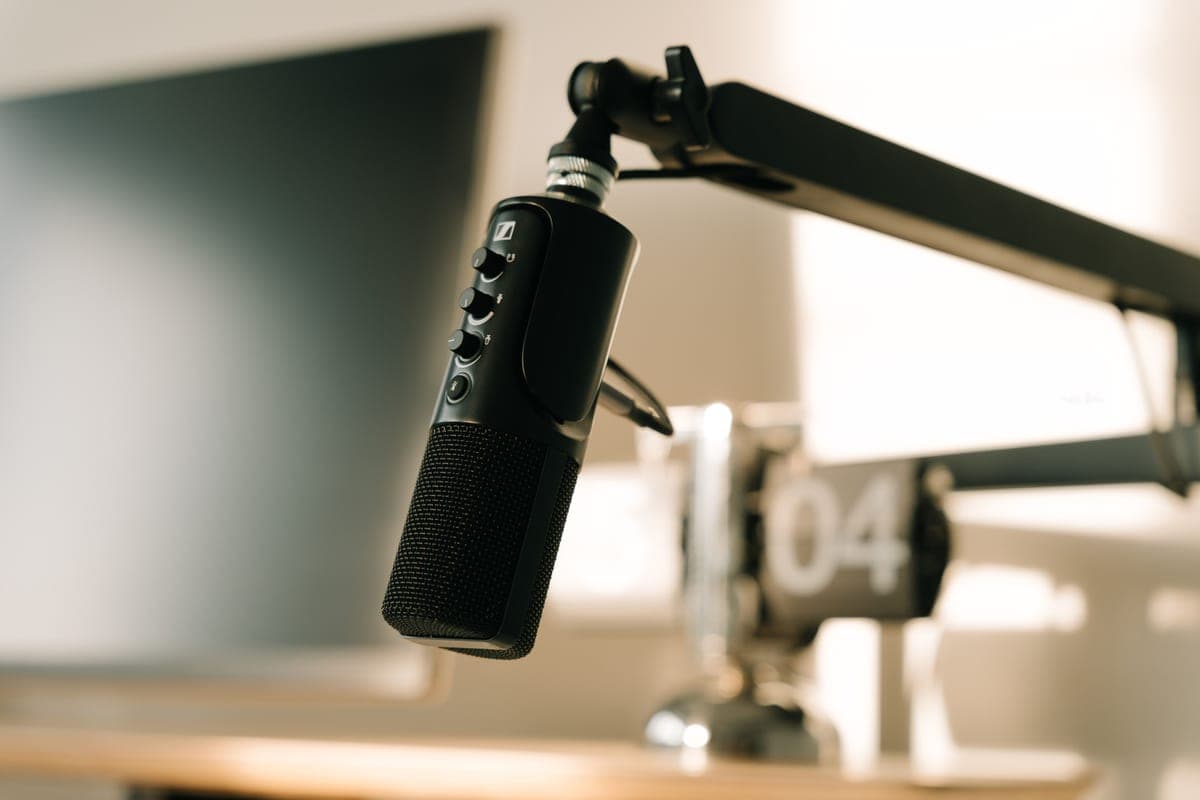
- You want a USB fallback while you transition: Shure MV7+.
- Treated room, you want detail rather than isolation: AT2035. The 80 Hz high-pass and 10 dB pad are the switches you will actually use.
- Microphone must sit at the edge of frame: Audio-Technica BP40. Hypercardioid hears less of the room than any cardioid here.
One closing point that applies to every pick: your audience will hear the room before they hear the microphone. If you have a fixed budget and a bare room, a PodMic plus two panels beats an SM7B on its own, every time. Acoustic treatment on a budget is the unglamorous half of a good voice track.