Buy the Zoom PodTrak P4 unless you genuinely need live mixing: 70 dB of gain, four mic preamps and four headphone outputs at a fraction of the RodeCaster's price is the whole job for most multi-person podcasts. Buy the RodeCaster Pro II if post-production time is your real constraint and you want to finish the mix live.
Gain is not the deciding factor here
This is the one comparison on this site where gain does not decide it. 76 dB and 70 dB are both far beyond what any microphone here demands — four SM7Bs at -59.0 dBV/Pa are comfortable on either box with no booster in sight. The RodeCaster's -131.5 dBV EIN is genuinely excellent, and Zoom's 70 dB is ample.
So the choice is about workflow. Do you want to finish the show live, or capture it clean and finish it later?
Choose the RodeCaster Pro II if
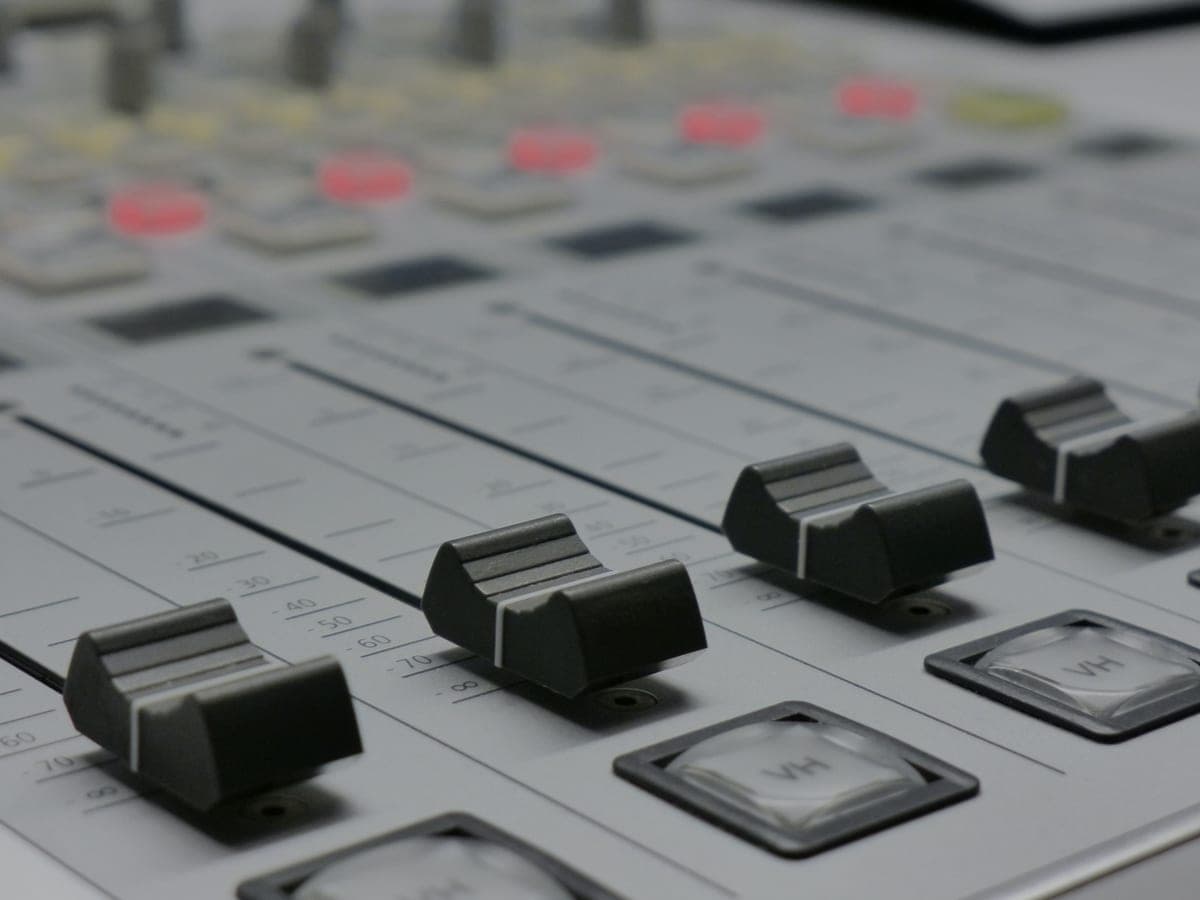
- Editing time is your real bottleneck. Six physical faders and onboard processing means one person can run and mix a four-person show as it happens.
- You play in sound beds, stings or pre-recorded segments live from pads.
- You need multichannel USB to a computer, for streaming or for recording separate tracks into a DAW at the same time.
- You record in a fixed location and mains power is never a question.
Choose the Zoom PodTrak P4 if
- You capture and edit afterwards, which is how most podcasts are actually made.
- You record in different places. AA batteries means a park bench, a hotel room, a client's office.
- Four headphone outputs with individual level control is the feature you actually need, and it is the real bottleneck in group recording.
- The price difference is better spent on microphones and treatment.
The limitation on each that people discover too late
PodTrak P4: only two channels reach your computer over USB. You can record four microphones to the SD card as separate tracks, but you cannot send four separate channels to a computer live. If you want to stream four individual mics, this is the wrong box.
RodeCaster Pro II: the onboard processing is a commitment. If you mix live and only keep the mixed output, a guest who was too loud stays too loud. Record the isolated tracks alongside the mix — the box can do it, and you should.
Monitoring and routing
Both give four people their own headphones, which is the thing a normal two-input interface cannot do and the reason either of these exists. The PodTrak gives each output its own level control, which in practice matters more than the mix-minus sophistication above it — everyone wants a different volume.
What else you need to buy
- Four microphones with strong rejection. Four open condensers in one room hear each other and each other's headphones. Best dynamic microphones for vocals.
- Four sets of closed-back headphones. Open-backs leak into live microphones. Best headphones for mixing covers the distinction.
- Four arms or stands. Best mic stands.
- An SD card for the PodTrak. It records to card, not to the box.
Both recorders in detail
Zoom PodTrak P4
Top pickZoom · Four mics, four headphone outs, battery power
The best value in group podcast recording: four hot preamps and four headphone feeds is the whole job. Step up to the RodeCaster Pro II only if you need live mixing rather than multitrack capture.
Why it is here
- 70 dB of gain feeds four SM7Bs, which nothing else at this price does
- Four headphone outputs with individual level control — the actual bottleneck in group recording
- Runs on AA batteries, so it records anywhere
What it costs you
- No faders, no onboard EQ or compression
- Only 2 channels reach the computer over USB, so live-streaming four separate mics is out
- Plastic build and a small screen
Rode RodeCaster Pro II
Rode · A multi-guest show with no engineer
The right purchase when you regularly record three or four people and post-production time is your real constraint. For one or two voices an interface plus a DAW does the same job for a fraction of the money.
Why it is here
- 76 dB of gain and -131.5 dBV EIN means any microphone on this site works with room to spare
- Six physical faders and onboard processing let one person run a four-person show live
- Records multitrack to its own storage, so a laptop crash is not a lost episode
What it costs you
- Far more money than an interface, and most of it buys features a solo host never uses
- The onboard processing is a commitment unless you record raw tracks alongside
- Big, and it owns your desk
If neither: the third option
If you are really recording two people rather than four, an interface with two mic preamps and two headphone outputs is a much cheaper answer — the SSL 2+ MKII. Two-person podcast setup walks that rig properly.