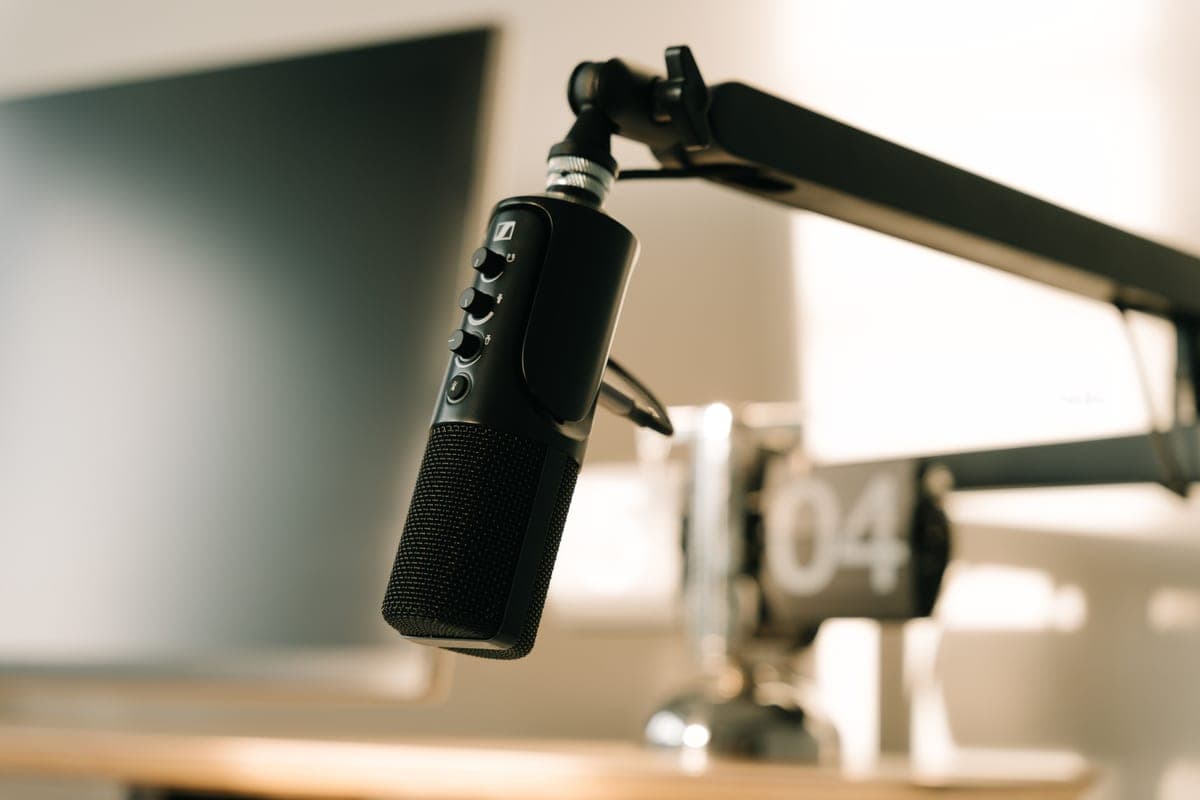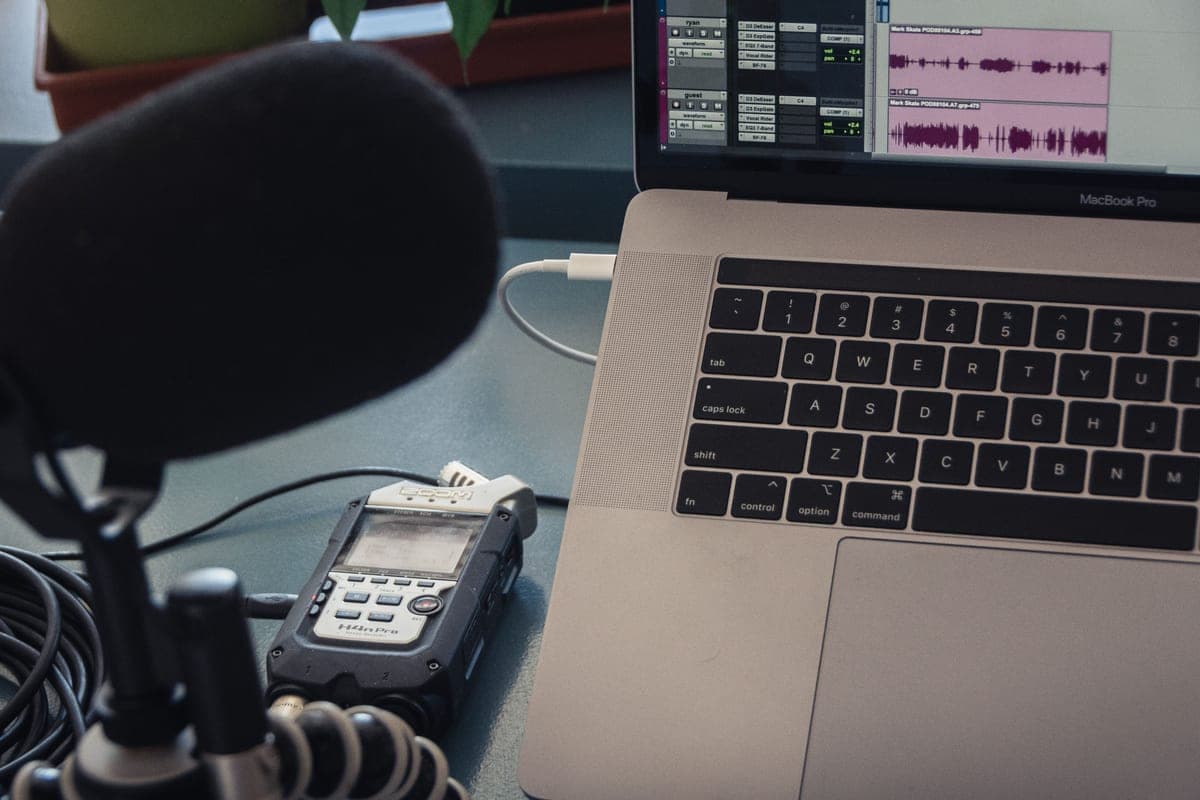
The Elgato Wave DX is the best dynamic for streaming: at -52 dBV/Pa it is the hottest broadcast-style dynamic here — about 7 dB above an SM7B — so it works cleanly on a modest interface with no booster, and it has an internal pop filter so nothing extra clamps to your arm.
Streaming is not the same job as podcasting, and this page ranks differently from best dynamic microphones for vocals because of three constraints a stream adds.
- A computer is running hard, two feet away. A gaming PC under load is a continuous broadband noise source pointed straight at your microphone. Rejection matters more here than anywhere else on this site.
- The chain has to be simple. You are already managing a scene, a chat and a game. A microphone that needs an inline booster and careful gain staging is a microphone that will be set wrong on stream.
- You are usually on camera. A large body on an overhead arm ends up in frame, and the arm does too.
Output level is the deciding spec
The single most common streaming audio problem is a hissy, thin microphone — an SM7B at -59.0 dBV/Pa on an interface that supplies 55 dB. Nothing is faulty; the arithmetic simply does not work. Choosing a hotter capsule removes the problem instead of managing it.
The SM7B is last on this page and first on several others, which is the point. It is an excellent capsule that demands the most from your chain — the opposite of what a streaming setup wants. If you already own one, the fix is gain rather than a new microphone: an interface with 69 dB or more, or a booster.
The six streaming dynamics, ranked
Elgato Wave DX
Top pickElgato · A streaming dynamic that needs no booster
The most sensible streaming dynamic if you want to plug into a modest interface and stop thinking about gain. If you also record music, the `15 kHz` ceiling is a real limit and a wider-band dynamic is the better buy.
Why it is here
- At `-52 dBV/Pa` it is the hottest broadcast-style dynamic here — `7 dB` above an SM7B, so no interface on this site struggles
- Internal pop filter, so nothing extra clamps to your arm
- Light at `440 g`, which any arm holds comfortably
What it costs you
- Response stops at `15 kHz`, so it is a speech microphone and not a music one
- No voicing switches at all
- Voiced for a close, forward streaming sound that is less neutral than an SM7B
Shure MV7+
Shure · Keeping a USB fallback while you move to XLR
The honest transition mic: it works on your laptop today and on your interface next month. If you know you are committing to XLR and never going back, the same money buys a better-sounding pure-XLR dynamic.
Why it is here
- -55 dBV/Pa is roughly 4 dB hotter than an SM7B, which removes the booster question entirely
- USB side keeps working when you travel without the interface
- DSP and the LED panel are genuinely useful for a solo host with no engineer
What it costs you
- Frequency response stops at 16 kHz, so it is voiced for speech rather than music
- The DSP features only exist on the USB path, not the XLR path
- You are part-paying for a converter you stop using the day the interface arrives
Rode PodMic
Rode · The best value in a broadcast dynamic
The pick for most people upgrading from a USB mic: it gets you 90 percent of the broadcast-dynamic sound without the booster arithmetic. Choose the SM7B instead if your voice is already bass-heavy and you want the bass-rolloff switch.
Why it is here
- At -57 dBV/Pa it needs about 2 dB less gain than an SM7B, which is enough to matter on a 58 dB interface
- Internal pop filter means one less thing clamped to your arm
- All-metal body at a fraction of the SM7B's price
What it costs you
- Voiced with more low-mid weight than the SM7B, so a boomy voice can get boomier
- No voicing switches, so you fix tone in the DAW rather than on the mic
- Still low enough output that a 55 dB interface will be working hard
Audio-Technica BP40
Audio-Technica · Tighter pickup than a cardioid in a live room
The pick when your problem is a live-sounding room and a weak preamp at the same time: the narrow pattern and the hot output solve both. Avoid it if you or your guests cannot stay on-axis.
Why it is here
- At -48 dB it is dramatically hotter than an SM7B and needs no booster on anything modern
- Hypercardioid pattern narrows the pickup further than the cardioid competition
- Switchable 100 Hz rolloff at 6 dB/octave for close work
What it costs you
- 632 g needs a serious arm or stand
- Hypercardioid punishes sloppy mic technique — step off-axis and you vanish
- Voiced large and forward, which is not every voice's friend
Shure SM7B
Shure · The default upgrade, if your preamp can feed it
Buy it if your interface supplies 60 dB or more of clean gain, or if you are budgeting for a booster alongside it. Buy something else if your only interface is a Scarlett Solo and you are not prepared to add hardware.
Why it is here
- Rejects room and computer-fan noise better than any condenser at any price
- Two voicing switches let one mic cover a thin voice and a boomy one
- Internal shockmount and a yoke that actually holds position on a boom arm
What it costs you
- At -59.0 dBV/Pa it is one of the quietest mics sold, so it demands a loud preamp
- Total cost is the mic plus, very often, a booster
- Heavy enough that a cheap desk arm will droop under it
Shure SM58
Shure · The cheapest way to hear what a dynamic does for you
The right first XLR mic if the real question is whether a dynamic fixes your room, because it answers that for very little money on the interface you already own. It is a diagnostic, not a destination.
Why it is here
- At -54.5 dBV/Pa it is the hottest dynamic here, and works on genuinely modest preamps
- Light enough for any stand or arm you already own
- Effectively indestructible, and resells for most of what you paid
What it costs you
- Response stops at 15 kHz and it is voiced for a PA, not a studio
- Handheld grille shape is awkward on a desk boom
- You will outgrow it if voice is your main output
What we did not pick, and why
- Condenser microphones. They hear your PC fan, your keyboard and your room in detail. In a streaming setup that is the opposite of useful — see dynamic vs condenser.
- USB gaming microphones with RGB. Some sound fine. None lets you improve the preamp later, and the lighting is a styling choice rather than an audio one.
- Microphones with onboard analog compression or gating. Processing you cannot undo, printed into a recording you may want to clip later.
- The Rode Procaster. Unverifiable published sensitivity, and this page ranks on exactly that figure.
Pair it with
- An interface built for streaming. Loopback is what lets game and chat audio into your stream cleanly. Best audio interfaces for streaming.
- A low-profile arm, if you are on camera. Best boom arms — the Elgato Wave Mic Arm LP travels below your shoulder line.
- Closed-back headphones. Open-backs leak your own stream audio back into the microphone.
- Something absorptive behind you. Rejection helps; it does not replace treatment.
How to choose
- Check your interface's published maximum mic gain first. Under 58 dB and the Wave DX or BP40 are the sensible picks.
- If you are on camera, prefer a smaller body and a low-profile arm. The BP40 at 632 g is the heaviest here and the most visible.
- If you also want a USB fallback for travel, take the MV7+.
- If your guests are inconsistent about mic technique, avoid the BP40 — its hypercardioid pattern punishes going off-axis.
- If you already own an SM7B, buy gain, not a microphone.