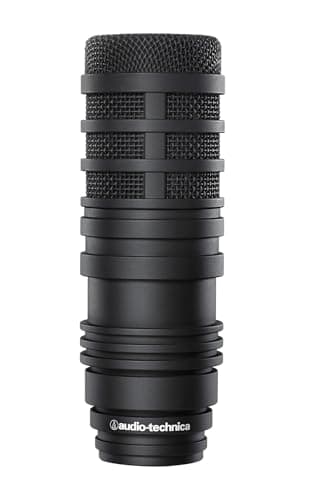
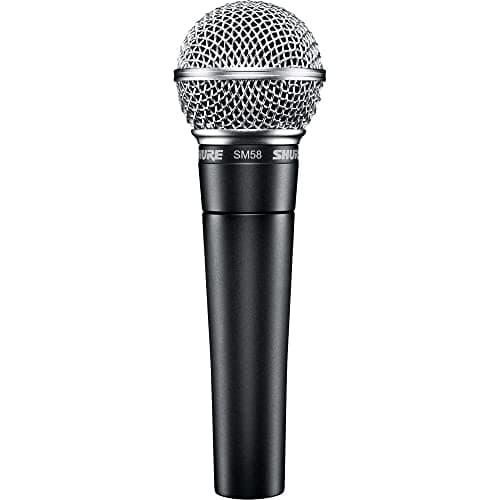
The Audio-Technica BP40 is the pick for a genuinely noisy room: it is the only hypercardioid here, which is the tightest pattern in this registry, and at -48 dB (3.9 mV) it is hot enough that a modest interface drives it without adding hiss of its own. The budget pick is the Shure SM58 at -54.5 dBV/Pa - the cheapest microphone here whose rejection is good enough to matter, and the cheapest way to hear what a close-miked dynamic does to a bad room.
Noise in a recording comes from three places, and they need three different fixes. Continuous mechanical noise - a fan, a fridge, an air conditioner - is a level problem, and the fix is distance ratio: get the capsule closer to your mouth so the voice rises relative to everything else. Room reflections are a pattern problem, and the fix is directionality plus absorption. And transmitted noise - a neighbour, a road, footsteps upstairs - is a construction problem, and no microphone fixes it. This page is about the first two.
The hypercardioid and Variable-D rows are the two genuinely different answers. A hypercardioid narrows the front lobe and moves the deepest rejection to roughly 110 degrees off-axis, which is tighter at the sides than a cardioid and - the trade nobody mentions - slightly more sensitive directly behind. A Variable-D capsule keeps tone constant as you move, which matters in a noisy room because you will instinctively lean in when something loud happens.
The five microphones, ranked for rejection
Each card carries the published pattern and sensitivity with sources, the working distance it is designed for, and what it will not fix.
Audio-Technica BP40
Top pickAudio-Technica · Tighter pickup than a cardioid in a live room
The pick when your problem is a live-sounding room and a weak preamp at the same time: the narrow pattern and the hot output solve both. Avoid it if you or your guests cannot stay on-axis.
Why it is here
- At -48 dB it is dramatically hotter than an SM7B and needs no booster on anything modern
- Hypercardioid pattern narrows the pickup further than the cardioid competition
- Switchable 100 Hz rolloff at 6 dB/octave for close work
What it costs you
- 632 g needs a serious arm or stand
- Hypercardioid punishes sloppy mic technique — step off-axis and you vanish
- Voiced large and forward, which is not every voice's friend
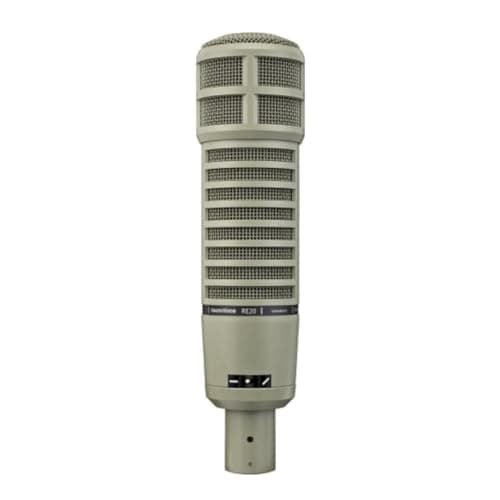
Electro-Voice RE20
Electro-Voice · Movers, leaners and anyone who cannot hold mic distance
Worth the premium if you move while you talk, gesture, or share a mic with someone whose technique you cannot control. If you sit still at a fixed distance, the SM7B's proximity effect is a feature you will use, not a problem you need engineered away.
Why it is here
- Variable-D means the tone barely changes as you drift closer to or further from the grille
- Integral blast filter handles close talking without a separate pop screen
- The bass tilt-down switch is a genuinely useful second voicing, not a gimmick
What it costs you
- Costs more than an SM7B while sounding less immediately flattering on most voices
- Same low-output problem as every broadcast dynamic
- Large and beige, which some people mind
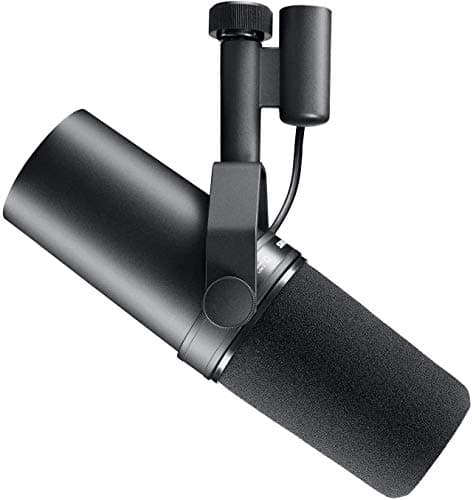
Shure SM7B
Shure · The default upgrade, if your preamp can feed it
Buy it if your interface supplies 60 dB or more of clean gain, or if you are budgeting for a booster alongside it. Buy something else if your only interface is a Scarlett Solo and you are not prepared to add hardware.
Why it is here
- Rejects room and computer-fan noise better than any condenser at any price
- Two voicing switches let one mic cover a thin voice and a boomy one
- Internal shockmount and a yoke that actually holds position on a boom arm
What it costs you
- At -59.0 dBV/Pa it is one of the quietest mics sold, so it demands a loud preamp
- Total cost is the mic plus, very often, a booster
- Heavy enough that a cheap desk arm will droop under it
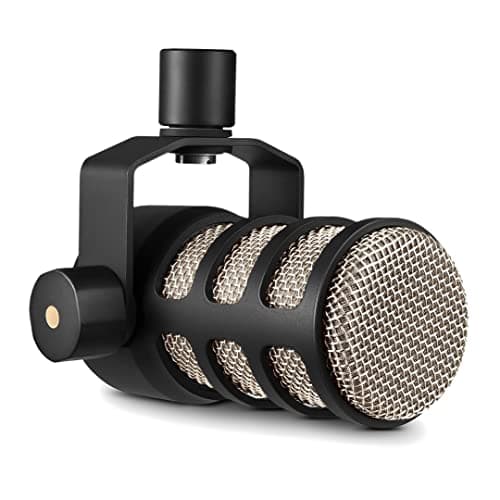
Rode PodMic
Rode · The best value in a broadcast dynamic
The pick for most people upgrading from a USB mic: it gets you 90 percent of the broadcast-dynamic sound without the booster arithmetic. Choose the SM7B instead if your voice is already bass-heavy and you want the bass-rolloff switch.
Why it is here
- At -57 dBV/Pa it needs about 2 dB less gain than an SM7B, which is enough to matter on a 58 dB interface
- Internal pop filter means one less thing clamped to your arm
- All-metal body at a fraction of the SM7B's price
What it costs you
- Voiced with more low-mid weight than the SM7B, so a boomy voice can get boomier
- No voicing switches, so you fix tone in the DAW rather than on the mic
- Still low enough output that a 55 dB interface will be working hard
Shure SM58
Shure · The cheapest way to hear what a dynamic does for you
The right first XLR mic if the real question is whether a dynamic fixes your room, because it answers that for very little money on the interface you already own. It is a diagnostic, not a destination.
Why it is here
- At -54.5 dBV/Pa it is the hottest dynamic here, and works on genuinely modest preamps
- Light enough for any stand or arm you already own
- Effectively indestructible, and resells for most of what you paid
What it costs you
- Response stops at 15 kHz and it is voiced for a PA, not a studio
- Handheld grille shape is awkward on a desk boom
- You will outgrow it if voice is your main output
How these are ranked
- Polar pattern, from published specifications. Hypercardioid above cardioid, and both above anything omnidirectional or multi-pattern. This is the only specification that rejects sound by direction.
- Sensitivity, because a quiet capsule imports preamp noise. A microphone that forces your interface to its gain ceiling adds hiss you then have to live with, which defeats the purpose in a room that is already noisy.
- Proximity behavior. Whether the microphone tolerates you moving, and whether it gives you a bass rolloff switch to deal with the boom that close-miking creates.
- Mechanical isolation. An internal shockmount matters more in a noisy room, because desk thumps and keyboard vibration are part of the noise you are fighting.
- Buyable now, with a live listing and a price from the daily price check when this page was written.
What we did not pick, and why
- Any condenser. A condenser is 20 dB or more hotter than these capsules, which means it amplifies the room at the same ratio it amplifies you. In a noisy room that is precisely the wrong trade, however good the capsule is.
- A shotgun or lavalier microphone. A shotgun is directional and needs distance and a boom operator; a lavalier is close but omnidirectional, so it hears the room in every direction. Both are film tools, not desk tools.
- Noise-suppression plugins as the plan. They work, and they work on what reaches the recording. Spectral suppression applied to a bad signal-to-noise ratio costs you the top of the voice. Fix the ratio first, then use the plugin on what is left.
- A noise gate. A gate hides noise between words and does nothing during them, which is the tell that gives away a bad recording. It is a finishing tool, not a fix.
- A reflection filter alone. Useful, and it treats reflections rather than noise sources - it will not quiet a fan. Do reflection filters work is honest about the limits.
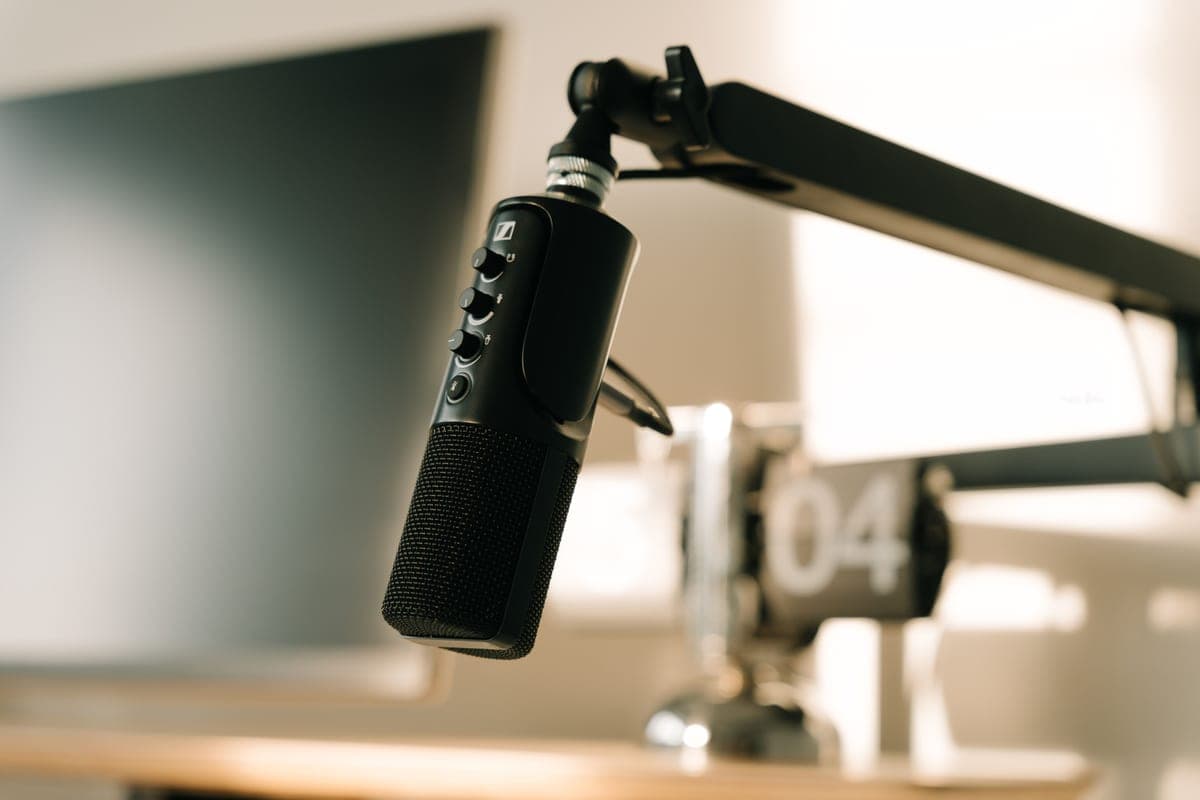
Do these three things before you buy anything
- Move the computer. A desktop tower on the desk, next to the microphone, is usually the loudest thing in the recording. On the floor and behind you is free and often decisive.
- Get the capsule to `4 inches` and use the rolloff. This is the single biggest improvement available and it costs nothing.
- Point the null at the noise. A cardioid rejects what is directly behind it; a hypercardioid rejects hardest at about 110 degrees off-axis. Rotate the microphone so the fan or the window sits in that zone, then set your seating around the microphone rather than the other way round.
Pair it with
- Absorption at the first reflection points. Best acoustic panels, and treating a bedroom studio if the room is shared.
- Gain that does not add hiss of its own. Best audio interfaces for vocals.
- An arm that keeps the capsule close and off the desk. Best boom arms for microphones.
- The broadcast category in full. Best broadcast microphones ranks the same family on voicing and gain demand instead.
One honest limit. If the noise is coming through a wall, a floor or a single-glazed window, nothing on this page helps, and the fix is mass and decoupling rather than a purchase - soundproofing vs acoustic treatment explains why. Close-miking a tight dynamic will make a noisy room usable; it will not make a noisy building quiet.