For a home studio, buy the Rode NT1 5th Generation. Its 4 dBA self-noise is 8 dB quieter than the Neumann TLM 102's 12 dB-A, it adds a USB-C path, and it costs a fraction as much. The TLM 102 is worth its premium only in a genuinely treated room where you have already heard what the NT1 does and want a specific Neumann voicing — and where 144 dB max SPL and resale value matter to you.
This is the most uncomfortable comparison on this site, because the expensive microphone loses the spec sheet and still sells. Both facts are true and both are worth understanding before you spend the money.
8 dB of self-noise is a real difference, and it favors the cheap one
Self-noise is the hiss the microphone generates with nothing in front of it, and 8 dB on a logarithmic scale is not a rounding error — it is the difference between a noise floor you forget about and one you can hear in every pause. The NT1's 4 dBA is close to the quietest figure published for any studio condenser at any price. The TLM 102's 12 dB-A is the same figure as the AT4040 and the AT2035, both of which cost dramatically less.
Where that bites is long-form quiet work: audiobook narration, voice-over with real silence between lines, anything where a listener hears the room between your words. On a close-talked podcast voice at a normal level, your own signal buries both noise floors and the figure stops mattering.
So what are you paying for?
Three things, and it is worth being precise because the marketing is not.
- A voicing, not a measurement. The TLM 102 sounds like a Neumann — a particular presence lift and a particular way of handling the top end that a great many commercial vocals were recorded through. That is a taste, and it is a taste you can only evaluate on your own voice.
- Headroom. 144 dB free from distortion means there is nothing you will put in front of it that it cannot take, including a loud guitar amplifier or a snare.
- Resale. Neumann microphones hold their value in a way budget condensers do not. If you buy one and sell it in three years, the real cost of ownership is much closer than the sticker prices suggest.
What you are not paying for is a quieter capsule, a filter, a pad or a more convenient connector. On all four the Rode wins outright, and at this price the TLM 102's lack of a high-pass filter is a genuine omission for desk work.
Both condensers, plus the step in between
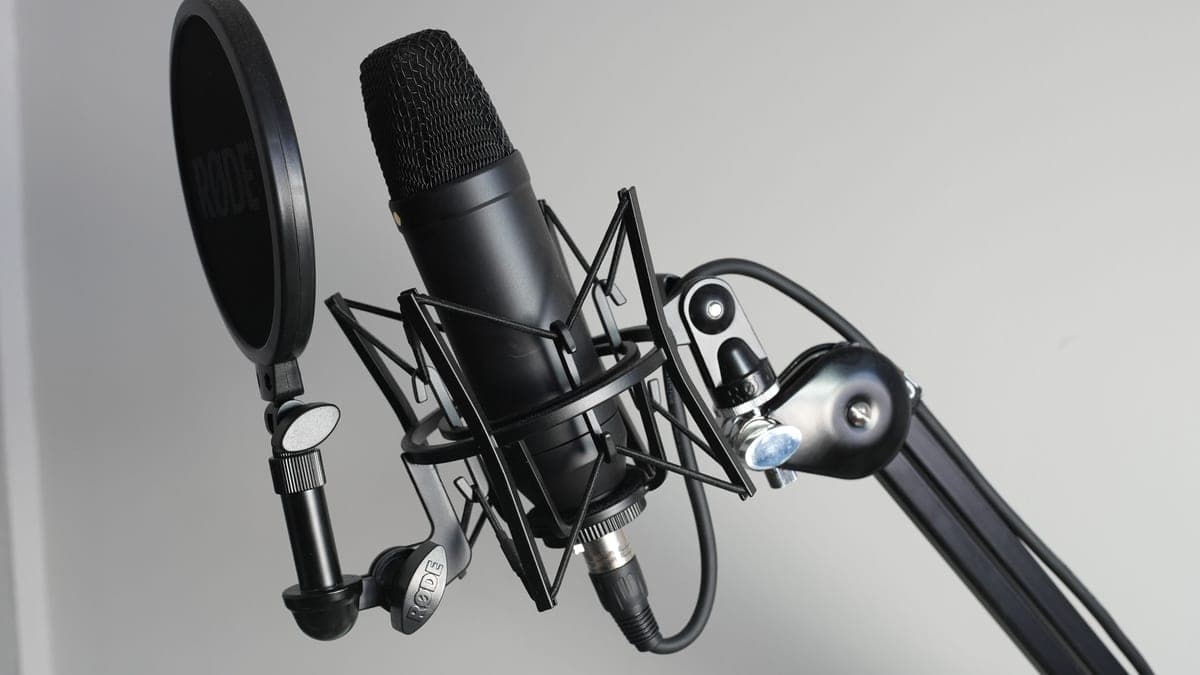
Rode NT1 5th Generation
Top pickRode · The quietest capsule most home studios can justify
The right condenser if you have treated the room, or are about to. If your room is bare drywall, the 4 dBA noise floor is irrelevant because the loudest thing on the recording will be the room.
Why it is here
- 4 dBA self-noise is quieter than the room you are recording in, which is the whole point of a condenser
- -32 dB sensitivity means no interface on this site struggles to drive it
- 32-bit float over USB makes clipping a non-event on the digital path
What it costs you
- A condenser hears your room, your keyboard and your fridge — treatment is not optional
- The USB path duplicates an interface you probably also want
- Bright enough that a sibilant voice needs a de-esser
Neumann TLM 102
Neumann · A Neumann capsule at the bottom of the range
Worth it only in a properly treated room where you have already exhausted what the AT4040 and the NT1 can do. If your room is untreated, this is the clearest example on the site of money that belongs in acoustic panels instead.
Why it is here
- A genuinely Neumann-voiced capsule, which is a different proposition from the budget tier rather than a quieter version of it
- `144 dB` max SPL means it handles anything you will put in front of it
- Physically small, so it fits where a large-body condenser will not
What it costs you
- No pad and no high-pass filter, which on a desk is a real omission at this price
- Neumann does not publish a sensitivity figure we could verify, so it is absent from our table
- The most expensive microphone on this site by a wide margin, and the room matters more than it does
Audio-Technica AT4040
Audio-Technica · The step up from the budget condensers
The right condenser once your room is genuinely treated and the AT2035 has become the limiting factor. In an untreated room it will faithfully reproduce your walls and you will have spent the money for nothing.
Why it is here
- The same `12 dB(A)` self-noise as the AT2035 but with a noticeably more even midrange and a `133 dB` dynamic range
- Keeps the `80 Hz` high-pass filter, which is the control that matters on a desk
- A 2-micron diaphragm and transformerless output at a price well below the boutique tier
What it costs you
- Several times the price of the AT2035 for a difference you only hear in a treated room
- No shockmount in some bundles — check before ordering
- Still a condenser, so the room rules apply unchanged
The room decides this, not the capsule
A cardioid condenser reproduces your room with the same accuracy it reproduces your voice, and a better capsule reproduces a bad room more faithfully rather than less. That is the part that makes an expensive microphone a bad purchase in an untreated space: you are buying resolution you then spend the session fighting.
The honest sequence is: treat the first reflection points, then buy the best capsule you can justify. Two acoustic panels at the walls either side of you will change your recordings more than the step from the Rode to the Neumann — and they cost a fraction of the difference. How to treat a room for recording is the order of operations.
Where the AT4040 sits
The Audio-Technica AT4040 is the microphone most people in this comparison actually want, and it rarely gets mentioned in it. It publishes the same 12 dB(A) self-noise as the TLM 102, adds the switchable 80 Hz high-pass filter the Neumann does not have, adds a -10 dB pad, and reaches 145 dB max SPL — all for considerably less than the Neumann.
If what attracted you to the TLM 102 was the idea of a large-diaphragm condenser a tier above the budget tier, rather than the Neumann name specifically, the AT4040 is the cheaper route to the same place. Best condenser microphones for home studio ranks the whole field.
Who should buy the Neumann anyway
- You are paid for voice work and the room is already treated. Then the voicing is the remaining variable and it is worth auditioning.
- You track loud sources as well as voice. 144 dB free from distortion covers amplifiers and drums without a pad.
- You care about resale. The real cost over five years is much lower than the purchase price implies.
- You have already owned a good budget condenser and know what you want to change. That is the only reliable reason to spend this much on a capsule.
If none of those describe you, the NT1 is the better purchase and the difference belongs in treatment and a decent preamp. How much clean gain do you need covers the interface side; both of these are easy loads that any interface here will drive.