Keep the AT2035 unless your room is genuinely treated. The two microphones publish the same 12 dB self-noise and the same switches — a 80 Hz high-pass and a -10 dB pad — and the cheaper AT2035 actually peaks higher at 148 dB against 145 dB. The AT4040 earns its premium on a larger active diaphragm and a more even midrange, which you can only hear once the room is no longer the loudest thing in the recording.
Most step-up comparisons are decided by a number. This one is not, and pretending otherwise would be dishonest: if you line the two spec sheets up side by side, the AT2035 either matches or beats the AT4040 on every figure except diaphragm size and dynamic range.
Identical self-noise, which kills the usual argument
Self-noise is normally the first and often the only number worth checking on a condenser, because it sets the floor under every quiet take. Both of these publish 12 dB. That means the step up buys you exactly nothing on the one figure that usually justifies spending more on a capsule.
It also means that if a quieter noise floor is what you are shopping for, neither of these is the answer. The Rode NT1 5th Generation publishes 4 dBA and the sE Electronics X1 S publishes 9 dB(A), both of them below either Audio-Technica, and the X1 S costs less than the AT4040.
What the AT4040 actually gives you
Two things, and they are both real.
The first is the diaphragm. A 20.4 mm active diaphragm, two microns thick and ageing-resistant, in a transformerless circuit, is a different piece of engineering from the AT2035's capsule. What that produces is a more even midrange — the band your voice lives in — and a less obviously forward upper midrange than the AT2035, which some voices find harsh. The second is dynamic range: the AT4040 publishes 133 dB, which is the headroom between its own noise floor and the point at which it distorts.
Neither of those is a number you can audition in a shop against a quiet source. They are the sort of difference you notice three weeks into using one, when the EQ you were reaching for every session stops being necessary.
Both Audio-Technicas, and the one that undercuts them both
Ranked for a real home studio rather than by price: the AT2035 first because it does the same job for less, the AT4040 second where the room is treated, and the X1 S because it is quieter than either and has more on-mic control.
Audio-Technica AT2035
Top pickAudio-Technica · The value condenser with the switches you actually need
The condenser to buy if you are choosing on value: the high-pass filter and the 8 dB quieter noise floor are worth more in a real room than anything else in this price band. Skip it if you have not treated the room, in which case a dynamic is the better purchase.
Why it is here
- 12 dB self-noise against the AT2020's 20 dB is an audible 8 dB of quiet for a small price step
- The 80 Hz high-pass is the single most useful switch on a desk-mounted condenser
- Ships with a real shockmount, not a plastic clip
What it costs you
- Still a condenser, so the room rules apply
- Slightly forward upper midrange that some voices find harsh
- The 10 dB pad is mostly irrelevant for voice work
Audio-Technica AT4040
Audio-Technica · The step up from the budget condensers
The right condenser once your room is genuinely treated and the AT2035 has become the limiting factor. In an untreated room it will faithfully reproduce your walls and you will have spent the money for nothing.
Why it is here
- The same `12 dB(A)` self-noise as the AT2035 but with a noticeably more even midrange and a `133 dB` dynamic range
- Keeps the `80 Hz` high-pass filter, which is the control that matters on a desk
- A 2-micron diaphragm and transformerless output at a price well below the boutique tier
What it costs you
- Several times the price of the AT2035 for a difference you only hear in a treated room
- No shockmount in some bundles — check before ordering
- Still a condenser, so the room rules apply unchanged
sE Electronics X1 S
sE Electronics · The most on-mic control of any condenser here
The best-specified condenser on this site for a real home studio: quieter than the Audio-Technicas and the only one with a choice of low-cut frequencies. Choose the AT4040 instead if you want a flatter, more forgiving top end.
Why it is here
- `9 dB(A)` self-noise undercuts the AT2035 and AT4040 while costing less than the latter
- **Two** low-cut frequencies rather than one — `160 Hz` is genuinely useful on a boomy voice in a small room
- Two pad settings take it to `160 dB`, so it doubles as an instrument microphone
What it costs you
- Brighter than the AT4040, which suits some voices and not others
- Smaller dealer network than Audio-Technica or Rode
- The switch count makes it easy to leave a filter engaged by accident
The 80 Hz filter both of them have, and why it matters more than the capsule
A condenser on a desk sits on top of a constant low-frequency mess: traffic, HVAC, the building, your chair, footsteps upstairs, and the desk transmitting every keystroke up the stand. None of it is content and all of it eats headroom. Filtering it at the microphone means it never reaches the converter at all, which is categorically better than removing it later.
Both of these have that switch, which is the single most useful control on either microphone and the reason both beat the AT2020 by more than their noise figures suggest. Use it. For voice work there is almost no case for leaving it off.
When the AT4040 is the right purchase
- Your room is treated and the AT2035 has become the limit. This is the only honest reason, and it is a good one.
- You find the AT2035's upper midrange harsh on your own voice. The AT4040 is the flatter, more forgiving voicing of the two.
- You record acoustic instruments as well as speech. The even midrange and 133 dB of dynamic range show up more on a guitar than on a voice. Best microphones for acoustic guitar.
- You want one condenser to keep. The AT4040 is a long-term microphone in a way the budget tier is not.
If none of those apply, the honest advice is to keep the AT2035 and put the difference into the room. Two acoustic panels at the first reflection points will do more for your recordings than this upgrade, and it is not a close call.
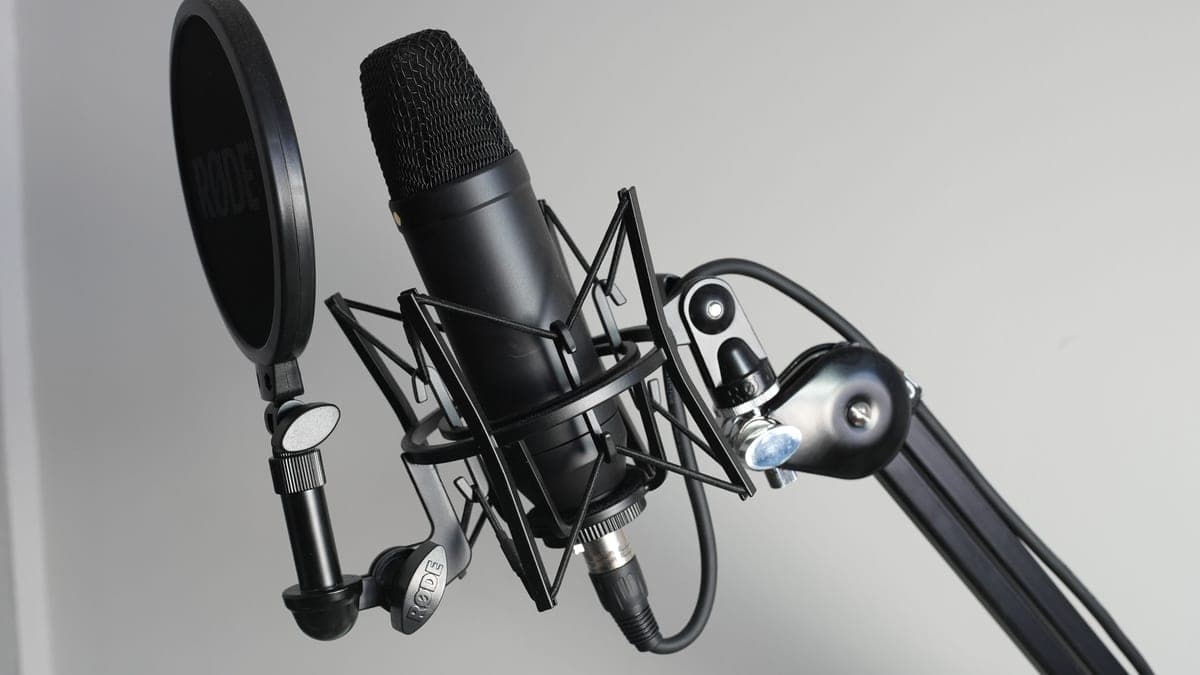
If you are spending AT4040 money, audition the X1 S
The sE Electronics X1 S publishes 9 dB(A) self-noise, two low-cut frequencies (80 Hz and 160 Hz, the second genuinely useful on a boomy voice in a small room) and two pad settings taking it to 160 dB. It is quieter than either Audio-Technica, has more usable control than either, and sits below the AT4040 on price.
It is brighter than the AT4040, which is the trade — if the reason you want the AT4040 is a flatter, more forgiving top end, the X1 S is not the substitute. Best condenser microphones for home studio ranks all three against the rest of the field.