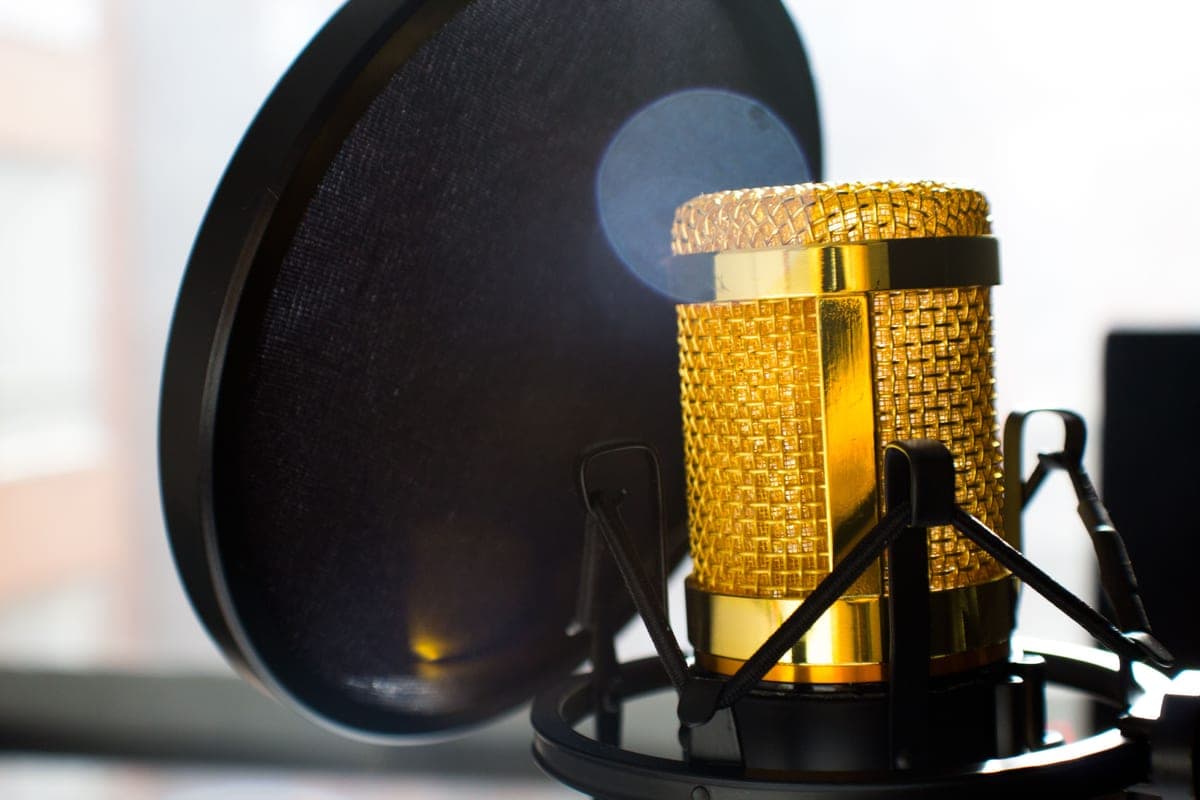
Choose the metal screen if you record daily and your boom arm has load capacity to spare — you rinse it clean instead of replacing it, and it keeps the top end cleaner than foam over the capsule. Choose the foam windshield if your arm is near its limit or the microphone needs to stay portable: 10 g against 10 oz is the whole argument.
The weight difference is not a rounding error
10 oz is roughly 283 g, at the end of a 13 inch gooseneck, clamped to the same stand as the microphone. 10 g sits on the capsule. That is a factor of nearly thirty in mass, and most of the metal screen's weight is cantilevered where it produces the most moment.
Work the arithmetic: an SM7B plus a FetHead plus a 283 g screen is a real load for the PSA1+'s published 1.2 kg ceiling. It fits, with less margin than you would like. On a cheaper unrated arm it is how a slow sag starts.
Choose the metal screen if
- You record most days. It is a buy-once item where a foam or mesh filter is a consumable.
- Your arm or stand has real capacity — an Elgato Wave Mic Arm LP at 2 kg or a floor stand.
- You move while talking. A 6.125 inch screen covers off-axis movement a small filter does not.
- You care about the top end. Foam over a capsule takes a little high frequency with it; a screen a few inches out interferes less.
Choose the foam windshield if
- Your arm is at or near its load limit. This is the decisive case and it is common.
- The microphone travels. A windshield stays on it; a gooseneck screen does not travel.
- You reposition the microphone often. The shield moves with the capsule, so you never re-aim a separate screen.
- Budget matters. A foam windshield is a fraction of a metal screen's cost.
What each costs you acoustically
Foam over the capsule is in the acoustic path for everything, so it attenuates some high frequency across the board. On a dynamic voiced for speech that is often inaudible. On a bright condenser it is a real, if small, effect.
A screen a few inches in front is only in the path of the direct sound arriving at that angle, and Stedman's design redirects the plosive air downward rather than trapping it in a mesh — which is the basis for claiming less high-frequency loss than a nylon filter. It also physically enforces a minimum distance, which some people find helpful and others find restrictive.
What neither one does
- Stop sibilance. A hard "s" is sound, not air. That is a de-esser, or turning slightly off-axis.
- Reduce room noise. Neither is an absorber. Acoustic treatment is a different hub.
- Fix technique. Speaking slightly across the capsule removes most plosives for free, and is worth trying before buying either.
Both filters in detail
Stedman Proscreen XL
Top pickStedman · A pop filter you can wash instead of replace
Worth it if you record daily and have replaced a fabric filter more than once. For occasional recording a nylon filter at a tenth of the price does the same acoustic job.
Why it is here
- The patented metal screen redirects plosive air downward rather than trapping it in fabric
- 6.125 inches of screen covers off-axis movement a small filter does not
- Rinse it clean; a nylon mesh filter is a consumable
What it costs you
- 10 oz on a 13-inch gooseneck is real leverage on a boom arm
- Costs many times a nylon filter
- 26.5 inches overall needs somewhere to live when you are not recording
Rode WS2
Rode · Plosive control without anything on your arm
The right choice when your arm is already at its weight limit, or when the mic has to stay portable. A mesh or metal screen keeps the top end cleaner if you have the load capacity for one.
Why it is here
- 10 g adds nothing to your arm's load, unlike a 10 oz metal filter
- Sits on the mic, so the mic can move without re-aiming a separate screen
- Cheapest effective plosive control there is
What it costs you
- Foam over a capsule takes a little top end with it
- Sized for specific Rode bodies — check the fit before ordering
- Foam degrades over a few years
If neither: the third option
Two of the microphones we recommend have internal filtering and need nothing added: the Rode PodMic has an internal pop filter, and the Electro-Voice RE20 has an integral blast filter over each acoustic opening. If you are still choosing a microphone, that is worth a line in the comparison.