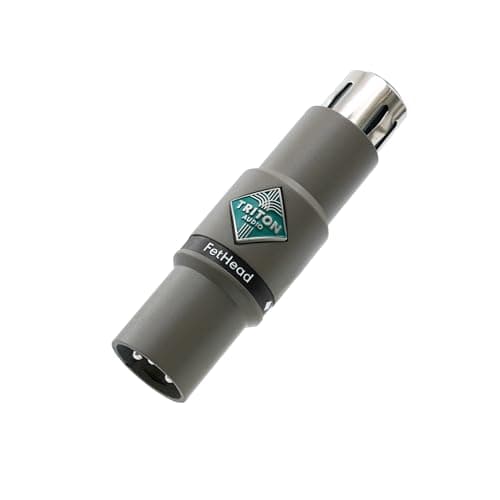
The Triton Audio FetHead is the best Cloudlifter alternative for most people: 27 dB of gain against the CL-1's +25 dB, a 22 kohm input impedance that loads a dynamic capsule more lightly, and a body small enough to disappear into the XLR connector instead of taking a desk slot. The budget alternative is the Coda MB-Stealth at +28 dB into a 1 kohm load. And the honest answer for two of the five reasons people look is further down: buy a high-gain interface or an SM7dB and skip the category.
First, credit where it is due. The Cloudlifter CL-1 publishes +25 dB from a Class-A discrete JFET circuit, presents a fixed 3 kohm load, and it is the device every studio already owns, which means every troubleshooting thread you will ever read assumes it. It is not overpriced for what it is. It is simply not the only 25 dB, and for several specific reasons it is not the best 25 dB.
The last two rows are the ones worth sitting with. A booster exists to compensate for an interface that cannot supply enough clean gain. If the interface is still an open decision, solving it at the interface is cheaper, tidier and better: one box, one cable, no extra phantom-power dependency to reason about. The same logic applies to the microphone - an SM7dB is an SM7B with the booster already inside it.
What the Cloudlifter actually does well
- A fixed, predictable `3 kohm` load. Every dynamic capsule behaves slightly differently depending on what it is loaded into, and the CL-1's load is the one most published SM7B advice was written around. That consistency is worth something real.
- `+25 dB` from a Class-A discrete JFET stage. Clean, quiet, and it does not pass phantom power through to the microphone - which is what makes it safe with a passive dynamic.
- A steel enclosure that lives on the desk, not the arm. The weight is off your boom, which matters with a heavy microphone on a long arm.
- It is the reference. When something goes wrong, every forum answer and every manufacturer FAQ assumes a Cloudlifter. That is not a specification and it is genuinely useful.
What it does not give you is the highest gain in the category, a light connector-sized form factor, or a price below the in-line alternatives. Each alternative below buys back exactly one of those. None of them is a meaningful upgrade in sound quality, and any page telling you otherwise is selling something.
How these are ranked
- Whether it does the Cloudlifter's job at all. 25 dB or more of clean gain from phantom power, without passing phantom to the microphone.
- Published gain, from the manufacturer, with a source link on every card. The spread here is 25 to 28 dB, which is small - so it is a tiebreaker, not the verdict.
- Load impedance. The only specification in this category that changes how the capsule sounds, and the honest reason to prefer one in-line booster over another.
- Form factor and where the weight goes. A connector-sized booster on a boom arm adds mass at the worst point; a desk box adds a cable run.
- Whether the purchase removes the problem instead of patching it. The Wave XLR and the SM7dB are ranked lower here because they are only the right answer when the interface or the microphone is still an open decision - but when they are, they are the better buy.
The five alternatives, ranked
The first three are direct in-line replacements; the last two are the purchases that make a booster unnecessary. Each card says which it is.
Triton Audio FetHead
Top pickTriton Audio · The most gain in the smallest package
The pick for most people boosting an SM7B or PodMic: more gain than the alternative, in nothing. Choose the Cloudlifter instead if the mic is on a long unsupported arm or if you own a ribbon.
Why it is here
- 27 dB is 2 dB more than a Cloudlifter, from something the size of a cable barrel
- 22 kohm input impedance lets a dynamic capsule behave the way its designer intended
- No desk space, no second cable
What it costs you
- Hangs off the back of the mic, adding weight and leverage to your boom arm
- Nothing to see — no LED, so a phantom-power mistake is silent
- Not for condensers, which need the phantom power it blocks
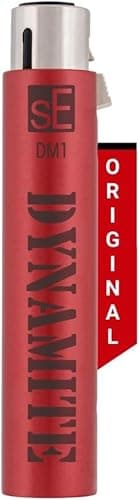
sE Electronics DM1 Dynamite
sE Electronics · The most gain of the three inline boosters
Buy it when you need every last decibel — an SM7B into a 55 dB interface is exactly that case. Otherwise the FetHead's 27 dB is the same result for less.
Why it is here
- +28 dB is the highest inline figure here, and 3 dB matters on a 55 dB interface
- Same barrel form factor as a FetHead, so no desk space
- Low-noise Class A design
What it costs you
- Priced above the FetHead for 1 dB more gain
- Same overhung-weight problem as any inline booster
- Max input around -18.5 dBu means it is for quiet sources only
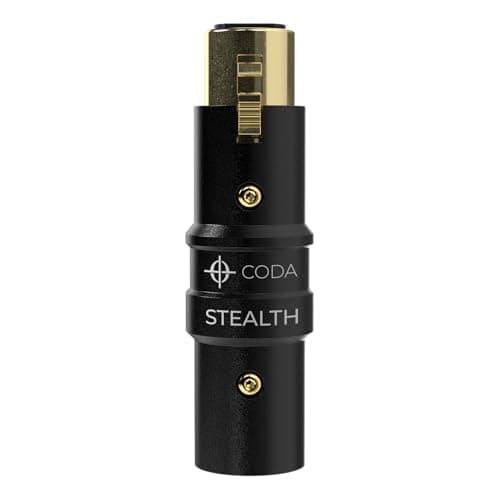
Coda MB-Stealth
Coda · The cheapest way to add 28 dB
The budget answer when the gain shortfall is the only problem and your microphone is a dynamic. If this is a permanent part of your chain, or you ever want to put a condenser on the same cable, the FetHead or Cloudlifter are better long-term purchases.
Why it is here
- `+28 dB` — more than a Cloudlifter's `+25 dB` — for well under half the money
- Suitable for ribbons as well as dynamics, and publishes a full spec list for a budget part
- Inline, so no desk footprint
What it costs you
- Will not work with a condenser at all, because it consumes the phantom power rather than passing it on
- Build and brand pedigree are not in the class of the Cloud or sE units
- Inline weight on the mic, as always
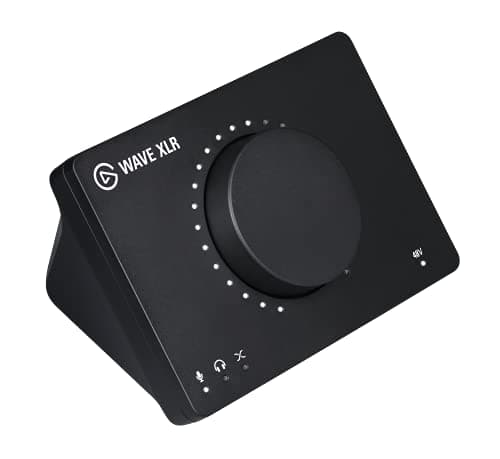
Elgato Wave XLR
Elgato · The most gain of any single-channel box, built for streaming
The right box if you stream or record alone with a low-output dynamic and want the gain problem to simply not exist. It is not a general-purpose interface, and it is the wrong buy if you also record instruments.
Why it is here
- `75 dB` of gain drives an SM7B with room to spare and no booster, which is the single most common streaming problem solved outright
- Clipguard catches a shout that would otherwise clip the take
- Capacitive tap-to-mute on the top surface, which is genuinely better than reaching for a key bind
What it costs you
- One microphone input, so a co-host needs a second unit
- The mixing lives in Elgato's software, so it is a Wave Link setup rather than a neutral interface
- No MIDI, no line inputs, no instrument input
Shure SM7dB
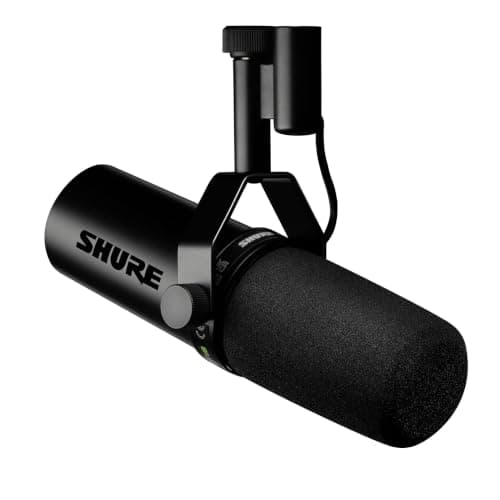
Shure · An SM7B with the booster problem already solved
The right SM7 for anyone whose interface tops out near 55 dB and who wants one purchase instead of two. Skip it if you already own a Cloudlifter or a 69 dB-gain interface, because you are paying twice for the same 25 dB.
Why it is here
- The +28 dB setting turns a 55 dB-gain interface into enough headroom for this capsule
- One XLR cable, no inline box, no second phantom-power dependency to reason about
- Bypassable, so it behaves as a plain SM7B when you move it to a big preamp
What it costs you
- You pay for the preamp whether your interface needed it or not
- A separate booster can be reused with other low-output mics; this one cannot
- No gain setting between +18 dB and +28 dB
What we did not pick, and why
- A rack preamp. A real step up in tone and headroom, and a different product at a different price with a power cable and a rack slot. It is not a Cloudlifter alternative, it is a replacement for your interface's front end.
- A second interface used as a preamp. Possible, awkward, and it introduces a clock you then have to think about. Can you use two audio interfaces at once.
- Software gain. Raising a quiet track in the DAW raises the interface's noise floor with it, which is the exact problem a booster exists to prevent.
- The Cloudlifter Zi or CL-2. Variants of the same circuit with an instrument input or a second channel. If you want a Cloudlifter, buy a Cloudlifter - this page is for people who do not.
- Any booster with a condenser. Not an alternative, a mistake. See the note above.
Pair it with
- The whole category, ranked on its own terms. Best inline mic preamps.
- The SM7B-specific version of this decision. Best preamps for the Shure SM7B and how much gain does the SM7B need.
- The interface route in full. Best audio interfaces for the Shure SM7B.
- A second XLR cable, which an in-line booster always needs. Best XLR cables.
Cloudlifter vs FetHead is the head-to-head between this page's reference and its winner, with the load-impedance argument in full. If the real question underneath is whether your current interface is the problem, how much clean gain do you need answers it with arithmetic rather than opinion.