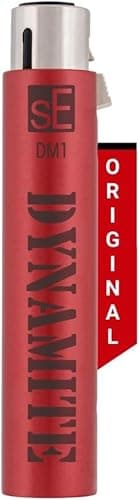
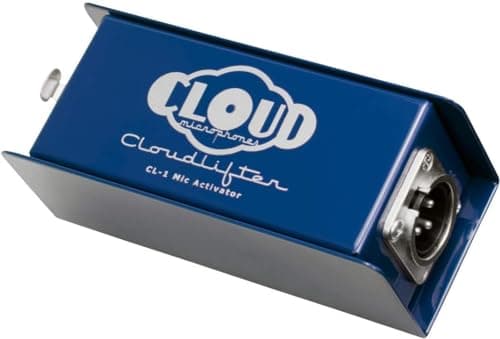
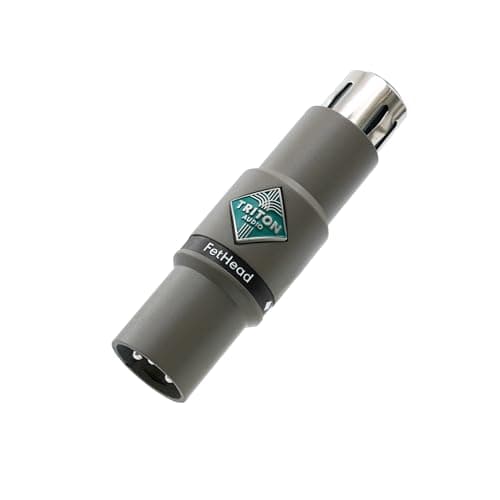
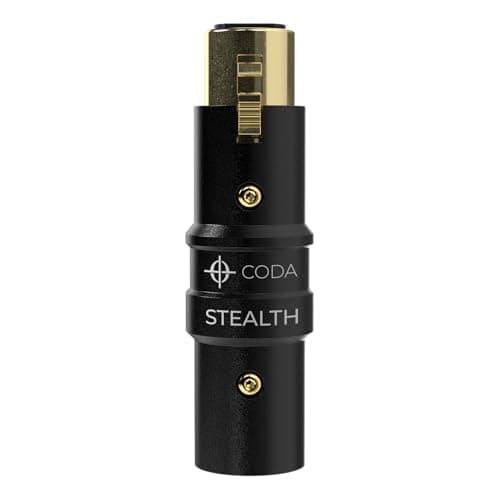
The sE Electronics DM1 Dynamite is the pick: +28 dB of phantom-powered Class A gain, the most of the three mainstream boosters, in a body small enough to hang off the microphone. The Cloudlifter CL-1 at +25 dB is the pick if you want the reference that every studio already has and a fixed 3 kohm load. The budget pick is the Coda MB-Stealth at +28 dB into a 1 kohm load - the cheapest way to add the same gain, with one hard restriction described below.
These devices go by several names - inline preamp, mic activator, booster, lifter - and they all do the same narrow job. They take 48 V phantom power from your interface, use it to run a small Class A JFET amplifier, and hand your interface a signal 25 to 28 dB hotter than the microphone produced. Crucially, they do not pass the phantom power on to the microphone, which is what makes them safe with a passive dynamic and useless with a condenser.
The load impedance column is the one most buying guides leave out, and it is the only place these four genuinely differ in sound. A dynamic capsule behaves differently depending on what it is loaded into: a higher impedance - the FetHead's 22 kohms - lets the capsule run more freely and typically gives a slightly more open top end, while a lower load damps it. None of these is wrong; they are different voicings of the same 25 to 28 dB. The gain figures are close enough that the load is the more interesting decision.
The four boosters, ranked
Each card carries the published gain and load figures with sources, the live price with the date it was checked, and what the booster will not do.
sE Electronics DM1 Dynamite
Top picksE Electronics · The most gain of the three inline boosters
Buy it when you need every last decibel — an SM7B into a 55 dB interface is exactly that case. Otherwise the FetHead's 27 dB is the same result for less.
Why it is here
- +28 dB is the highest inline figure here, and 3 dB matters on a 55 dB interface
- Same barrel form factor as a FetHead, so no desk space
- Low-noise Class A design
What it costs you
- Priced above the FetHead for 1 dB more gain
- Same overhung-weight problem as any inline booster
- Max input around -18.5 dBu means it is for quiet sources only
Cloud Microphones Cloudlifter CL-1
Cloud Microphones · The reference booster, and the safest one
The right booster if you own or might own a ribbon mic, or if you want the version that cannot be knocked out of its socket. If neither applies, a FetHead does the same job smaller and cheaper.
Why it is here
- +25 dB turns a 55 dB interface into an 80 dB one for a passive mic
- Blocks phantom power downstream, so a ribbon mic is safe behind it
- A box, not a dongle — it stays put and takes strain off the XLR connector
What it costs you
- Needs two XLR cables and a spot on the desk
- Costs as much as some interfaces
- Does nothing for a condenser, which needs the phantom it blocks
Triton Audio FetHead
Triton Audio · The most gain in the smallest package
The pick for most people boosting an SM7B or PodMic: more gain than the alternative, in nothing. Choose the Cloudlifter instead if the mic is on a long unsupported arm or if you own a ribbon.
Why it is here
- 27 dB is 2 dB more than a Cloudlifter, from something the size of a cable barrel
- 22 kohm input impedance lets a dynamic capsule behave the way its designer intended
- No desk space, no second cable
What it costs you
- Hangs off the back of the mic, adding weight and leverage to your boom arm
- Nothing to see — no LED, so a phantom-power mistake is silent
- Not for condensers, which need the phantom power it blocks
Coda MB-Stealth
Coda · The cheapest way to add 28 dB
The budget answer when the gain shortfall is the only problem and your microphone is a dynamic. If this is a permanent part of your chain, or you ever want to put a condenser on the same cable, the FetHead or Cloudlifter are better long-term purchases.
Why it is here
- `+28 dB` — more than a Cloudlifter's `+25 dB` — for well under half the money
- Suitable for ribbons as well as dynamics, and publishes a full spec list for a budget part
- Inline, so no desk footprint
What it costs you
- Will not work with a condenser at all, because it consumes the phantom power rather than passing it on
- Build and brand pedigree are not in the class of the Cloud or sE units
- Inline weight on the mic, as always
How these are ranked
- Published gain. 25 to 28 dB, quoted from the manufacturer with a source link on every card. The practical difference across that range is small; the published figure still has to exist.
- Load impedance presented to the microphone. The only specification here that changes how your capsule sounds, and the reason to prefer one over another on tone rather than on level.
- Noise performance of the circuit. A booster that adds its own hiss defeats the entire purpose, which is to avoid running your interface preamp at its noisy ceiling.
- Form factor. An in-line connector that hangs off the microphone against a box that sits on the desk. On a boom arm the connector version adds weight at the worst possible point.
- Buyable now, with a live listing and a price from the daily price check when this page was written.
What we did not pick, and why
- A high-gain interface instead. Usually the better purchase if you are buying both at once: a Focusrite Scarlett 2i2 at a published 69 dB or an Elgato Wave XLR at 75 dB removes the need for a booster entirely. Best audio interfaces for the Shure SM7B makes that case properly.
- The Shure SM7dB. The same +18/+28 dB idea built into the microphone, which is the cleanest solution if you have not bought the microphone yet. Shure SM7B vs SM7dB.
- A rack preamp. A genuine upgrade in tone and headroom, and a different purchase at a different price with a power cable and a rack space. Not an in-line booster.
- Phantom-passing in-line pads and transformers. They solve the opposite problem - too much level, or impedance matching - and will not add gain.
- Software gain. Raising a quiet recording in the DAW raises the interface's noise floor with it. That is precisely the problem a booster exists to avoid.
When you actually need one
- Your microphone is below about `-57 dBV/Pa`. An SM7B at -59.0 dBV/Pa, an RE20 at 1.5 mV/Pa or any ribbon. A -52 dBV/Pa capsule rarely needs help.
- Your interface publishes `58 dB` of gain or less. At 55 to 58 dB with a quiet dynamic you will hit a usable level only at the top of the knob, where the preamp's own noise is loudest.
- You can hear hiss when nobody is talking. This is the symptom. If you have to add 10 dB or more in the DAW to reach a normal level, the booster is the fix.
- You are keeping the microphone. A booster follows you to any low-output microphone; a high-gain interface is a better buy if the microphone itself is also up for replacement.
Pair it with
- The microphone that sent you here. Best broadcast microphones and how much gain does the SM7B need.
- The SM7B-specific ranking of the same boosters. Best preamps for the Shure SM7B.
- A second XLR cable, because a booster needs one. Best XLR cables.
- The alternative route entirely. Cloudlifter alternatives if the reference is more than you want to spend.
The two head-to-heads worth reading before you buy are Cloudlifter vs FetHead, which is the form-factor and load argument in detail, and best microphones under $500, which includes the SM7dB option that makes this whole category unnecessary if you have not bought the microphone yet.