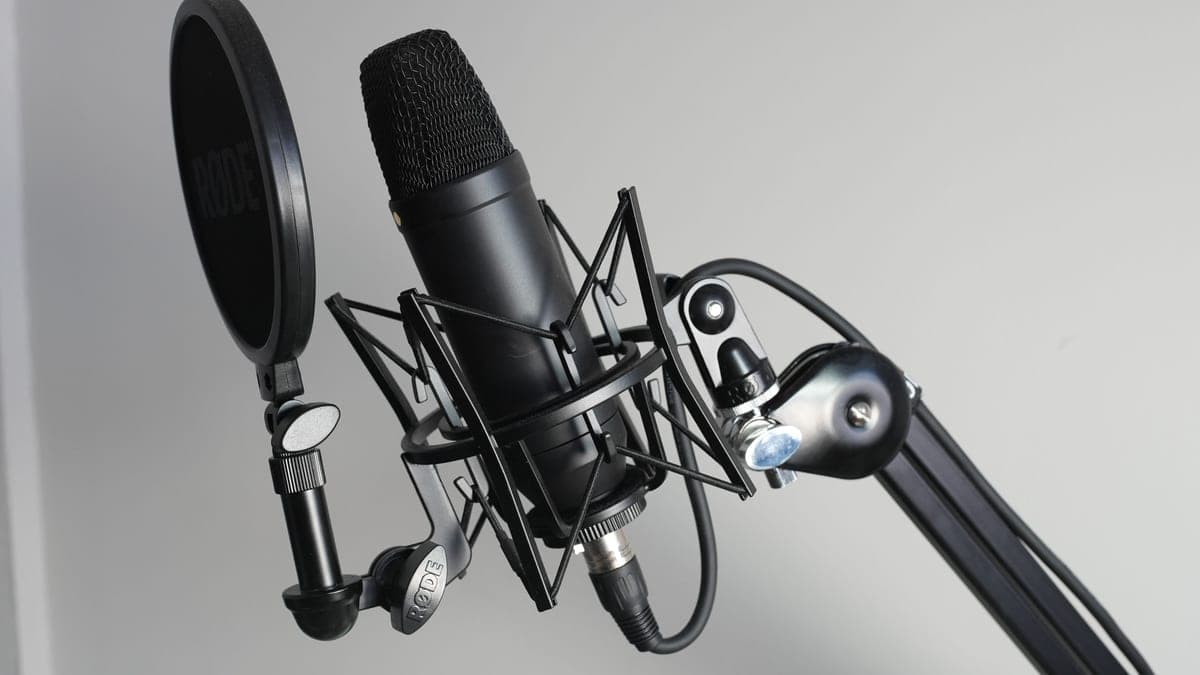
Buy the AT2035 for a desk-based home studio: its switchable 80 Hz high-pass filter removes desk rumble and footfall at the source, which is a problem you have every session. The Rode NT1 5th Generation's 4 dBA self-noise against 12 dB SPL is a real advantage, but only in a room quiet enough to hear it.
The filter beats the noise floor in a real room
An 8 dB self-noise advantage is genuinely meaningful in the right circumstances: quiet material, heavy compression, a treated and silent room. Most home studios are none of those things. What most home studios do have is a desk that transmits typing and knocks, a floor that transmits footsteps, and a chair that creaks — all of it energy below 80 Hz that a high-pass filter removes before it reaches the capsule.
You can filter in the DAW, of course. But filtering at the microphone means that rumble never uses up headroom in your gain stage, never modulates a compressor, and never has to be remembered. That is why the AT2035 wins this page, and why it wins best budget condensers too.
Choose the AT2035 if
- The microphone lives on a desk, on an arm, within reach of a keyboard.
- You are on an upper floor, or anywhere footfall reaches the stand.
- You want a shockmount in the box, which it has.
- You value on-mic control over a specification you may not be able to hear.
Choose the Rode NT1 if
- Your room is treated and measurably quiet, so the capsule really is your noise floor.
- Your material is quiet and heavily processed — soft voice-over, intimate singing.
- You want the USB-C path for travel, with 32-bit float removing the risk of clipping.
- The microphone is on a floor stand away from the desk, where rumble is less of an issue.
Sound character
Both are bright condensers by design. The NT1 5th Generation is the smoother of the two at the very top and the more expensive-sounding on a sung vocal. The AT2035 has a more forward upper midrange that some voices read as clarity and others as hardness. If you have found budget condensers harsh before, neither is the flattest option available — the Lewitt LCT 440 Pure is.
What else you need to buy
- Both: phantom power from an interface — neither needs a booster, condensers are hot.
- Both: a pop filter, and honestly, treatment. A condenser in a bare room is the wrong tool whichever one you choose.
- NT1 only: nothing extra; the shockmount is included, as it is with the AT2035.
Both microphones in detail
Audio-Technica AT2035
Top pickAudio-Technica · The value condenser with the switches you actually need
The condenser to buy if you are choosing on value: the high-pass filter and the 8 dB quieter noise floor are worth more in a real room than anything else in this price band. Skip it if you have not treated the room, in which case a dynamic is the better purchase.
Why it is here
- 12 dB self-noise against the AT2020's 20 dB is an audible 8 dB of quiet for a small price step
- The 80 Hz high-pass is the single most useful switch on a desk-mounted condenser
- Ships with a real shockmount, not a plastic clip
What it costs you
- Still a condenser, so the room rules apply
- Slightly forward upper midrange that some voices find harsh
- The 10 dB pad is mostly irrelevant for voice work
Rode NT1 5th Generation
Rode · The quietest capsule most home studios can justify
The right condenser if you have treated the room, or are about to. If your room is bare drywall, the 4 dBA noise floor is irrelevant because the loudest thing on the recording will be the room.
Why it is here
- 4 dBA self-noise is quieter than the room you are recording in, which is the whole point of a condenser
- -32 dB sensitivity means no interface on this site struggles to drive it
- 32-bit float over USB makes clipping a non-event on the digital path
What it costs you
- A condenser hears your room, your keyboard and your fridge — treatment is not optional
- The USB path duplicates an interface you probably also want
- Bright enough that a sibilant voice needs a de-esser
If neither: the third option
If this comparison has made you uneasy about condensers in your room — good, that is the right instinct. A dynamic rejects what a condenser captures, and in an untreated room it is the better recording. Dynamic vs condenser makes the case properly.