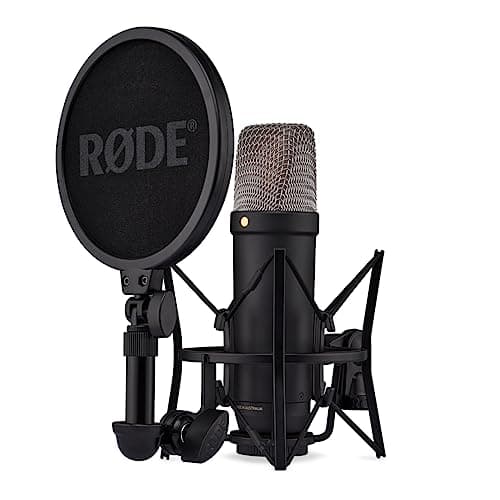
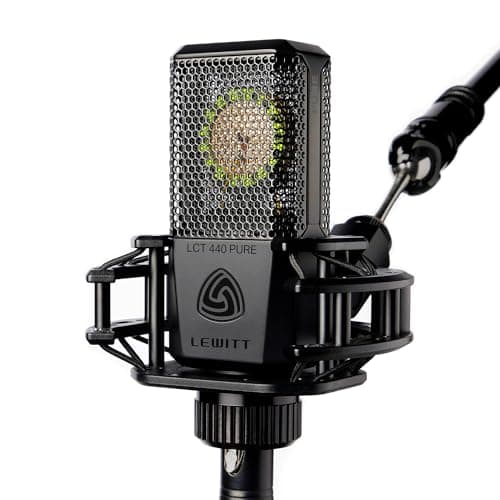
Buy the Lewitt LCT 440 PURE if the budget condensers have sounded harsh to you: it is voiced flatter, publishes 133 dB(A) of dynamic range, and ships with a shock mount and a magnetic pop filter you would otherwise buy. Buy the Rode NT1 5th Generation if your signal chain is the weak link — 4 dBA self-noise is the lowest published figure at this price, and its USB-C output with 32-bit float recording means you can capture a usable take with no interface at all.
These two get compared because they occupy the same shelf and make the same promise: a 1-inch true condenser with no switches to get wrong. The specs even rhyme. What separates them is not quality, it is voicing and plumbing — one is a hybrid you can run two completely different ways, the other is a straight XLR microphone that was tuned to stay out of the way.
The 3 dB noise gap is real and almost never the deciding factor
4 dBA against 7 dB(A) is a genuine engineering difference, and Rode earned the headline. It is also 3 dB measured in an anechoic chamber, and your room is not one. A quiet domestic room with the heating off and no traffic outside sits somewhere around 30 dBA. A room with a computer fan in it is louder. Both of these capsules are already quieter than anything you will record in, which means the noise you hear on the finished file came from the room, not the microphone.
Where the figure does start to matter is on very quiet sources recorded close in a properly treated space — fingerstyle guitar, soft spoken narration, room ambience you intend to raise in the mix. If that is your work, the NT1's margin is worth having. If your work is a podcast recorded in a spare bedroom, treating the room will change the noise floor by more than switching microphones ever will.
Voicing is the difference you will actually hear
Both publish 20 Hz to 20 kHz, which tells you nothing, because a frequency range without a tolerance and a response curve is marketing. In use, the NT1 5th Generation is the brighter of the two — flattering on a dull voice, unforgiving on a sibilant one. Lewitt named the LCT 440 PURE for a reason: the pitch is a flatter presentation with the switches and the sheen deliberately left out.
That makes the choice a question about your voice rather than about the microphones. A dark, chesty voice gets lift and air from the Rode that it would otherwise have to find with EQ. A bright or sibilant voice gets more of what it already has too much of, and you end up spending every mix pulling the upper midrange back down. The Lewitt starts closer to where you want to end up.
Both microphones, and the cheaper one with the switches
Rode NT1 5th Generation
Top pickRode · The quietest capsule most home studios can justify
The right condenser if you have treated the room, or are about to. If your room is bare drywall, the 4 dBA noise floor is irrelevant because the loudest thing on the recording will be the room.
Why it is here
- 4 dBA self-noise is quieter than the room you are recording in, which is the whole point of a condenser
- -32 dB sensitivity means no interface on this site struggles to drive it
- 32-bit float over USB makes clipping a non-event on the digital path
What it costs you
- A condenser hears your room, your keyboard and your fridge — treatment is not optional
- The USB path duplicates an interface you probably also want
- Bright enough that a sibilant voice needs a de-esser
Lewitt LCT 440 Pure
Lewitt · A flatter alternative to the bright budget condensers
Worth the step up if the budget condensers have sounded harsh to you and you want flat rather than flattering. If you want on-mic filtering, the AT2035 gives you more control for less.
Why it is here
- 7 dB(A) is competitive with mics costing considerably more
- Voiced flatter than the NT1-A, so less de-essing on a sibilant voice
- Deliberately stripped of switches, which keeps the signal path simple
What it costs you
- No high-pass filter or pad at all, by design
- Costs more than the AT2035 without adding features
- Smaller dealer network than Rode or Audio-Technica
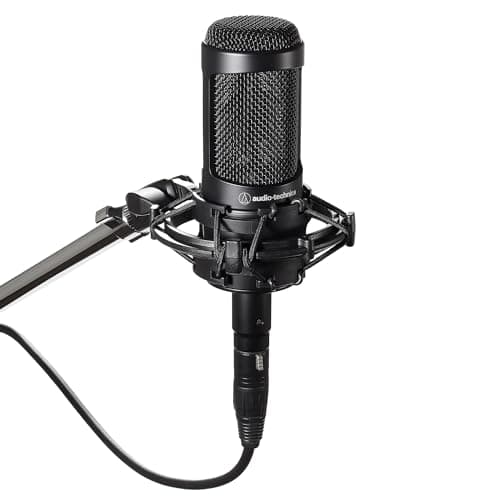
Audio-Technica AT2035
Audio-Technica · The value condenser with the switches you actually need
The condenser to buy if you are choosing on value: the high-pass filter and the 8 dB quieter noise floor are worth more in a real room than anything else in this price band. Skip it if you have not treated the room, in which case a dynamic is the better purchase.
Why it is here
- 12 dB self-noise against the AT2020's 20 dB is an audible 8 dB of quiet for a small price step
- The 80 Hz high-pass is the single most useful switch on a desk-mounted condenser
- Ships with a real shockmount, not a plastic clip
What it costs you
- Still a condenser, so the room rules apply
- Slightly forward upper midrange that some voices find harsh
- The 10 dB pad is mostly irrelevant for voice work
The USB-C output is the NT1's real differentiator
Rode's Dual Connect puts XLR and USB-C in the same connector, and over USB the microphone records 32-bit float with analog-to-digital conversion up to 192 kHz and onboard APHEX processing. The practical consequence of 32-bit float is that clipping stops being something you can do: a take recorded far too hot can be pulled back down in the edit without the distortion that would have been baked into a 24-bit file.
For a traveling podcaster, or for someone who has not bought an interface yet, that is a genuinely useful second life for the purchase. It is also a feature you pay for and may never use. If you already own a Scarlett 2i2 or an iD4, the USB path duplicates hardware you have, and the LCT 440's money went into the capsule and the accessories instead. If the mobile rig is a tablet, weigh it against a small interface with documented tablet support — best audio interfaces for iPad is that comparison.
Gain: neither is demanding, and that is worth saying
At -32 dBV/Pa and -31.2 dBV/Pa these two are within rounding distance of each other, and both are hot enough that every interface on this site drives them with room to spare. That is the quiet advantage of a condenser over a broadcast dynamic: there is no gain arithmetic to do and no inline booster to budget for. How much clean gain do you need has the full table, and the short version is that a 55 dB interface is fine with either of these and marginal with an SM7B.
Both need 48 V phantom power. Lewitt publishes the LCT 440 PURE's draw at 2.63 mA, which is unremarkable — any interface with a 48 V button supplies it, including the bus-powered ones.
What you get in the box, priced honestly
This is closer than the shelf price suggests. The NT1 5th Generation includes a shock mount, a pop filter, a braided XLR cable with Neutrik connectors and a USB-C cable. The LCT 440 PURE includes a shock mount, a magnetic pop filter, a foam windscreen and a transport bag. Both bundles remove a real slice of accessory shopping that a bare microphone would have forced on you, and on a first condenser purchase that is worth more than a spec row.
The difference is the cable. Rode supplies one and Lewitt does not, so budget for a decent XLR cable with the Lewitt. That is a small cost, but it is the kind of thing that makes a cheaper-looking microphone the more expensive purchase.
Which to buy
- Bright or sibilant voice, treated room, mixing yourself: LCT 440 PURE. Flatter in means less corrective EQ out.
- Dark voice, or you want the recording to arrive sounding finished: NT1 5th Generation. The top-end lift is doing work you would otherwise do in the DAW.
- No interface yet, or you record away from the desk: NT1 5th Generation, specifically for the USB-C and 32-bit float path.
- Very quiet acoustic sources in a properly treated room: NT1 5th Generation, for the 4 dBA margin.
- You want a switchable high-pass and a pad: neither. The Audio-Technica AT2035 has both and costs less.
What matters more than either choice
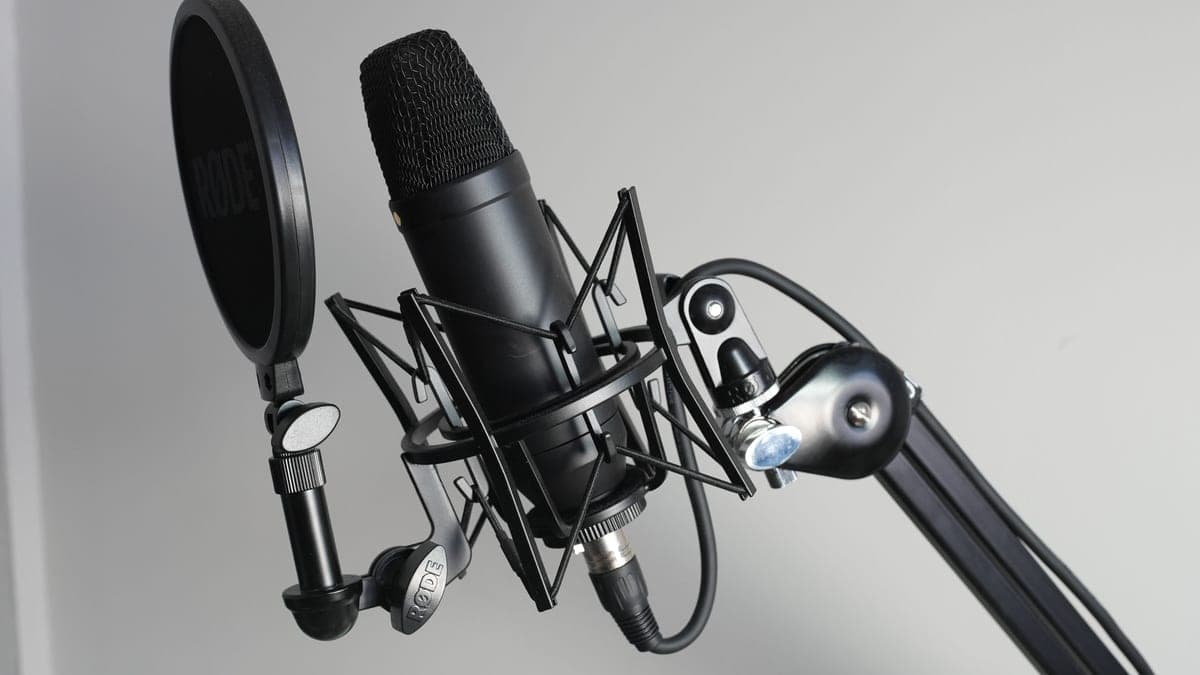
A condenser hears the room. Both of these capsules will faithfully reproduce your drywall, your keyboard, your fridge and the car outside, and no amount of self-noise advantage changes that. If your room is untreated, the honest ranking is: two acoustic panels at the first reflection points, then the microphone. Spend in that order and either of these sounds like a studio. Spend in the other order and both sound like a bedroom.
If the room cannot be treated at all, the comparison is the wrong one — a cardioid dynamic rejects more of a bad room than any condenser does, which is the argument in dynamic vs condenser microphones.