Buy the AT2035. Its 12 dB SPL self-noise is 8 dB quieter than the AT2020's 20 dB SPL, it adds a switchable 80 Hz high-pass filter, and it ships with a real shockmount rather than a plastic clip — three concrete upgrades for a small price step. The AT2020 is the right choice only when the budget is genuinely fixed and the alternative is not recording at all.
This is one of the few comparisons on this site with an unambiguous answer, and it is worth saying plainly rather than manufacturing a dilemma. Both microphones are side-address cardioid condensers from the same manufacturer, aimed at the same buyer. Every published figure that differs between them favors the AT2035, and the two features it adds are precisely the two things a condenser in a home studio needs.
What 8 dB of self-noise sounds like
Self-noise is the hiss the microphone itself generates. 20 dB SPL is not loud in absolute terms, but it is a fixed floor under everything you record, and 8 dB is a large step on a logarithmic scale — roughly the difference between a noise floor you never think about and one you notice in every pause.
Where it bites hardest is voice-over and audiobook work, where long silences are part of the deliverable and a noise gate makes the hiss pump instead of removing it. It matters least on a loud, close-talked podcast voice, where your own level buries it. If your work is the first kind, the 8 dB alone justifies the step up; see best microphones for voice over.
The 80 Hz high-pass is the feature, not the capsule
If we could only keep one difference between these microphones, it would be the AT2035's switchable 80 Hz high-pass filter — and that is a genuinely unusual thing to say about a microphone comparison.
A condenser on a desk sits on top of a continuous low-frequency mess: traffic, HVAC, the building itself, your chair, footsteps upstairs, and the desk transmitting every keystroke into the stand. None of that is content and all of it eats headroom. Filtering it at the microphone means it never reaches the converter in the first place, which is categorically better than removing it later. The AT2020 has no such switch, so every bit of that rumble is recorded and has to be dealt with in the DAW.
The -10 dB pad is the less useful of the two switches for voice work — you are not going to approach 144 dB SPL talking. It earns its place if you also record a guitar amplifier or a drum.
Both microphones, and the one that beats them both
Audio-Technica AT2035
Top pickAudio-Technica · The value condenser with the switches you actually need
The condenser to buy if you are choosing on value: the high-pass filter and the 8 dB quieter noise floor are worth more in a real room than anything else in this price band. Skip it if you have not treated the room, in which case a dynamic is the better purchase.
Why it is here
- 12 dB self-noise against the AT2020's 20 dB is an audible 8 dB of quiet for a small price step
- The 80 Hz high-pass is the single most useful switch on a desk-mounted condenser
- Ships with a real shockmount, not a plastic clip
What it costs you
- Still a condenser, so the room rules apply
- Slightly forward upper midrange that some voices find harsh
- The 10 dB pad is mostly irrelevant for voice work
Audio-Technica AT2020
Audio-Technica · The entry condenser, if the budget is truly fixed
Buy it only if the AT2035 is genuinely out of reach — the step up buys a high-pass filter and a quieter capsule, which are the two things that matter in an untreated room. On a fixed budget the money is better spent on a dynamic and a panel.
Why it is here
- Cheapest credible XLR condenser, and it has been in production long enough to be a known quantity
- -37 dB sensitivity drives easily from any interface
- Light, so it works on a modest stand
What it costs you
- 20 dB self-noise is 8 dB noisier than the AT2035 and audible on a quiet voice-over
- No high-pass filter, so desk rumble goes straight into the take
- Plastic stand mount rather than a shockmount
sE Electronics X1 S
sE Electronics · The most on-mic control of any condenser here
The best-specified condenser on this site for a real home studio: quieter than the Audio-Technicas and the only one with a choice of low-cut frequencies. Choose the AT4040 instead if you want a flatter, more forgiving top end.
Why it is here
- `9 dB(A)` self-noise undercuts the AT2035 and AT4040 while costing less than the latter
- **Two** low-cut frequencies rather than one — `160 Hz` is genuinely useful on a boomy voice in a small room
- Two pad settings take it to `160 dB`, so it doubles as an instrument microphone
What it costs you
- Brighter than the AT4040, which suits some voices and not others
- Smaller dealer network than Audio-Technica or Rode
- The switch count makes it easy to leave a filter engaged by accident
The uncomfortable part: neither may be the right purchase
Both of these are condensers, and a cardioid condenser reproduces your room with the same enthusiasm it reproduces your voice. In a bedroom with bare drywall, a window and a hard floor, the loudest problem on your recording is not 20 dB of self-noise — it is the wall behind you arriving a few milliseconds after you do.
So before choosing between them, be honest about the room. If it is untreated, a broadcast dynamic will give you a cleaner-sounding result than either condenser for the same money: dynamic vs condenser microphones sets out why, and best XLR microphones under $100 is the shortlist. If you are committed to a condenser, two acoustic panels at the first reflection points will do more for your recordings than the step from the AT2020 to the AT2035.
If you can stretch past the AT2035
The sE Electronics X1 S is the better-specified microphone in every respect that matters here: 9 dB(A) self-noise, two low-cut frequencies (80 Hz and 160 Hz, the second genuinely useful on a boomy voice in a small room) and two pad settings. The step from the AT2035 to the X1 S buys more than the step from the AT2020 to the AT2035 does. Best condenser microphones for home studio ranks the whole field.
What else you need
- Phantom power. Both are condensers and need 48 V. Every interface on this site supplies it; a plain USB-to-XLR cable does not. XLR to USB adapters explained.
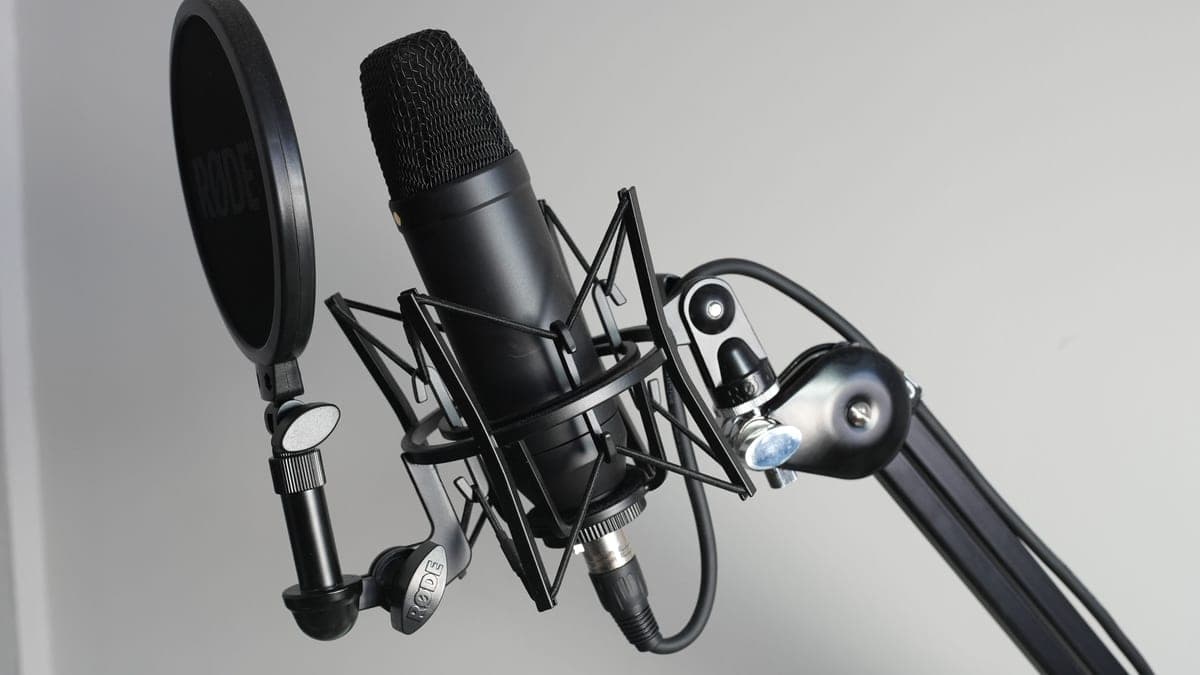
- A pop filter. Neither has one built in, and a condenser at close range is less forgiving of plosives than a dynamic. Best pop filters.
- A stand that does not transmit the desk. Particularly for the AT2020, which has no shockmount. Boom arm vs desk stand.