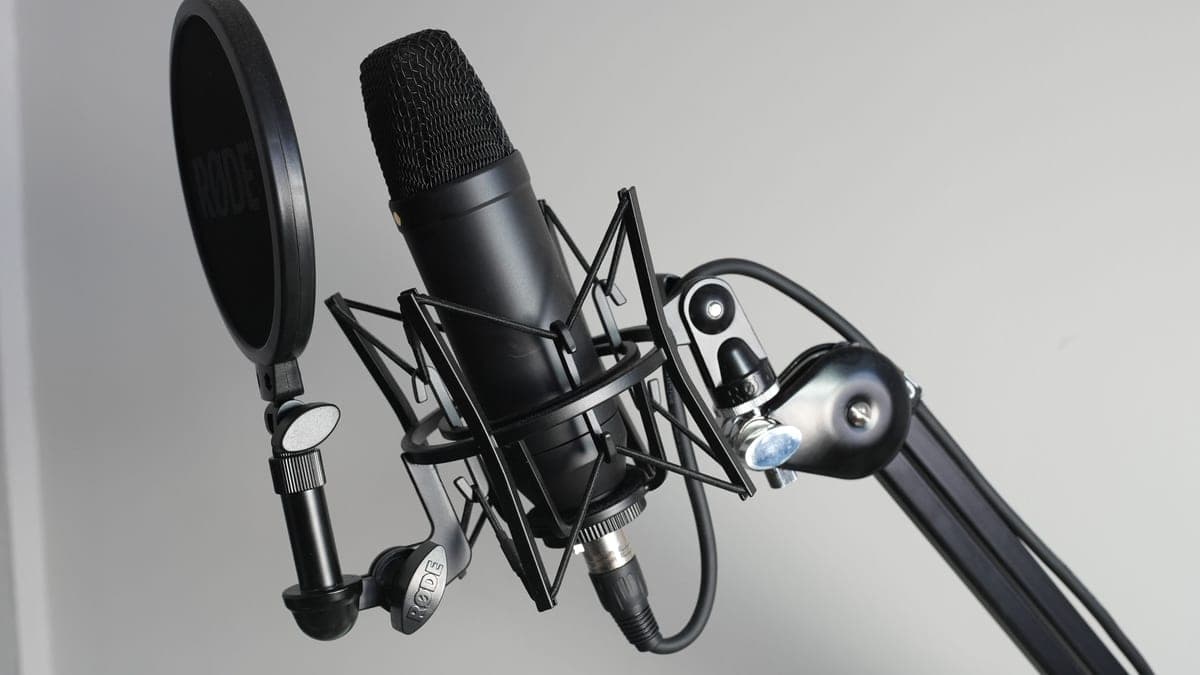
The Rode PodMic is the pick under $100: -57 dBV/Pa of output, an internal pop filter and an internal shockmount in an all-metal body, which is a broadcast dynamic's entire feature set at the bottom of the price range. Buy the Elgato Wave DX instead if your interface is modest — at -52 dBV/Pa it is 5 dB hotter and the least likely of these four to need anything added.
This page exists because the $100 XLR tier is where most upgrades from a USB microphone actually happen, and because the usual advice for it is wrong. The question at this price is not which capsule sounds best in a treated vocal booth — none of these will be the limiting factor in a bedroom. The question is which one your existing interface can drive to a usable level without you buying a second box, and that is answered by published sensitivity, not by a review.
Why sensitivity decides this page
A dynamic microphone has no electronics in it. Whatever voltage the capsule produces is all your preamp gets, and at this price that voltage is small. The published sensitivity figure tells you exactly how small: the PodMic's -57 dBV/Pa means a conversational voice at a hand's distance arrives at the interface roughly 60 dB below the level your DAW wants to see. Your interface has to make up the difference, quietly.
That is why the Wave DX ranks second here despite being the narrowest-bandwidth microphone on the page. At -52 dBV/Pa it is 5 dB hotter than the PodMic and 7 dB hotter than an SM7B, which in practice is the difference between a clean take on a 55 dB interface and a take with an audible hiss behind it. How much clean gain do you need does the arithmetic properly.
The AT2020's -37 dB looks dramatically better than all three dynamics, and it is — a condenser has a powered circuit inside it, so output level is simply not a problem. What you pay for that is room sensitivity, and in an untreated room that is a far worse trade than a hiss you can avoid by choosing a hotter dynamic.
The four, in order
Ranked on how likely each one is to produce a usable recording in an ordinary room on an ordinary interface — not on which capsule measures best in isolation.
Rode PodMic
Top pickRode · The best value in a broadcast dynamic
The pick for most people upgrading from a USB mic: it gets you 90 percent of the broadcast-dynamic sound without the booster arithmetic. Choose the SM7B instead if your voice is already bass-heavy and you want the bass-rolloff switch.
Why it is here
- At -57 dBV/Pa it needs about 2 dB less gain than an SM7B, which is enough to matter on a 58 dB interface
- Internal pop filter means one less thing clamped to your arm
- All-metal body at a fraction of the SM7B's price
What it costs you
- Voiced with more low-mid weight than the SM7B, so a boomy voice can get boomier
- No voicing switches, so you fix tone in the DAW rather than on the mic
- Still low enough output that a 55 dB interface will be working hard
Elgato Wave DX
Elgato · A streaming dynamic that needs no booster
The most sensible streaming dynamic if you want to plug into a modest interface and stop thinking about gain. If you also record music, the `15 kHz` ceiling is a real limit and a wider-band dynamic is the better buy.
Why it is here
- At `-52 dBV/Pa` it is the hottest broadcast-style dynamic here — `7 dB` above an SM7B, so no interface on this site struggles
- Internal pop filter, so nothing extra clamps to your arm
- Light at `440 g`, which any arm holds comfortably
What it costs you
- Response stops at `15 kHz`, so it is a speech microphone and not a music one
- No voicing switches at all
- Voiced for a close, forward streaming sound that is less neutral than an SM7B
Shure SM58
Shure · The cheapest way to hear what a dynamic does for you
The right first XLR mic if the real question is whether a dynamic fixes your room, because it answers that for very little money on the interface you already own. It is a diagnostic, not a destination.
Why it is here
- At -54.5 dBV/Pa it is the hottest dynamic here, and works on genuinely modest preamps
- Light enough for any stand or arm you already own
- Effectively indestructible, and resells for most of what you paid
What it costs you
- Response stops at 15 kHz and it is voiced for a PA, not a studio
- Handheld grille shape is awkward on a desk boom
- You will outgrow it if voice is your main output
Audio-Technica AT2020
Audio-Technica · The entry condenser, if the budget is truly fixed
Buy it only if the AT2035 is genuinely out of reach — the step up buys a high-pass filter and a quieter capsule, which are the two things that matter in an untreated room. On a fixed budget the money is better spent on a dynamic and a panel.
Why it is here
- Cheapest credible XLR condenser, and it has been in production long enough to be a known quantity
- -37 dB sensitivity drives easily from any interface
- Light, so it works on a modest stand
What it costs you
- 20 dB self-noise is 8 dB noisier than the AT2035 and audible on a quiet voice-over
- No high-pass filter, so desk rumble goes straight into the take
- Plastic stand mount rather than a shockmount
The condenser trap at this price
The AT2020 is the microphone most often recommended under $100, and it is the one we rank last. Its 20 dB SPL self-noise is 8 dB noisier than the AT2035 one tier up, it has no high-pass filter, and it ships with a plastic clip rather than a shockmount — so desk rumble and keyboard noise go into the take with nothing on the microphone to stop them.
More importantly, a cardioid condenser picks up roughly as much of your room as it does of you. If your recording space is drywall, a desk and a window, the loudest problem on your recording will be the room, and no amount of capsule quality fixes that. Dynamic vs condenser microphones is the full argument. The short version for this price bracket: buy a dynamic, and spend the difference on acoustic treatment rather than on a quieter capsule.
Where each one stops being enough
- The PodMic runs out of road when your voice is already bass-heavy. It is voiced with more low-mid weight than an SM7B and has no switches, so a boomy voice gets boomier and you fix it in the DAW. If that describes you, the SM7B's bass-rolloff switch is the reason to spend more.
- The Wave DX stops at 15 kHz. For speech that is irrelevant; for singing or an acoustic instrument it is a real ceiling, and best microphones for acoustic guitar is the page you want instead.
- The SM58 is voiced for a live PA and shaped to be held. On a desk boom the ball grille sits awkwardly and the response stops at 15 kHz. It is the best diagnostic purchase here, because it answers the question of whether a dynamic fixes your room for very little money, and the worst long-term one.
- The AT2020 stops being enough the moment you notice its noise floor on a quiet passage, which on voice-over work is quickly. Best budget condenser microphones covers the next step up.
What you still have to budget for
- An XLR cable. None of these ship with one. Best XLR cables covers what matters and what does not.
- Something to hold it. A dynamic on a desk tripod picks up every keystroke through the desk. Boom arm vs desk stand is the decision; best boom arms is the shortlist.
- An interface with enough gain. This is the one that breaks budgets. Best audio interfaces under $100 is honest about what the bottom of that category gives up, and are cheap audio interfaces worth it is the honest answer on whether to stretch.
- Nothing else. No booster, no preamp, no shock mount, not at this tier. If your plan requires a $130 inline preamp to make a $99 microphone work, buy a hotter microphone instead.
The honest summary
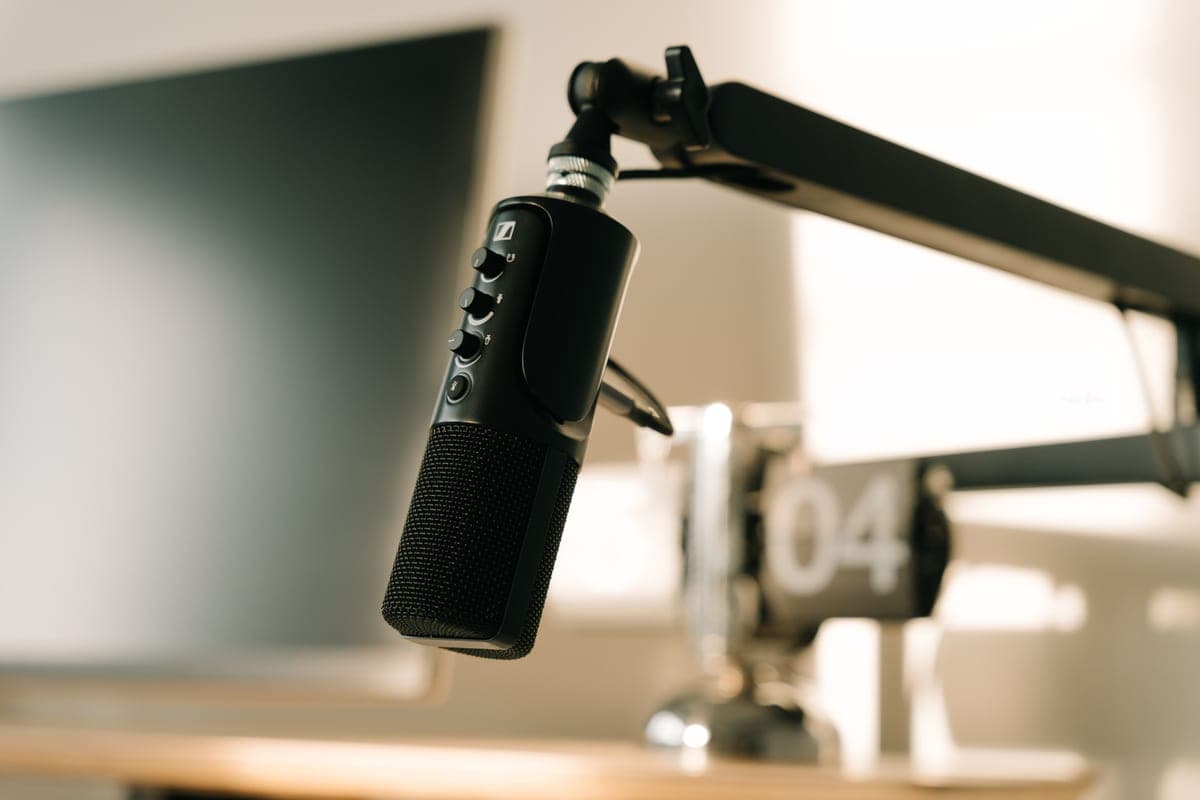
Under $100 you are buying a dynamic microphone, and you are choosing between a slightly better voicing (PodMic) and slightly more output (Wave DX). Both are real upgrades on any USB microphone you are likely to own, for the same reason: they reject the room. Neither is the last microphone you will buy, and that is fine — a dynamic at this price holds its resale value better than almost anything else in a home studio.