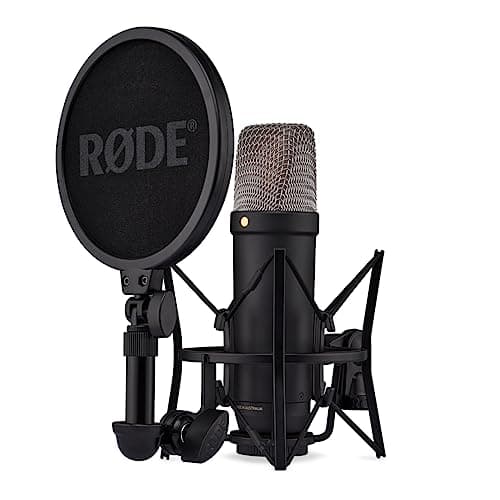
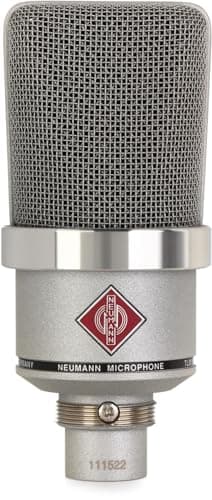
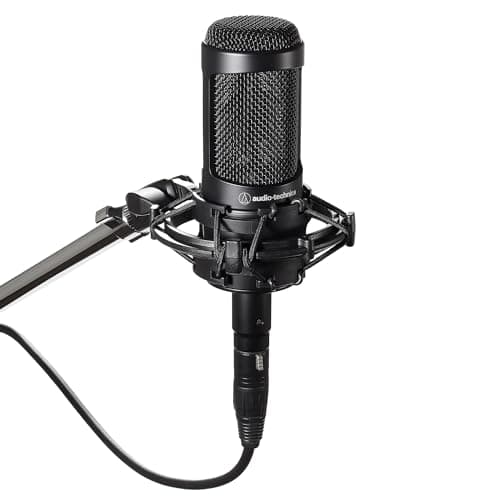
The Rode NT1 5th Generation is the pick on published data: 4 dBA of self-noise is the quietest figure in this group and among the quietest of any microphone at any price, from a 1 inch capsule rated to 142 dB max SPL. The budget pick is the Audio-Technica AT2035 at 12 dB SPL self-noise with a switchable 80 Hz high-pass and a 10 dB pad - the cheapest microphone here with the two switches that actually matter.
A large-diaphragm condenser - conventionally a capsule around 1 inch across - is not simply a better small-diaphragm condenser. The larger membrane moves more air for a given sound pressure, which lifts the signal above the circuit's own noise floor and is why these microphones measure so quietly. It also makes the capsule slower and more directional at high frequencies, which is why a large diaphragm flatters a voice and a small one is usually the better choice over a hi-hat.
Notice how little separates the bottom four rows on self-noise, and how much separates them on controls. The X1 S publishes two pads and two low-cut frequencies; the TLM 102 publishes none. That is a legitimate design position - Neumann's argument is that filtering belongs in the console, not the capsule - but for someone recording in a real room it means the high-pass has to happen in software, after the proximity-effect boom has already been converted.
The six condensers, ranked
Each card carries the published self-noise figure with its source, the max SPL it is rated to, and the room it needs to be worth the money.
Rode NT1 5th Generation
Top pickRode · The quietest capsule most home studios can justify
The right condenser if you have treated the room, or are about to. If your room is bare drywall, the 4 dBA noise floor is irrelevant because the loudest thing on the recording will be the room.
Why it is here
- 4 dBA self-noise is quieter than the room you are recording in, which is the whole point of a condenser
- -32 dB sensitivity means no interface on this site struggles to drive it
- 32-bit float over USB makes clipping a non-event on the digital path
What it costs you
- A condenser hears your room, your keyboard and your fridge — treatment is not optional
- The USB path duplicates an interface you probably also want
- Bright enough that a sibilant voice needs a de-esser
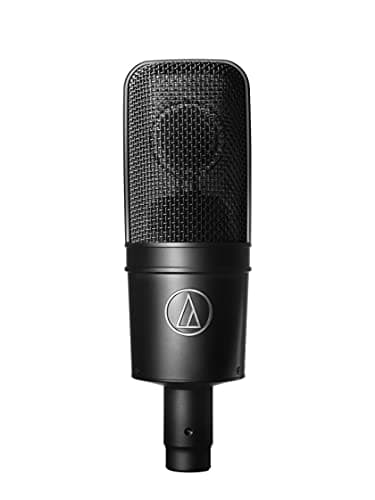
Audio-Technica AT4040
Audio-Technica · The step up from the budget condensers
The right condenser once your room is genuinely treated and the AT2035 has become the limiting factor. In an untreated room it will faithfully reproduce your walls and you will have spent the money for nothing.
Why it is here
- The same `12 dB(A)` self-noise as the AT2035 but with a noticeably more even midrange and a `133 dB` dynamic range
- Keeps the `80 Hz` high-pass filter, which is the control that matters on a desk
- A 2-micron diaphragm and transformerless output at a price well below the boutique tier
What it costs you
- Several times the price of the AT2035 for a difference you only hear in a treated room
- No shockmount in some bundles — check before ordering
- Still a condenser, so the room rules apply unchanged
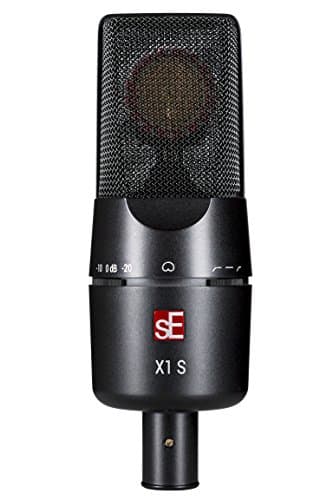
sE Electronics X1 S
sE Electronics · The most on-mic control of any condenser here
The best-specified condenser on this site for a real home studio: quieter than the Audio-Technicas and the only one with a choice of low-cut frequencies. Choose the AT4040 instead if you want a flatter, more forgiving top end.
Why it is here
- `9 dB(A)` self-noise undercuts the AT2035 and AT4040 while costing less than the latter
- **Two** low-cut frequencies rather than one — `160 Hz` is genuinely useful on a boomy voice in a small room
- Two pad settings take it to `160 dB`, so it doubles as an instrument microphone
What it costs you
- Brighter than the AT4040, which suits some voices and not others
- Smaller dealer network than Audio-Technica or Rode
- The switch count makes it easy to leave a filter engaged by accident
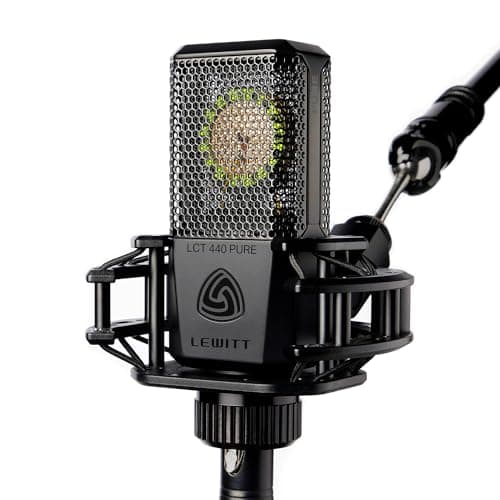
Lewitt LCT 440 Pure
Lewitt · A flatter alternative to the bright budget condensers
Worth the step up if the budget condensers have sounded harsh to you and you want flat rather than flattering. If you want on-mic filtering, the AT2035 gives you more control for less.
Why it is here
- 7 dB(A) is competitive with mics costing considerably more
- Voiced flatter than the NT1-A, so less de-essing on a sibilant voice
- Deliberately stripped of switches, which keeps the signal path simple
What it costs you
- No high-pass filter or pad at all, by design
- Costs more than the AT2035 without adding features
- Smaller dealer network than Rode or Audio-Technica
Neumann TLM 102
Neumann · A Neumann capsule at the bottom of the range
Worth it only in a properly treated room where you have already exhausted what the AT4040 and the NT1 can do. If your room is untreated, this is the clearest example on the site of money that belongs in acoustic panels instead.
Why it is here
- A genuinely Neumann-voiced capsule, which is a different proposition from the budget tier rather than a quieter version of it
- `144 dB` max SPL means it handles anything you will put in front of it
- Physically small, so it fits where a large-body condenser will not
What it costs you
- No pad and no high-pass filter, which on a desk is a real omission at this price
- Neumann does not publish a sensitivity figure we could verify, so it is absent from our table
- The most expensive microphone on this site by a wide margin, and the room matters more than it does
Audio-Technica AT2035
Audio-Technica · The value condenser with the switches you actually need
The condenser to buy if you are choosing on value: the high-pass filter and the 8 dB quieter noise floor are worth more in a real room than anything else in this price band. Skip it if you have not treated the room, in which case a dynamic is the better purchase.
Why it is here
- 12 dB self-noise against the AT2020's 20 dB is an audible 8 dB of quiet for a small price step
- The 80 Hz high-pass is the single most useful switch on a desk-mounted condenser
- Ships with a real shockmount, not a plastic clip
What it costs you
- Still a condenser, so the room rules apply
- Slightly forward upper midrange that some voices find harsh
- The 10 dB pad is mostly irrelevant for voice work
How these are ranked
- Published self-noise, A-weighted. The specification that justifies the capsule size, quoted from the manufacturer with a source link on every card.
- Max SPL, and whether a pad extends it. A large diaphragm close to a loud source is the case where this matters, and a published pad figure is a real extra 10 to 20 dB of headroom.
- On-mic controls. A 80 Hz high-pass applied before conversion is worth more than any amount of post-processing, and a pad is what lets one microphone cover a whisper and a shout.
- Voicing honesty. Several budget condensers are deliberately bright in the 6 to 10 kHz region, which sells in a shop and fights you in a mix. Flatter is ranked higher.
- Buyable now, with a live listing and a price from the daily price check when this page was written.
What we did not pick, and why
- Multi-pattern condensers. Figure-of-eight and omni are genuinely useful, and on a budget microphone the extra backplate usually costs you self-noise and consistency in cardioid - the pattern you will use 95% of the time.
- Tube condensers. A real coloration and a real commitment: a power supply, a multi-pin cable, a warm-up period and a valve that ages. Not a first large-diaphragm microphone.
- Small-diaphragm pencil condensers. Better transient behavior and tighter, more consistent off-axis response - the right tool over an acoustic guitar or a drum kit, not a vocal. Best microphones for acoustic guitar covers that case.
- The Rode NT1-A matched pair. A very quiet capsule at 5 dB(A), sold as two for stereo work. As a single vocal microphone you are paying for a second capsule you will not use.
- Any condenser, if your room is bare. This is the honest caveat the category rarely states. A 4 dBA capsule in an untreated room gives you a very quiet recording of a bad-sounding room. Best dynamic microphones for vocals is the better page for that situation.
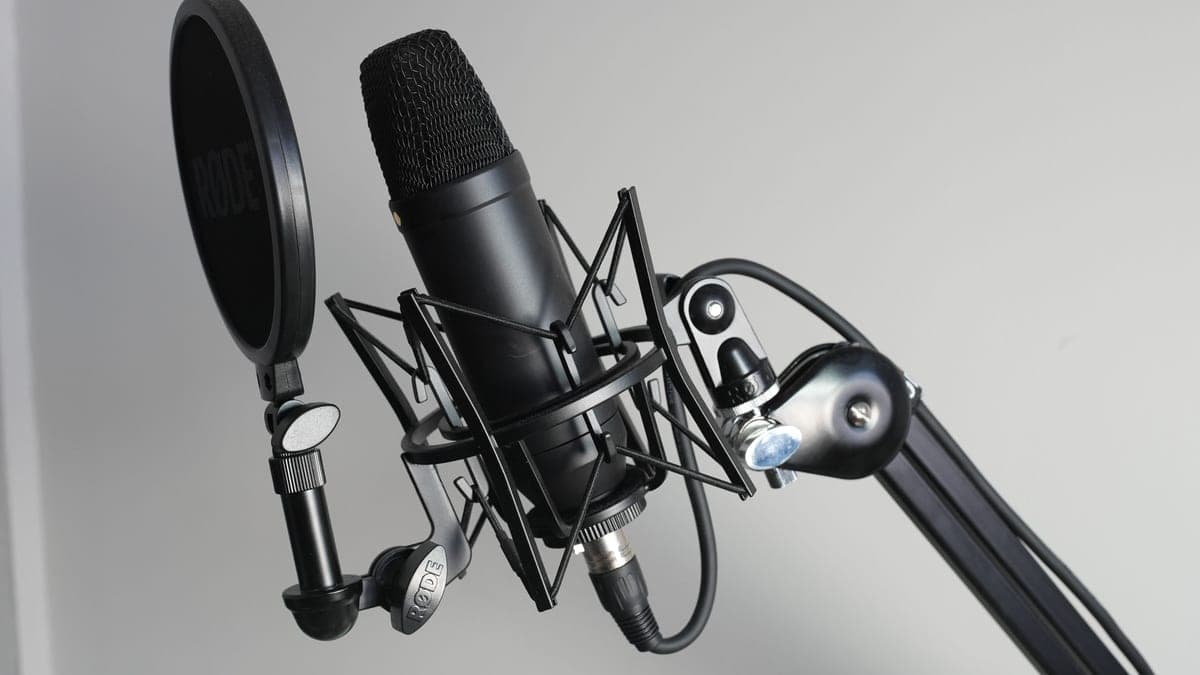
Pair it with
- Phantom power and a clean preamp. Every microphone here needs 48 V: best audio interfaces for vocals.
- Treatment, which matters more here than with a dynamic. Best acoustic panels and best reflection filters.
- A pop filter, because a high-pass switch is not one. Best pop filters.
- The tier question, if the budget is the constraint. Best condenser microphones under $300.
Two head-to-head pages settle most of the remaining decisions here. Neumann TLM 102 vs Rode NT1 is the question of whether the badge buys anything measurable, and Lewitt LCT 440 vs Audio-Technica AT4040 is the flat-versus-bright argument between the two best value capsules in the group.