The Shure SM7B is the best microphone for rap vocals recorded at home: a dynamic capsule takes a loud, close performance without strain, rejects the untreated room almost all home recording happens in, and its bass-rolloff switch handles the proximity buildup close-micing creates. If your room is treated, the sE Electronics X1 S gives you condenser detail with -10 and -20 dB pads and a 160 dB max SPL to survive it.
Rap vocals stress a microphone in three specific ways at once, and a generic vocal roundup addresses none of them. The performance is loud. It is delivered close, often with lips inches from the grille. And it is dense with plosives and sibilance, because consonants are the rhythm. Those three facts move the specification priorities away from self-noise, which is what condenser marketing leads with, and toward max SPL, pads and pattern.
Self-noise still matters, but less than you would think. A capsule's self-noise figure is relevant when the source is quiet — a fingerpicked guitar, a whispered voice-over. A rap vocal at six inches is 20 dB or more above conversational speech, which buries a 12 dB(A) noise floor as thoroughly as it buries a 4 dBA one. Spend the specification budget where the performance actually pushes.
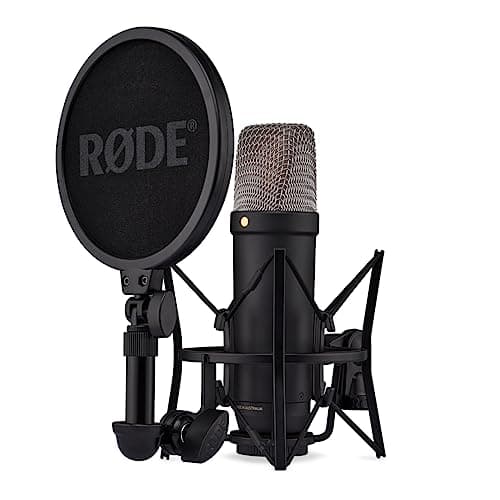
Read that table as two groups rather than five entries. The two dynamics have no meaningful SPL ceiling and no switches you need; the three condensers have a ceiling and, in two cases, switches that raise it. The NT1 5th Generation is the outlier: the quietest capsule here by a wide margin at 4 dBA, and the only condenser on the list with nothing on the body to tame a loud source.
The five microphones, ranked for a rap vocal
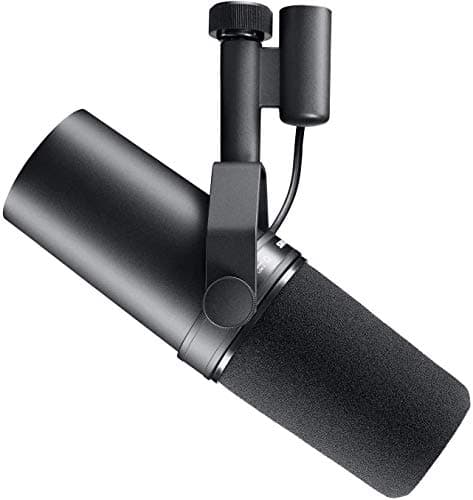
Shure SM7B
Top pickShure · The default upgrade, if your preamp can feed it
Buy it if your interface supplies 60 dB or more of clean gain, or if you are budgeting for a booster alongside it. Buy something else if your only interface is a Scarlett Solo and you are not prepared to add hardware.
Why it is here
- Rejects room and computer-fan noise better than any condenser at any price
- Two voicing switches let one mic cover a thin voice and a boomy one
- Internal shockmount and a yoke that actually holds position on a boom arm
What it costs you
- At -59.0 dBV/Pa it is one of the quietest mics sold, so it demands a loud preamp
- Total cost is the mic plus, very often, a booster
- Heavy enough that a cheap desk arm will droop under it
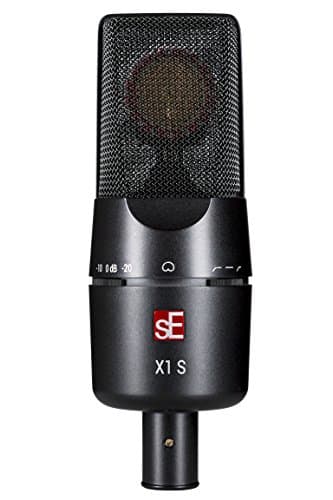
sE Electronics X1 S
sE Electronics · The most on-mic control of any condenser here
The best-specified condenser on this site for a real home studio: quieter than the Audio-Technicas and the only one with a choice of low-cut frequencies. Choose the AT4040 instead if you want a flatter, more forgiving top end.
Why it is here
- `9 dB(A)` self-noise undercuts the AT2035 and AT4040 while costing less than the latter
- **Two** low-cut frequencies rather than one — `160 Hz` is genuinely useful on a boomy voice in a small room
- Two pad settings take it to `160 dB`, so it doubles as an instrument microphone
What it costs you
- Brighter than the AT4040, which suits some voices and not others
- Smaller dealer network than Audio-Technica or Rode
- The switch count makes it easy to leave a filter engaged by accident
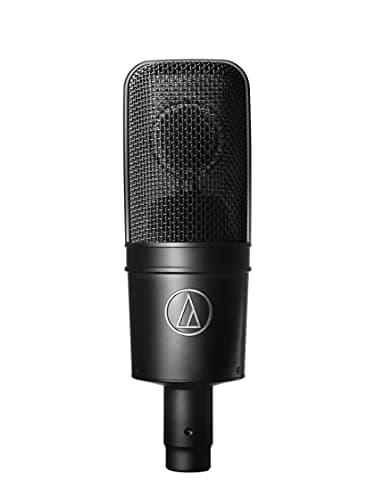
Audio-Technica AT4040
Audio-Technica · The step up from the budget condensers
The right condenser once your room is genuinely treated and the AT2035 has become the limiting factor. In an untreated room it will faithfully reproduce your walls and you will have spent the money for nothing.
Why it is here
- The same `12 dB(A)` self-noise as the AT2035 but with a noticeably more even midrange and a `133 dB` dynamic range
- Keeps the `80 Hz` high-pass filter, which is the control that matters on a desk
- A 2-micron diaphragm and transformerless output at a price well below the boutique tier
What it costs you
- Several times the price of the AT2035 for a difference you only hear in a treated room
- No shockmount in some bundles — check before ordering
- Still a condenser, so the room rules apply unchanged
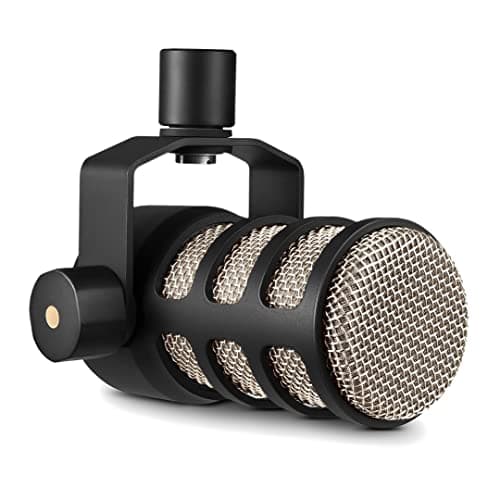
Rode PodMic
Rode · The best value in a broadcast dynamic
The pick for most people upgrading from a USB mic: it gets you 90 percent of the broadcast-dynamic sound without the booster arithmetic. Choose the SM7B instead if your voice is already bass-heavy and you want the bass-rolloff switch.
Why it is here
- At -57 dBV/Pa it needs about 2 dB less gain than an SM7B, which is enough to matter on a 58 dB interface
- Internal pop filter means one less thing clamped to your arm
- All-metal body at a fraction of the SM7B's price
What it costs you
- Voiced with more low-mid weight than the SM7B, so a boomy voice can get boomier
- No voicing switches, so you fix tone in the DAW rather than on the mic
- Still low enough output that a 55 dB interface will be working hard
Rode NT1 5th Generation
Rode · The quietest capsule most home studios can justify
The right condenser if you have treated the room, or are about to. If your room is bare drywall, the 4 dBA noise floor is irrelevant because the loudest thing on the recording will be the room.
Why it is here
- 4 dBA self-noise is quieter than the room you are recording in, which is the whole point of a condenser
- -32 dB sensitivity means no interface on this site struggles to drive it
- 32-bit float over USB makes clipping a non-event on the digital path
What it costs you
- A condenser hears your room, your keyboard and your fridge — treatment is not optional
- The USB path duplicates an interface you probably also want
- Bright enough that a sibilant voice needs a de-esser
Why the proximity effect decides this more than the capsule does
Any directional microphone boosts low frequencies as the source gets closer. At six inches it is a pleasant thickening. At two inches it is a large hump in the low end that no amount of EQ fully undoes, because the boost is not flat — it changes with every head movement, so a static filter cannot track it.
This is the single biggest technical problem with a close-mic rap vocal, and it is why the SM7B's bass-rolloff switch matters so much more here than on a podcast. Flipping it in trades a proximity hump you cannot predict for a known, fixed curve. The AT4040 and X1 S do the same job with their high-pass filters at 80 Hz and 80 or 160 Hz respectively. The PodMic and the NT1 have no filter, so the fix has to happen in the DAW, after the fact, on a moving target.
The other half of the answer is mechanical: a pop filter stops the plosive blast from reaching the capsule at all, which is a different problem from the low-end boost. Best pop filters covers the hardware, and pop filter vs foam windscreen covers which type survives this style of performance.
The room is the reason most home rap vocals sound amateur
A rap vocal is usually the most exposed element in the mix — dry, loud, centred and unmasked. That means every artefact of the recording space is audible: the flutter echo off the wall behind the mic, the boxiness from a small room's low-frequency modes, the slap off a bare desk.
A dynamic capsule hides a remarkable amount of that simply by not hearing it. That is the core argument for the SM7B and the PodMic topping this list despite being technically simpler instruments than the condensers below them. If you do treat the space, the ranking genuinely flips and the X1 S or the AT4040 pull ahead — treating a bedroom studio is what that costs, and best reflection filters is the half-measure if you cannot mount anything.
What we did not pick, and why
- Ribbon microphones. Beautiful on brass, and a close rap delivery is exactly the kind of air blast that stretches a ribbon out of spec.
- Tube condensers. The colour is real and so is the noise floor, and neither helps a source this loud.
- USB microphones. The gain structure is fixed inside the body, so when a loud take clips there is nothing to turn down. USB vs XLR microphones.
- Omnidirectional capsules. No proximity effect, which sounds like a solution, and no room rejection either, which makes it a worse problem.
Pair it with
- Enough clean gain for a dynamic. The SM7B at -59.0 dBV/Pa wants roughly 60 dB. Best audio interfaces for vocals ranks on that figure.
- A pop filter that handles a close delivery. Best pop filters.
- Closed-back headphones, so a loud backing track does not bleed into the take. Best closed-back headphones for recording.
How to choose
- Untreated room, loud close delivery: Shure SM7B. The bass-rolloff switch is the feature, not a bonus.
- Treated room, you want detail and control: sE Electronics X1 S. Two pads and two low-cut positions is the most on-mic control here.
- Treated room, one switch is enough: Audio-Technica AT4040. 155 dB with the pad in, 12 dB(A) self-noise.
- Budget is hard and the room is bare: Rode PodMic. No filter switch, so plan on a high-pass in the DAW.
- You also record instruments: Rode NT1 5th Generation. Buy it for the 4 dBA capsule's other jobs.
If you are coming from a USB microphone and this is your first XLR purchase, read upgrading from USB to XLR before you spend — the microphone is usually the smaller half of the bill, and buying the capsule before checking the interface's gain figure is the most common way this upgrade disappoints.