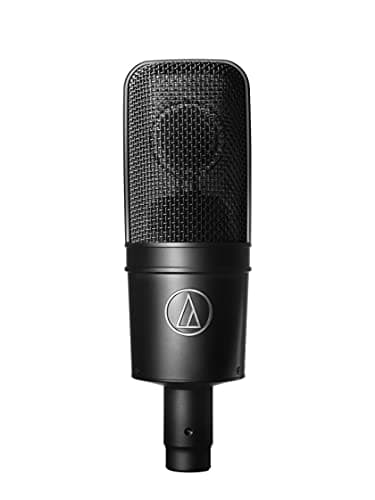
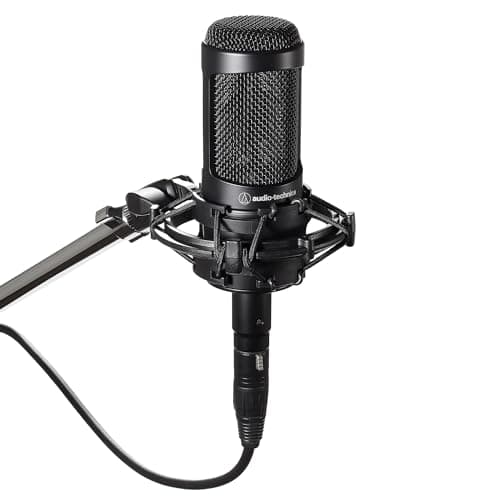
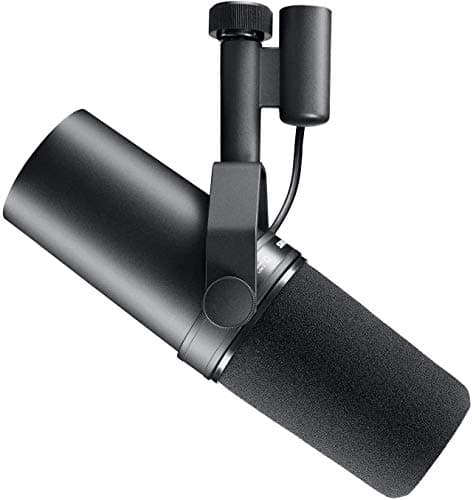
The Audio-Technica AT4040 is the pick for singing: 12 dB(A) self-noise, 145 dB max SPL that becomes 155 dB with the pad engaged, a switchable 80 Hz high-pass, and the most even midrange of the Audio-Technica condensers - which matters more on a sung vowel than on a spoken sentence. The budget pick is the AT2035, which has the same 12 dB(A) noise floor and the same two switches for well under half the money. If your room is bare, buy the Shure SM7B instead and treat the room later.
A sung source behaves nothing like a spoken one, and that is the whole reason this page exists separately from the best condenser microphones for vocals, which ranks the same shelf on capsule quality. A conversational voice at 6 inches sits somewhere around 85 dB SPL at the capsule. A trained singer leaning into a chorus at the same distance is comfortably 15 dB to 20 dB above that, and a belt can transiently go further. That changes which specification decides the purchase: not the quietest capsule, but the one with the most headroom above your loudest note and the most control over the low-mid buildup that close-miked chest voice produces.
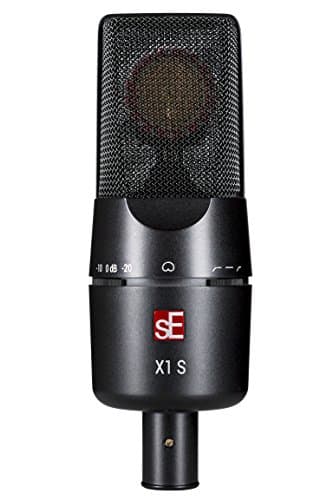
On raw numbers the X1 S wins twice over: 9 dB(A) of self-noise against the AT4040's 12 dB(A), and 160 dB of max SPL with the 20 dB pad in against the AT4040's 155 dB. It is ranked second anyway, for one reason that only shows up on singing. The X1 S is the brighter of the two, and brightness on a sung vowel arrives as sibilance and as a hardness around 4 kHz that you then spend the mix fighting. The AT4040's flatter upper midrange is the more forgiving starting point for a voice that is already working hard. If your voice is dark, or you sing quietly and want the top lifted, reverse those two - and use the X1 S 160 Hz low-cut, which is the single most useful switch here for a singer who works close.
The six, ranked for a sung source
Each card carries the published specification with its source, and says plainly which kind of singer it suits. No microphone here was tested by us; the ranking is a reading of published figures against our criteria.
Audio-Technica AT4040
Top pickAudio-Technica · The step up from the budget condensers
The right condenser once your room is genuinely treated and the AT2035 has become the limiting factor. In an untreated room it will faithfully reproduce your walls and you will have spent the money for nothing.
Why it is here
- The same `12 dB(A)` self-noise as the AT2035 but with a noticeably more even midrange and a `133 dB` dynamic range
- Keeps the `80 Hz` high-pass filter, which is the control that matters on a desk
- A 2-micron diaphragm and transformerless output at a price well below the boutique tier
What it costs you
- Several times the price of the AT2035 for a difference you only hear in a treated room
- No shockmount in some bundles — check before ordering
- Still a condenser, so the room rules apply unchanged
sE Electronics X1 S
sE Electronics · The most on-mic control of any condenser here
The best-specified condenser on this site for a real home studio: quieter than the Audio-Technicas and the only one with a choice of low-cut frequencies. Choose the AT4040 instead if you want a flatter, more forgiving top end.
Why it is here
- `9 dB(A)` self-noise undercuts the AT2035 and AT4040 while costing less than the latter
- **Two** low-cut frequencies rather than one — `160 Hz` is genuinely useful on a boomy voice in a small room
- Two pad settings take it to `160 dB`, so it doubles as an instrument microphone
What it costs you
- Brighter than the AT4040, which suits some voices and not others
- Smaller dealer network than Audio-Technica or Rode
- The switch count makes it easy to leave a filter engaged by accident
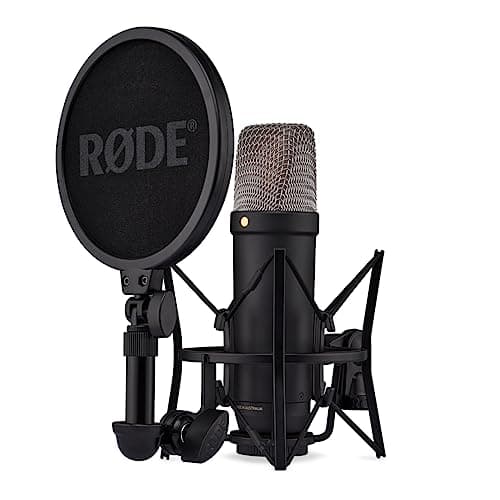
Rode NT1 5th Generation
Rode · The quietest capsule most home studios can justify
The right condenser if you have treated the room, or are about to. If your room is bare drywall, the 4 dBA noise floor is irrelevant because the loudest thing on the recording will be the room.
Why it is here
- 4 dBA self-noise is quieter than the room you are recording in, which is the whole point of a condenser
- -32 dB sensitivity means no interface on this site struggles to drive it
- 32-bit float over USB makes clipping a non-event on the digital path
What it costs you
- A condenser hears your room, your keyboard and your fridge — treatment is not optional
- The USB path duplicates an interface you probably also want
- Bright enough that a sibilant voice needs a de-esser
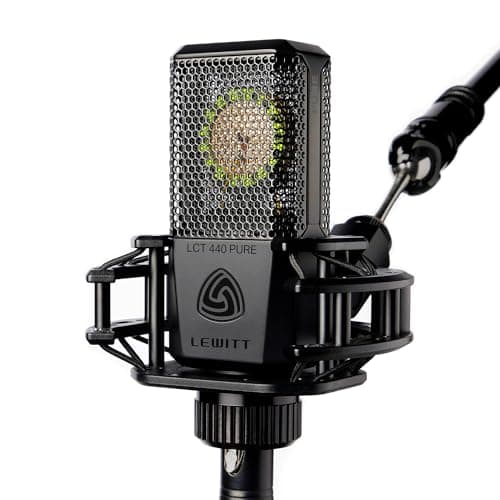
Lewitt LCT 440 Pure
Lewitt · A flatter alternative to the bright budget condensers
Worth the step up if the budget condensers have sounded harsh to you and you want flat rather than flattering. If you want on-mic filtering, the AT2035 gives you more control for less.
Why it is here
- 7 dB(A) is competitive with mics costing considerably more
- Voiced flatter than the NT1-A, so less de-essing on a sibilant voice
- Deliberately stripped of switches, which keeps the signal path simple
What it costs you
- No high-pass filter or pad at all, by design
- Costs more than the AT2035 without adding features
- Smaller dealer network than Rode or Audio-Technica
Audio-Technica AT2035
Audio-Technica · The value condenser with the switches you actually need
The condenser to buy if you are choosing on value: the high-pass filter and the 8 dB quieter noise floor are worth more in a real room than anything else in this price band. Skip it if you have not treated the room, in which case a dynamic is the better purchase.
Why it is here
- 12 dB self-noise against the AT2020's 20 dB is an audible 8 dB of quiet for a small price step
- The 80 Hz high-pass is the single most useful switch on a desk-mounted condenser
- Ships with a real shockmount, not a plastic clip
What it costs you
- Still a condenser, so the room rules apply
- Slightly forward upper midrange that some voices find harsh
- The 10 dB pad is mostly irrelevant for voice work
Shure SM7B
Shure · The default upgrade, if your preamp can feed it
Buy it if your interface supplies 60 dB or more of clean gain, or if you are budgeting for a booster alongside it. Buy something else if your only interface is a Scarlett Solo and you are not prepared to add hardware.
Why it is here
- Rejects room and computer-fan noise better than any condenser at any price
- Two voicing switches let one mic cover a thin voice and a boomy one
- Internal shockmount and a yoke that actually holds position on a boom arm
What it costs you
- At -59.0 dBV/Pa it is one of the quietest mics sold, so it demands a loud preamp
- Total cost is the mic plus, very often, a booster
- Heavy enough that a cheap desk arm will droop under it
What changes when you sing instead of speak
- Your working distance stops being fixed. A podcaster parks 4 inches from a dynamic and stays there. A singer moves, which means proximity effect moves with them. That is an argument for a high-pass filter on the body of the mic, and for a mic whose off-axis response does not change character sharply.
- Headroom stops being theoretical. Clipping on speech is a gain-staging mistake. Clipping on a sung peak is physics, and it happens at the capsule before your interface's meter ever sees it. This is what the pad is for.
- Self-noise matters at the other end of the take. The quiet verse is where a noisy capsule shows up. The NT1's 4 dBA is genuinely the quietest figure on this site, which is why it is third here rather than further down.
- The room gets louder too. A condenser hears everything your voice excites in the room, and you are exciting it 15 dB harder than a speaker would. If the room is bare, that is the problem to solve first - how to treat a room for recording is the five-minute diagnosis.
- Sibilance becomes a purchase decision. Bright condensers flatter spoken word and punish sung consonants. This is the single most common reason a singer dislikes an otherwise excellent microphone.
What we did not pick, and why
- The Neumann TLM 102. A genuinely better capsule and a 144 dB max SPL, at a price that only makes sense once the room is treated and the preamp is not the limiting factor. Neumann TLM 102 vs Rode NT1 has the figures side by side.
- The Rode NT1-A matched pair. Two microphones, sold for stereo work. A singer needs one, and the single NT1 5th Generation is quieter - see Rode NT1 vs Rode NT1-A.
- The Shure SM58. The right handheld for live singing and a poor studio choice for it: the grille and the proximity-heavy voicing that make it work on stage are what you are trying to avoid on a recording.
- The Rode NT5 matched pair. Small-diaphragm pencil condensers, correct for an acoustic instrument and wrong for a close-miked voice.
- Any USB microphone. Not a snobbery point - a sung peak is exactly where a fixed-gain USB capsule runs out of room, and you cannot put a pad in front of it. USB vs XLR microphones covers the trade honestly.
How these are ranked
- Max SPL, with and without the pad. Published by the manufacturer. This is the ceiling your loudest note has to fit under.
- On-mic filtering. A switchable high-pass, and a second low-cut frequency where one exists, because proximity effect on a sung source is not optional to manage.
- Self-noise, in dB(A). It decides the quiet passages, not the loud ones.
- Top-end character against a sung vowel. Flat is ranked above flattering here, which is the reverse of how a spoken-word page would rank it.
- Buyable now, with a live Amazon listing and a price from the daily price check at the time this page was written.
Pair it with
- An interface with real gain and clean phantom power. Best audio interfaces for vocals.
- A pop filter, not a foam sock. A sung plosive carries more energy than a spoken one: best pop filters.
- Two panels at the first reflection points. Best acoustic panels, which is the cheapest thing on this site that changes a vocal recording.
- Closed-back headphones for the take. Best closed-back headphones for recording, so the backing track does not leak into a condenser working this hard.
One caveat worth more than any of the rankings above. If you have ever recorded a vocal in this room and thought it sounded distant, boxy or like a small bathroom, no microphone on this page will fix that - a condenser will reproduce it more faithfully, which is worse. Spend the first $80 on a panel behind the mic and the next on the capsule. If you sing loud in a room you cannot treat, the SM7B is the honest answer and the best dynamic microphones for vocals is the page for you rather than this one.