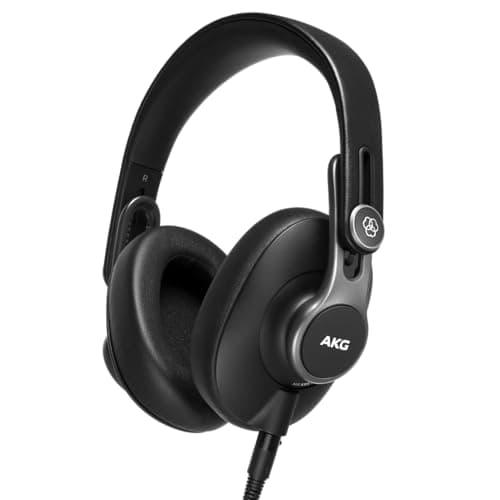
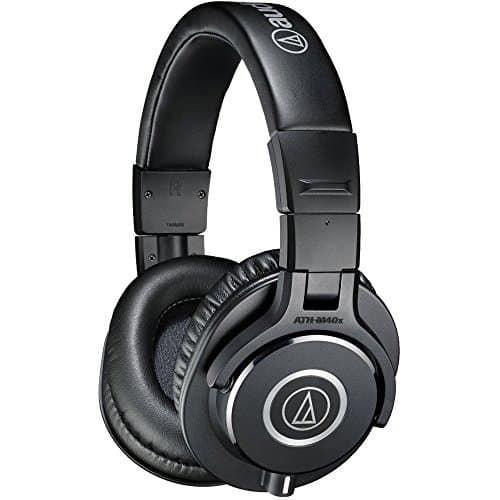
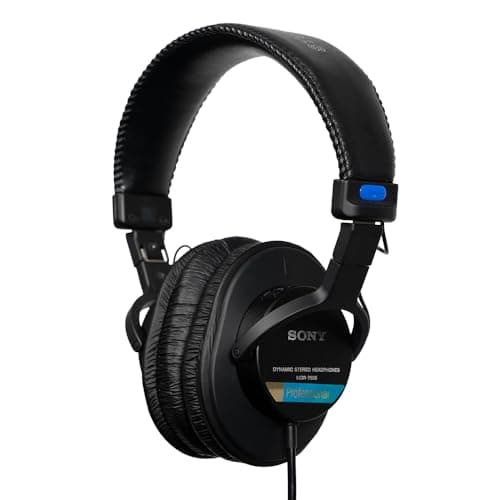
The AKG K371 is the best ATH-M50x alternative for most people: at a measured 36.2 ohms and 117.9 dB SPL it plays loud from any interface output just as the M50x does, and it is the closed-back in this registry that measures closest to a target curve - which is the specific thing people are reaching for when the M50x's low end stops being fun and starts being a problem. The budget pick is the Audio-Technica ATH-M40x at 35 ohms: the same family, the same build, a flatter voicing, and less money than the headphone you are replacing.
Start with what is not in dispute. The M50x publishes a 45 mm neodymium driver with CCAW voice coils, 15 Hz to 28 kHz response, 1,600 mW maximum input power and 287 g without cable, and it measures 36.6 ohms with 115.1 dB SPL sensitivity. It ships with three detachable cables - a 1.2 m coiled, a 1.2 m straight and a 3 m straight - it folds flat, and it has survived a decade of being thrown into bags. On durability and convenience nothing on this page beats it.
There is a sixth reason that is not in that table, because the answer is not a headphone. If your mixes come out bass-heavy on other systems, the M50x's voicing is only part of the story - any closed-back's seal shapes its low frequency response, and that affects every pair here. How to mix low end on headphones is the workaround, and best studio monitors under $300 is the purchase that solves it properly once the room allows it.
What the ATH-M50x actually does well
- Three detachable cables in the box. A fixed cable is what kills headphones in this bracket, and the M50x ships with a coiled one for the desk and a 3 m straight one for tracking across a room. Two of the five alternatives here still have fixed cables.
- `1,600 mW` maximum input power and `115.1 dB SPL` measured sensitivity. It will go painfully loud from a laptop, let alone an interface, and it tolerates being driven hard.
- It folds, and it survives. 287 g without cable, swivelling cups and a build that has outlasted several generations of rivals. If the headphones travel, this is still a strong answer.
- A useful second opinion. The bass lift that makes it wrong for mix decisions makes it a fair proxy for consumer headphones, which is a legitimate reference to check a finished mix against.
What it does not give you is a response you can set a bass level against, pads that stay comfortable through a long session, or a measured figure its manufacturer is willing to publish against a target curve. Every alternative below buys back one of those, and two of them cost less than the M50x does.
Notice how little the published response ranges tell you. Every pair here claims to reach well below 20 Hz and most claim well above 20 kHz, and none of those numbers carries a tolerance - so they are not comparable and they say nothing about the bass lift that sent you here. That is why the ranking leads with measured response against a target curve, where an independent measurement exists, and treats the manufacturers' own ranges as decoration.
How these are ranked
- Measured response against a target curve, where an independent measurement exists. This is the M50x's one real weakness for mixing and the most common reason this search happens, so it comes first.
- Whether you can set a bass level on it. Not the same as flatness in general - a headphone can be even through the midrange and still mislead you below 100 Hz.
- Impedance and sensitivity, so the pair plays loud from an interface headphone output. The M50x is easy to drive, so an alternative that needs an amplifier has to earn it. None here does.
- Comfort and pads over a long session. The M50x's smaller pads and firm clamp are the second-most-common complaint, and it is the one no measurement captures.
- Serviceability. A detachable cable and replaceable pads, because the M50x sets a high bar here with three cables in the box.
The five alternatives, ranked
Two of these cost less than the M50x and three cost more. Each card says which complaint it answers and what it does worse than the headphone you already own.
AKG K371
Top pickAKG · The closed-back that measures closest to a target curve
The best single-pair compromise on this site: closed enough to track with, flat enough to make real mix decisions on. Choose the DT 770 instead if durability matters more than measured flatness.
Why it is here
- Independently measured as one of the flattest closed-backs at any price
- 36 ohms and 117.9 dB SPL means anything drives it loudly
- Folds flat, with three detachable cables
What it costs you
- Plastic build that does not inspire the confidence a DT 770 does
- Clamping force is light, so it moves if you do
- Closed-back still compresses your sense of reverb depth
Audio-Technica ATH-M40x
Audio-Technica · The flat-voiced budget closed-back
The one to buy if money is tight and you want a closed-back that does not lie to you about low end. Step up to the DT 770 Pro when isolation or longevity starts costing you takes.
Why it is here
- Voiced far flatter than the ATH-M50x it sits below, which makes it the better monitoring choice of the two
- 35 ohms and a 1,600 mW power handling figure means nothing you own will struggle or damage it
- Two detachable cables in the box, one coiled and one straight
What it costs you
- Isolates less than the DT 770 Pro or the HD 280 Pro, so a loud headphone mix can still leak
- Pads are shallow and compress within a year of regular use
- Audio-Technica publishes no attenuation figure for it either
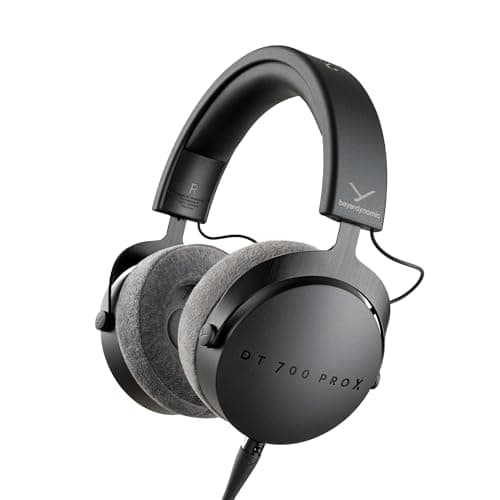
Beyerdynamic DT 700 Pro X
Beyerdynamic · A closed-back you can also make mix calls on
The pick if you want one closed-back that tracks honestly and can take a mix most of the way, and your interface has a modest headphone output. If budget decides, the DT 770 Pro does the tracking job for less.
Why it is here
- 48 ohms is the easiest-to-drive closed-back here — a bus-powered interface or a phone dongle manages it
- Noticeably flatter than the DT 770's lifted treble, so mix decisions survive better
- Detachable cable plus the usual Beyerdynamic replaceable-everything parts policy
What it costs you
- Costs roughly half again what the DT 770 Pro does for a smaller gain than the price implies
- Isolates less than the DT 770 Pro, which is the trade for the flatter voicing
- Beyerdynamic publishes no attenuation figure, so isolation cannot be compared on paper
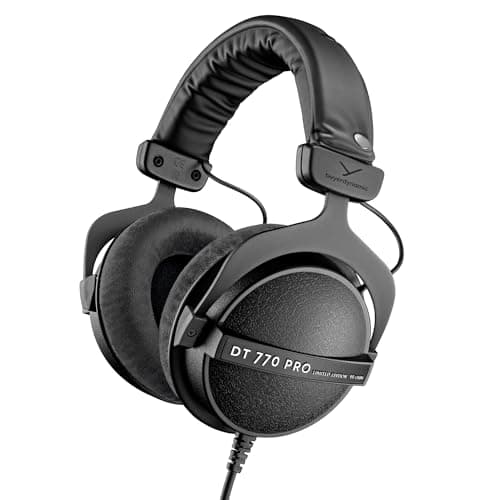
Beyerdynamic DT 770 Pro (80 ohm)
Beyerdynamic · Tracking with a live mic in the room
The right headphone for recording, where leakage is the problem you are solving. For mixing decisions, an open-back pair will tell you more truth about depth and reverb.
Why it is here
- Closed-back, so nothing leaks into an open microphone two feet away
- 80 ohms drives properly from any interface headphone output on this site
- Every wear part is a user-replaceable spare, which is why these last a decade
What it costs you
- A lifted top end that flatters detail and misleads on sibilance decisions
- Closed-back soundstage narrows your sense of reverb depth
- Velour pads get warm over a long session
Sony MDR-7506
Sony · The broadcast standard for hearing problems
Buy them as the pair you check edits and noise on, not the pair you mix on. If you only own one set of headphones, the K371 is the better choice.
Why it is here
- Forward, slightly harsh presentation that makes clicks, hum and sibilance obvious
- 63 ohms drives from anything, including a camera
- Decades of parts availability and a price that has barely moved
What it costs you
- Not flat, and not pleasant — this is a fault-finding tool
- Coiled cable is fixed, not detachable
- Thin pads that flake with age
What we did not pick, and why
- The Sennheiser HD 280 Pro. The isolation champion in this registry at a published 32 dB of ambient attenuation, and isolation is not the M50x complaint - the M50x already isolates well. It belongs on best headphones for podcasting, where that figure is the whole point.
- Open-back headphones. A more natural soundstage and a better read on depth, and they leak freely - so they are wrong anywhere near a live microphone, which is half of what an M50x is used for. Best open-back headphones under $500 is that category.
- The ATH-M50xBT and other wireless versions. The same voicing plus a codec, a battery and latency. If the complaint is accuracy, adding a wireless link is the wrong direction.
- Equalising the M50x instead. A legitimate and free first move, and it cannot fix the part of the problem that comes from the pads and the seal, which varies session to session. Try it before you spend anything; do not expect it to replace a flatter headphone.
- A headphone amplifier. At a measured 36.6 ohms the M50x does not need one, and an amplifier will not change its voicing - which is the actual complaint. Spend the money on the headphones or on treatment.
Pair it with
- An interface headphone output rather than a motherboard jack. Best audio interfaces for vocals.
- The tier view, if the budget is the real constraint. Best closed-back headphones under $200 - four of these five sit in that band.
- Monitors, if the complaint is really about mixing. Best studio monitors under $300.
- The podcast version of this decision. Best headphones for podcasting, where isolation outranks flatness.
Beyerdynamic DT 770 Pro vs ATH-M50x is the head-to-head between the M50x and the comfort answer on this page, with the impedance and weight figures side by side. If you have already decided the Beyerdynamic is not for you either, Beyerdynamic DT 770 alternatives is the mirror image of this page - same shelf, different reference, and a ranking led by treble rather than bass.