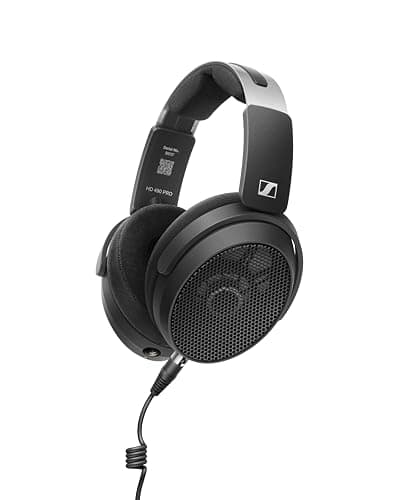
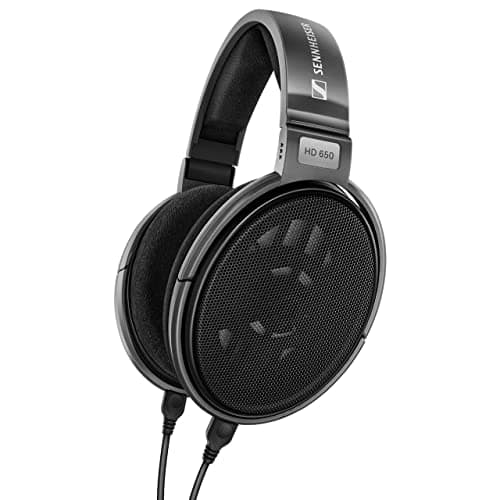
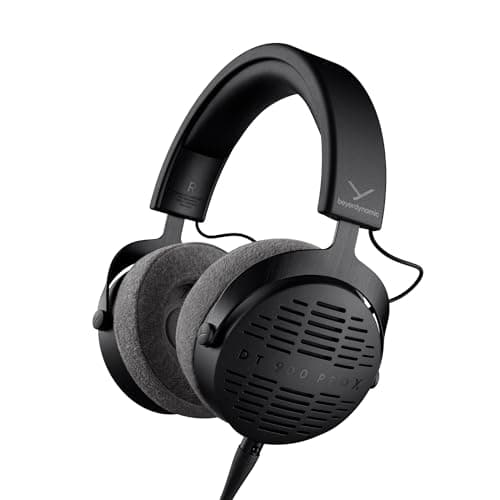
The Sennheiser HD 490 Pro is the pick under $500: at 130 ohms and 105 dB SPL at 1 Vrms it reaches a working level from an interface headphone output, which the long-standing reference in this category does not reliably do. The Sennheiser HD 650 at 300 ohms is the pick if you already own a headphone amplifier - it has been the mixing reference for two decades and nothing here replaces it on sound. The budget pick is the Beyerdynamic DT 900 Pro X at 48 ohms, the easiest pair here to drive from anything.
An open-back headphone has a perforated or grilled outer cup, so the driver sees the room behind it instead of a sealed cavity. That removes the pressure build-up that makes closed-backs sound enclosed, and it gives you a more natural sense of depth - which is the entire reason mixing engineers prefer them. It also means they leak freely in both directions, so they are the wrong tool anywhere near a live microphone.
The 300 ohm figure for the HD 650 is the single most consequential number on this page. Sensitivity is quoted per volt, and a high-impedance headphone draws little current - so to reach a given level it needs voltage swing that most interface headphone outputs cannot deliver. The result is not distortion; it is a pair that sounds thin and quiet and that you then blame for lacking bass. On a proper amplifier it is a different headphone entirely.
The three open-backs, ranked
Each card carries the published figures with sources, the live price with the date it was checked, and what the pair needs to be driven properly.
Sennheiser HD 490 Pro
Top pickSennheiser · A modern open-back that laptops can drive
The pick if you mix on a laptop or a modest interface and the HD 650's 300 ohms would leave you short of level. If your interface has a strong headphone amp, the HD 650 gets you most of the way for much less.
Why it is here
- 130 ohms and 105 dB SPL means it plays loud enough from modest outputs, unlike the HD 650
- Ships with two pad sets that genuinely change the voicing for mixing versus listening
- Lighter than the HD 650 over a long session
What it costs you
- Costs considerably more than the HD 650 it is voiced against
- Two pad sets means two references, which is one more variable than you wanted
- Open-back, so still no good for tracking
Sennheiser HD 650
Sennheiser · The long-standing mixing reference
Buy it for mixing if your interface can drive 300 ohms — the SSL 2+ and MOTU M2 can, a bus-powered budget box may struggle. Do not buy it as your only pair if you also track with a live mic in the room.
Why it is here
- The midrange presentation most mixing engineers have calibrated their ears against
- Open-back, so reverb depth and stereo width read honestly
- Fully serviceable — pads, cable and headband are all replaceable
What it costs you
- 300 ohms needs a headphone output with real voltage swing; a weak one sounds thin and quiet
- Open-back leaks straight into any live microphone, so it is useless for tracking
- Costs more than any other pair ranked here, and needs the output to match
Beyerdynamic DT 900 Pro X
Beyerdynamic · Open-back detail with no amplifier requirement
The right open-back if you want mixing honesty from a laptop or an interface with a weak headphone amp. The HD 650 is still the more neutral midrange if you can drive it.
Why it is here
- 48 ohms is the easiest open-back here to drive — a phone dongle manages it
- Detachable cable with two lengths in the box
- Beyerdynamic spare-part support, same as the DT 770
What it costs you
- Slightly bright, in the family tradition
- Open-back rules out tracking with a live mic
- Beyerdynamic does not publish a full response spec for this model in the same detail as the DT 770
How these are ranked
- A live listing under `$500` on the day this page was written, from the site's daily price check.
- Whether an interface headphone output can drive it. Impedance and published sensitivity, because a headphone you cannot reach working level on is not the better headphone, whatever it measures on a bench.
- Published specifications at all. Two of these three publish sensitivity per volt; one does not publish a figure, and this page says so rather than estimating.
- Suitability for mix decisions. Open-backs are bought to make calls on, so a natural soundstage and a response you can learn rank above excitement.
- Replaceable cables and parts. At this price a pair should last a decade, which means pads and cable must be serviceable.
What we did not pick, and why
- Closed-back headphones. Mandatory with a live microphone in the room and a different category. Best closed-back headphones under $200 and best headphones for podcasting.
- Planar magnetic headphones. Genuinely excellent and almost all of them want a real amplifier, which turns a $400 purchase into a $600 one. Not in this registry and not pretended to be.
- Open-backs above `$500`. Above this band you are into diminishing returns that an untreated room will hide completely. Are expensive studio monitors worth it makes the same argument for speakers.
- Semi-open designs. A compromise that leaks nearly as much as an open-back while giving up some of the soundstage. If you need isolation, buy closed.
- Using these for tracking. They will bleed into the microphone. That is not a flaw, it is the design.
Pair it with
- A headphone output that can drive them, or an amplifier. Best audio interfaces for a home studio.
- A closed-back pair for tracking, because these cannot do that job. Best closed-back headphones for recording.
- The low-end workaround every headphone mix needs. How to mix low end on headphones.
- Monitors, once the room can support them. Best studio monitors under $500.
If these will be your only monitoring - which is a perfectly reasonable choice in a shared flat - read how to mix with headphones only and studio monitors vs headphones for mixing before you buy. The honest summary is that a good open-back in an untreated room beats good monitors in the same room for everything except low-frequency balance.