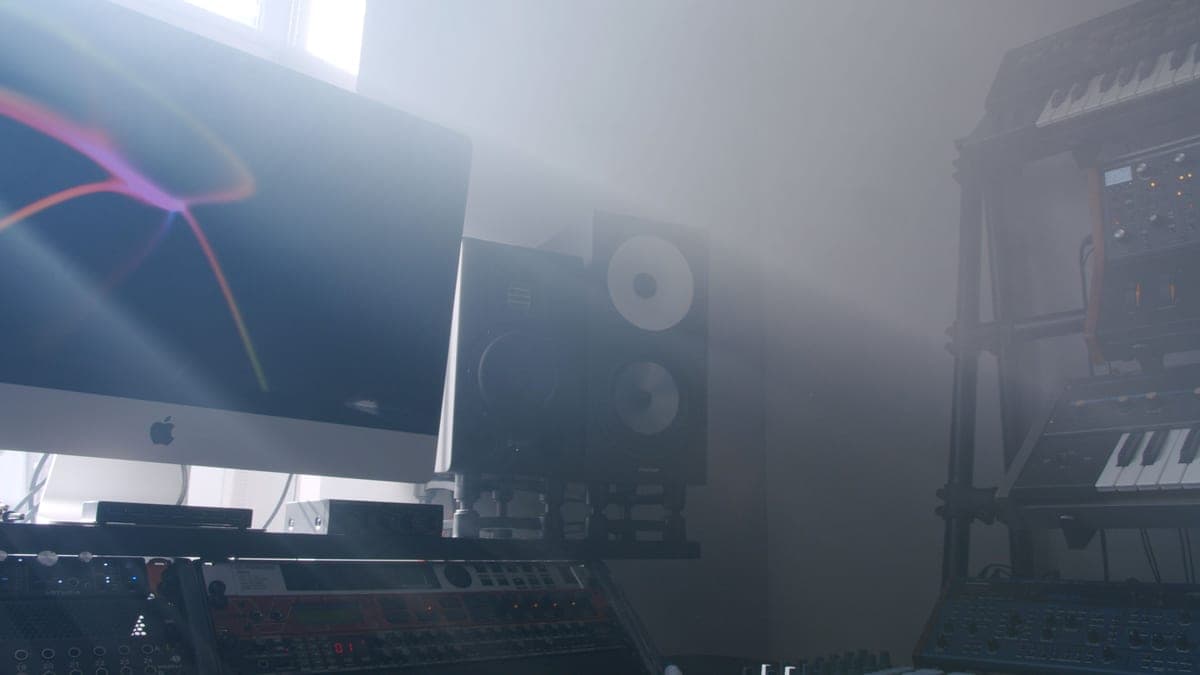
Buy the Yamaha HS5 if these are your only monitors. The HS voicing is flat and unflattering, which is what teaches you your mixes. The KRK Rokit 5 G4 is reasonable if its DSP presets genuinely match your placement and you cross-check every mix on headphones.
Flat versus flattering, and why it matters
A monitor's job is to tell you the truth about a recording, including the parts you would rather not hear. The Rokit line has historically been voiced with more low-frequency emphasis than a flat response, which sounds more impressive in a shop and produces a specific, predictable problem: you under-mix low end, because your speakers are supplying some of it, and the mix arrives thin everywhere else.
That is not a fatal flaw, and it is entirely manageable if you know it and cross-reference. But if these are the only speakers you own and you are learning what your mixes sound like, a flattering monitor teaches you the wrong lesson consistently. The HS5's reputation for being unforgiving is the point.
What the DSP can and cannot do
The Rokit's placement presets apply EQ intended to compensate for a wall-adjacent or desk-mounted position. That is a genuinely useful tool, and it addresses a real problem.
What it cannot do is fix a null. If your room cancels energy at a given frequency at your listening position, boosting that frequency does not restore it — the cancellation happens in the air, not in the speaker. DSP flattens a response measured at one point; it does not make a room behave. Only absorption does that.
Choose the HS5 if
- These are your only monitors and you want to learn your mixes on them.
- You want both tolerance figures published, so you know precisely what you are buying.
- You want the extra amplifier headroom: 70 W bi-amp against 55 W.
- Your work is voice-led, where a flat midrange matters more than a published 43 Hz.
Choose the Rokit 5 G4 if
- The DSP presets match your actual placement and you will use them.
- You already have a reliable headphone reference and will cross-check every mix.
- You want the deepest published figure of the 5-inch group, and understand it is quoted without a stated tolerance.
- You value the Kevlar drivers' physical robustness.
Headroom is the underrated difference
104 dB maximum SPL is the lowest in this hub, and 55 W for a claimed 43 Hz to 40 kHz is modest. At nearfield distances and sensible levels it is enough. But a speaker working near its limits distorts, and distortion in the low end is exactly where you least want it. The HS5's 70 W for a narrower claimed bandwidth is the more conservative engineering.
What else you need to buy
- Both: stands or isolation.
- Rokit especially: a headphone reference, for the low-end cross-check.
- Both: corner treatment, which no DSP replaces.
Both monitors in detail
Yamaha HS5
Top pickYamaha · The flat midrange reference for a small room
The right monitor for an untreated or lightly treated small room, precisely because it does not pretend to have low end your room could not reproduce honestly anyway. If you need to hear below 74 Hz, add a treated room before you add a bigger speaker.
Why it is here
- The honest -3 dB figure of 74 Hz tells you what it will not do, which is rarer than it should be
- Midrange is flat and unflattering, which is the entire job of a monitor
- Small enough to sit at ear height on a desk without dominating the room
What it costs you
- Nothing below about 74 Hz, so you mix low end by trust rather than by ear
- Unforgiving — a rough mix sounds rough, which some people hate
- Rear port needs clearance from the wall
KRK Rokit 5 G4
KRK · Onboard DSP room correction presets
Reasonable if the DSP presets genuinely match your placement and you cross-check mixes on headphones. As a sole reference, the flatter HS5 or 305P MkII will teach you more about your own mixes.
Why it is here
- 43 Hz is the deepest published figure of the 5-inch group here
- Onboard DSP presets address desk and wall placement without external hardware
- Kevlar drivers are physically tough
What it costs you
- 104 dB max SPL is the lowest headroom here
- The Rokit voicing is historically flattering rather than flat — mixes translate less predictably
- 55 W is modest for the claimed bandwidth
If neither: the third option
If you want a wider sweet spot for a compromised seating position, the JBL 305P MkII is the better answer than either. If you have corner treatment and want real bandwidth, the Kali LP-6 V2.