The Shure SM7dB is the pick under $500, and it wins on total cost rather than on the capsule: it is an SM7B with a switchable +18/+28 dB preamp inside, which means it works on the interface you already own instead of requiring a booster. The Shure SM7B is the pick if your interface already publishes 60 dB or more of clean gain. The budget pick is the Rode PodMic at -57 dBV/Pa with a pop filter and shockmount already in the body. Prices come from the daily price check with the date on each button.
$500 is the most interesting ceiling in home recording, because it is the band where the microphones that professional studios actually use become affordable - and where the thing holding your recording back stops being the microphone. Above this price you are buying refinement. Below it you are buying the tool. Inside it you are choosing between a broadcast dynamic that ignores your room and a condenser that will tell you exactly how good your room is.
The SM7dB sitting above the SM7B is not a judgement about the capsule, which is the same. It is arithmetic. If your interface publishes 55 dB of gain - which describes most interfaces under $200 other than the Scarlett range - then an SM7B costs you the microphone plus a booster, and an SM7dB costs you the microphone. The +28 dB setting does the same job as a Cloudlifter, in the body, with no extra XLR cable and no second phantom-power dependency to reason about.
The six microphones, ranked
Each card carries the published specifications with sources, the live price with the date it was checked, and the hardware the microphone implies.
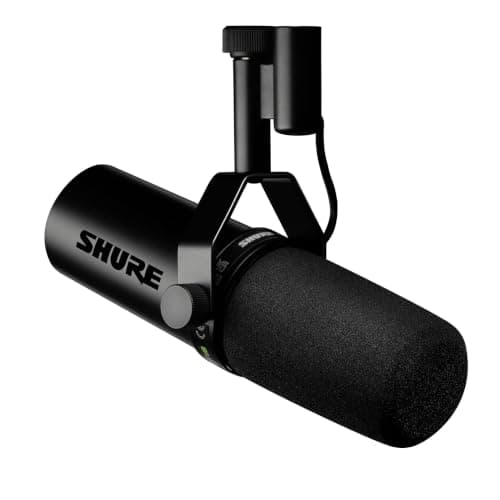
Shure SM7dB
Top pickShure · An SM7B with the booster problem already solved
The right SM7 for anyone whose interface tops out near 55 dB and who wants one purchase instead of two. Skip it if you already own a Cloudlifter or a 69 dB-gain interface, because you are paying twice for the same 25 dB.
Why it is here
- The +28 dB setting turns a 55 dB-gain interface into enough headroom for this capsule
- One XLR cable, no inline box, no second phantom-power dependency to reason about
- Bypassable, so it behaves as a plain SM7B when you move it to a big preamp
What it costs you
- You pay for the preamp whether your interface needed it or not
- A separate booster can be reused with other low-output mics; this one cannot
- No gain setting between +18 dB and +28 dB
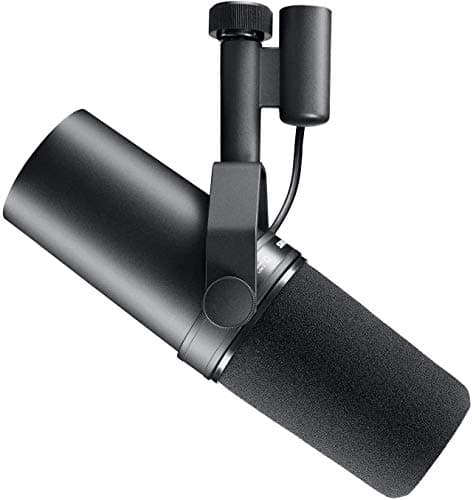
Shure SM7B
Shure · The default upgrade, if your preamp can feed it
Buy it if your interface supplies 60 dB or more of clean gain, or if you are budgeting for a booster alongside it. Buy something else if your only interface is a Scarlett Solo and you are not prepared to add hardware.
Why it is here
- Rejects room and computer-fan noise better than any condenser at any price
- Two voicing switches let one mic cover a thin voice and a boomy one
- Internal shockmount and a yoke that actually holds position on a boom arm
What it costs you
- At -59.0 dBV/Pa it is one of the quietest mics sold, so it demands a loud preamp
- Total cost is the mic plus, very often, a booster
- Heavy enough that a cheap desk arm will droop under it
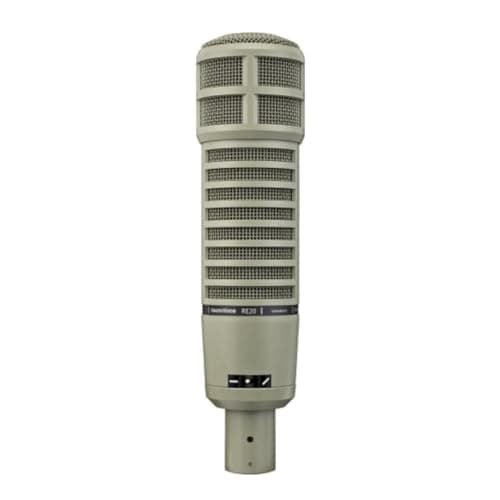
Electro-Voice RE20
Electro-Voice · Movers, leaners and anyone who cannot hold mic distance
Worth the premium if you move while you talk, gesture, or share a mic with someone whose technique you cannot control. If you sit still at a fixed distance, the SM7B's proximity effect is a feature you will use, not a problem you need engineered away.
Why it is here
- Variable-D means the tone barely changes as you drift closer to or further from the grille
- Integral blast filter handles close talking without a separate pop screen
- The bass tilt-down switch is a genuinely useful second voicing, not a gimmick
What it costs you
- Costs more than an SM7B while sounding less immediately flattering on most voices
- Same low-output problem as every broadcast dynamic
- Large and beige, which some people mind
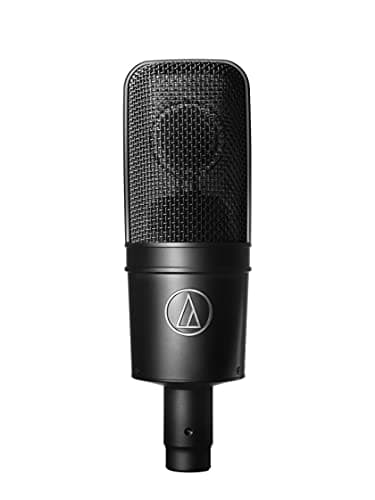
Audio-Technica AT4040
Audio-Technica · The step up from the budget condensers
The right condenser once your room is genuinely treated and the AT2035 has become the limiting factor. In an untreated room it will faithfully reproduce your walls and you will have spent the money for nothing.
Why it is here
- The same `12 dB(A)` self-noise as the AT2035 but with a noticeably more even midrange and a `133 dB` dynamic range
- Keeps the `80 Hz` high-pass filter, which is the control that matters on a desk
- A 2-micron diaphragm and transformerless output at a price well below the boutique tier
What it costs you
- Several times the price of the AT2035 for a difference you only hear in a treated room
- No shockmount in some bundles — check before ordering
- Still a condenser, so the room rules apply unchanged
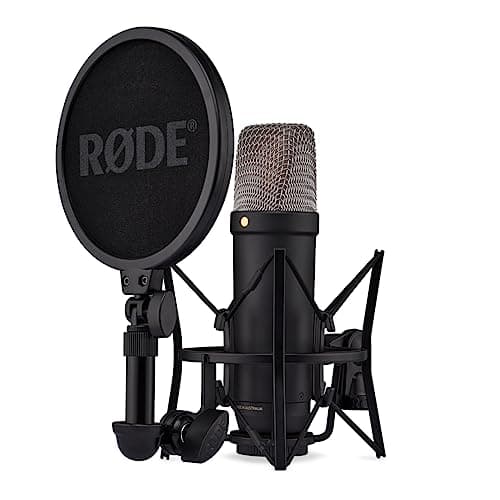
Rode NT1 5th Generation
Rode · The quietest capsule most home studios can justify
The right condenser if you have treated the room, or are about to. If your room is bare drywall, the 4 dBA noise floor is irrelevant because the loudest thing on the recording will be the room.
Why it is here
- 4 dBA self-noise is quieter than the room you are recording in, which is the whole point of a condenser
- -32 dB sensitivity means no interface on this site struggles to drive it
- 32-bit float over USB makes clipping a non-event on the digital path
What it costs you
- A condenser hears your room, your keyboard and your fridge — treatment is not optional
- The USB path duplicates an interface you probably also want
- Bright enough that a sibilant voice needs a de-esser
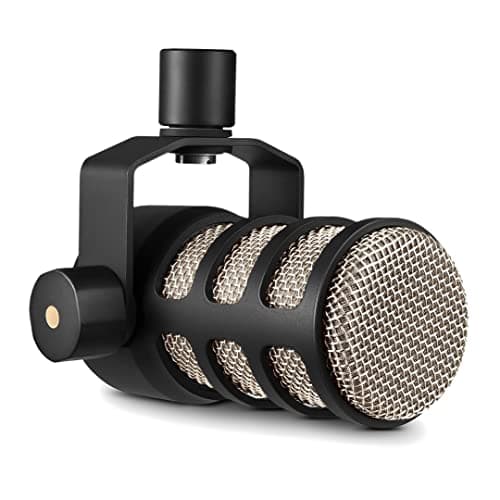
Rode PodMic
Rode · The best value in a broadcast dynamic
The pick for most people upgrading from a USB mic: it gets you 90 percent of the broadcast-dynamic sound without the booster arithmetic. Choose the SM7B instead if your voice is already bass-heavy and you want the bass-rolloff switch.
Why it is here
- At -57 dBV/Pa it needs about 2 dB less gain than an SM7B, which is enough to matter on a 58 dB interface
- Internal pop filter means one less thing clamped to your arm
- All-metal body at a fraction of the SM7B's price
What it costs you
- Voiced with more low-mid weight than the SM7B, so a boomy voice can get boomier
- No voicing switches, so you fix tone in the DAW rather than on the mic
- Still low enough output that a 55 dB interface will be working hard
How these are ranked
- A live listing under `$500` on the day this page was written, from the site's daily price check.
- Total cost to a working recording. A microphone that needs a booster is ranked below one that does not, because the band is a budget, not a sticker price.
- Room tolerance. The two condensers here are better capsules than the dynamics and are ranked below them, because most buyers at this tier are recording in a room that has had a few panels at best.
- Published sensitivity and self-noise, quoted from the manufacturer with a source link on every card.
- Voicing control on the microphone. A bass rolloff and presence switch is what lets one purchase cover a thin voice and a boomy one.
What we did not pick, and why
- The Neumann TLM 102. Outside the band, and the honest reading of its specification is that it does not beat the NT1 on self-noise - what you are buying is the voicing and the build. Neumann TLM 102 vs Rode NT1 is the comparison.
- A microphone plus a cheap interface, as a bundle. Under $500 total, the interface is where the compromise lands and it is the part you will replace first. Best audio interfaces under $200 treats it as its own decision.
- Ribbon microphones. Lovely on a voice, extremely low output, and a fragile element. At this price the gain requirement is the problem, not the microphone.
- Multi-pattern condensers. Useful for interviews recorded on one capsule, and in cardioid they are usually outperformed by a dedicated cardioid at the same money.
- Anything that spends the whole budget on the microphone. The honest version of this page: if your room is bare and your interface is a Solo, $200 of panels and a booster will improve your recordings more than a $450 capsule. Best acoustic panels.
Pair it with
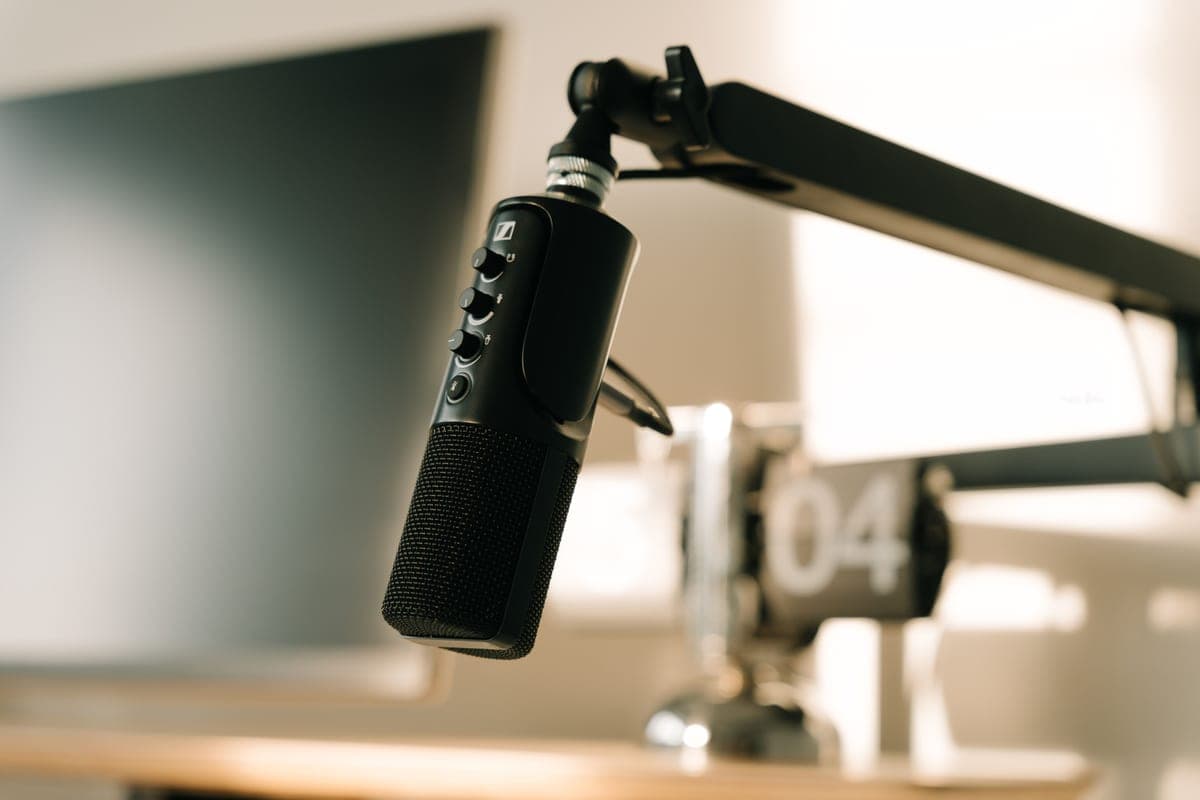
- Enough gain, if you chose the SM7B or the RE20. Best preamps for the Shure SM7B and best inline mic preamps.
- An arm rated for the weight. Best boom arms for microphones.
- Treatment, if you chose a condenser. Best acoustic panels.
- The tier below, if this is more than you want to spend. Best XLR microphones under $200.
If you have narrowed it to two, the head-to-heads are faster than a roundup. SM7B vs SM7dB is the built-in preamp question, RE20 vs SM7B is Variable-D against a fixed cardioid, SM7B vs Rode NT1 is dynamic against condenser at nearly the same money, and best broadcast microphones ranks this same family on rejection and voicing instead of on price.