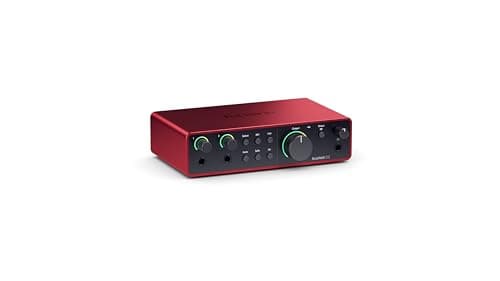
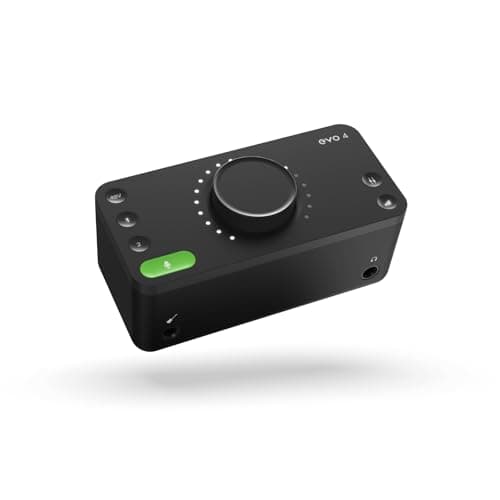
The Focusrite Scarlett 2i2 (4th Gen) is the best MOTU M2 alternative for most people: a published 69 dB of mic gain against the M2's 60 dB, which is the single most common reason people go looking - an M2 is tight on a bare SM7B. The budget alternative is the Audient EVO 4 at 58 dB with Smartgain. If you want the M2's converters with more channels, the MOTU M4 is the same box with four inputs and MIDI.
Start with what is not in dispute. The M2 publishes -129 dB EIN on its mic inputs, 115 dB of input dynamic range, 120 dB on the main outputs through ESS Sabre32 Ultra converters, and it has a full-colour LCD meter on the front - which no other interface at the price offers. On measured output quality it is the best box in its bracket, and nothing below is an upgrade in that respect.
There is a sixth reason that is not on that list, because the answer is not an interface. If your recordings are noisy, thin or boxy, the conversion stage is not the cause - the room, the microphone and the gain structure are. Does an audio interface improve sound quality is the honest version of that question, and best acoustic panels is usually the better $150.
What the MOTU M2 actually does well
- Published `-129 dB` EIN and `115 dB` input dynamic range. Equivalent input noise is the specification that tells you how quiet the preamp is at high gain, and the M2's figure is as good as anything near the price.
- `120 dB` on the main outputs through ESS Sabre32 Ultra converters. This is a DAC class you normally meet in dedicated listening gear, not in a two-input interface.
- A real meter. The full-colour LCD shows input and output levels at a glance, which is the difference between noticing a clip and discovering it in the edit.
- `44.1` to `192 kHz` sample rates and genuinely low round-trip latency. The M2 has been a reference for monitoring latency since it launched.
What it does not give you is gain headroom, channel count or MIDI. 60 dB is adequate for a hot condenser and tight on a bare SM7B at -59.0 dBV/Pa; two inputs is two inputs; and there is no MIDI port. Each alternative below buys back exactly one of those, and three of the five give up measurable output quality to do it.
How these are ranked
- Published maximum mic gain, because that is the M2's one real weakness and the most common reason this search happens.
- Published EIN and dynamic range, quoted from the manufacturer with a source link. Where a figure is not published, this page says so rather than estimating.
- What you gain against what you give up. Three of these five are a step down in measured output quality, and each card states that plainly.
- Channel count and MIDI, which are hardware facts you cannot add later.
- Buyable now, with a live listing and a price from the daily price check when this page was written.
The five alternatives, ranked
Each card carries the published figures with sources and says what it costs you against the M2, not just what it buys you.
Focusrite Scarlett 2i2 (4th Gen)
Top pickFocusrite · The most gain per dollar in a two-input box
The default answer for someone buying an SM7B or PodMic: it supplies enough clean gain that you never need a booster, which makes it the cheaper total purchase even when it is not the cheaper box. Look elsewhere only if you need MIDI or four outputs.
Why it is here
- 69 dB is the most gain of any interface at this price, and enough for an SM7B with headroom to spare
- 120 dB dynamic range means the converters are not the weak link
- Two inputs, so a second person does not mean a second purchase
What it costs you
- Air mode is a fixed voicing, not an EQ you can dial
- Plastic-and-metal build feels less solid than the SSL or Audient competition
- No MIDI, which matters if you also play keys
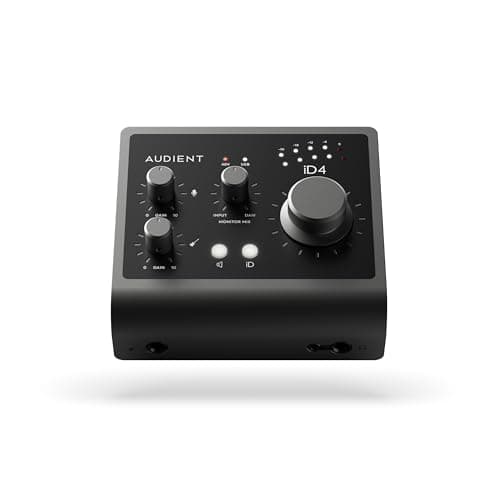
Audient iD4 MKII
Audient · The best-sounding single preamp here
The right box if your mic is a condenser or a hot dynamic and you want the cleanest single channel at this price. If you are buying an SM7B, 58 dB puts you straight back into booster territory.
Why it is here
- -129 dB(A) EIN and 0.0017% THD+N are numbers you would expect a tier up
- The Class A preamp is the same circuit family as Audient's consoles
- Two headphone outputs on a one-input box, which is unusual and useful
What it costs you
- 58 dB is not enough for an SM7B without a booster
- One mic input only
- No onboard DSP or voicing
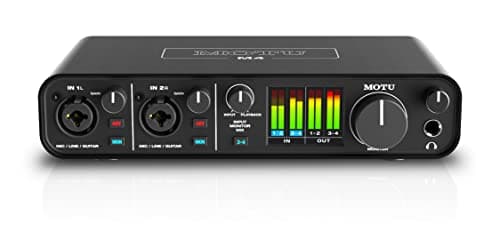
MOTU M4
MOTU · Four channels, MIDI and the best converters here
The pick if you want MOTU's conversion plus MIDI and a couple of extra line inputs. If you only ever record one or two microphones and do not need MIDI, the M2 does the same job for less.
Why it is here
- 60 dB of published gain and `-129 dBu` EIN is a genuinely quiet channel, and unlike the M2 the figure is published
- MIDI in and out on a box this size saves a separate interface if you play keys
- Full-color LCD metering for all four channels, which is more useful daily than any software mixer
What it costs you
- 60 dB is enough for an SM7B but without much headroom to spare
- Two of the four inputs are line-only, so it is not a four-microphone box
- No onboard voicing or DSP at all
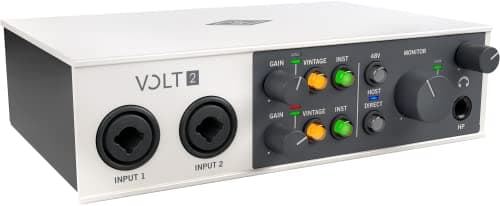
Universal Audio Volt 2
Universal Audio · A hardware color option on the way in
Buy it if you want character on the way in and your mic is a condenser or a hot dynamic. With a low-output broadcast dynamic, 55 dB means a booster, and that changes the price comparison entirely.
Why it is here
- Vintage mode is a real analog-style color, not a plug-in you could add later
- Two combo inputs and a clean, legible front panel
- The UA software bundle is worth actual money
What it costs you
- 55 dB is the lowest gain ceiling in this group and the least SM7B-friendly
- 112 dB dynamic range trails the Focusrite and MOTU converters
- Vintage mode is a commitment printed into the recording
Audient EVO 4
Audient · Anyone who keeps getting gain-staging wrong
The pick for a second host on a budget, or for anyone whose recordings keep coming back too quiet. Not the pick if your mic is an SM7B, where the gain ceiling forces a booster.
Why it is here
- Smartgain removes the single most common beginner mistake in one button
- Two mic preamps at the price of most one-input boxes
- Genuinely small and bus-powered
What it costs you
- 58 dB again falls short of an SM7B's appetite
- Single encoder for everything means more button-pressing than knob-turning
- Plastic build
What we did not pick, and why
- The SSL 2+ MKII. The natural answer for anyone who wants two headphone outputs and a console voicing, and it had no buyable listing when this page was written, so it is not ranked. MOTU M2 vs SSL 2 MKII has the comparison for when it returns.
- A Thunderbolt interface. Lower latency than USB and considerably more money, for a benefit most home studios cannot measure. Are Thunderbolt audio interfaces worth it.
- A cheaper two-input box. The Behringer UMC204HD and similar are honest products, and stepping down from an M2 to one of them is a downgrade in every column of the table above. Are cheap audio interfaces worth it.
- A podcast console. A different product for a different job. Best 4-channel audio interfaces.
- Keeping the M2 and adding a booster. Often the cheapest and best answer, and not an alternative interface. Best inline mic preamps.
Pair it with
- The microphone side of the gain decision. Best broadcast microphones and how much clean gain do you need.
- The tier view, if price is the real constraint. Best audio interfaces under $200.
- The two-channel category in full. Best 2-channel audio interfaces.
- Monitors that can use those `120 dB` outputs. Best studio monitors under $300.
Three head-to-heads settle the rest of this directly. Audient iD4 vs MOTU M2 is the single-preamp quality argument, MOTU M2 vs Universal Audio Volt 2 is converters against coloration, and MOTU M2 vs MOTU M4 is whether the extra channels and MIDI are worth the difference.