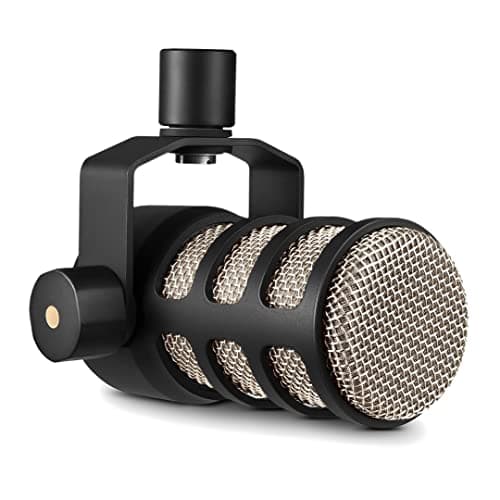
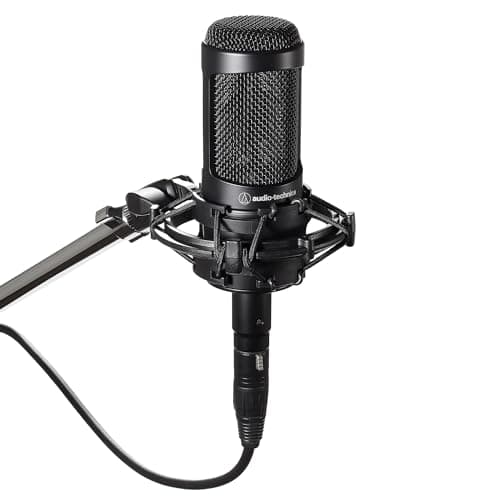
The Rode PodMic is the best Shure SM58 alternative for a desk or a podcast: -57 dBV/Pa is close enough to the SM58's output that your interface will not notice, and it arrives with an internal pop filter and an internal shockmount - the two things an SM58 does not have and that you would otherwise buy separately. It is also the cheapest alternative on this page, so the top pick and the budget pick are the same microphone here, which is unusual enough to say plainly.
First, what is not in dispute. The SM58 publishes -54.5 dBV/Pa sensitivity, 50 Hz to 15 kHz response and a 150 ohm rated impedance, and it weighs 298 g. It is one of the most durable microphones ever made, it is hot enough that any interface drives it, and it is the cheapest honest way to find out whether a dynamic microphone fixes your room. Nothing on this page replaces it on value or on toughness.
There is a sixth reason that is not in that table, because the answer is not a microphone. If your recordings sound boxy, hollow or distant, the SM58 is not the cause and swapping it will not help - a close-miked cardioid dynamic is already the most room-tolerant tool in this registry. Best acoustic panels is the purchase that fixes that, and best microphones for a noisy room ranks the same family on pattern if the problem is noise rather than reflections.
What the Shure SM58 actually does well
- It is hot enough for anything. -54.5 dBV/Pa is around 4.5 dB louder than an SM7B, which means a 55 dB interface drives it to a usable level with headroom left. That removes the booster question entirely, which is more than most broadcast dynamics manage.
- It survives. A hardened steel grille, a pneumatic shockmount for the capsule and a reputation built on decades of being dropped. If the microphone travels, this is still the right answer.
- A cardioid pattern that rejects a room. The reason it keeps getting recommended to people recording in bedrooms: a dynamic at 4 inches hears you and very little else.
- It is the cheapest honest diagnostic in the category. If you do not yet know whether your problem is the microphone or the room, this answers that question for very little money on the interface you already own.
What it does not give you is an internal pop screen, an internal shockmount, a voicing switch, a yoke that holds position on a boom arm, or any response above 15 kHz. Four of the five alternatives below buy back at least two of those. None of them is dramatically better on raw capsule quality, and any page telling you otherwise is selling something.
Two rows deserve a note before you read the cards. The BP40's -48 dB sensitivity is roughly 6.5 dB hotter than the SM58's, which is the opposite of what people expect from a bigger broadcast capsule and makes it the easiest microphone here to drive. And the AT2035 is in this list as the honest condenser option rather than as a straight swap: its -33 dB output is around 21 dB hotter than the SM58's, which means it amplifies your room by the same margin it amplifies you.
How these are ranked
- Whether it fixes the reason you are looking. The table above is the ranking's logic: a body built for a desk comes first, because that is the most common complaint about an SM58 used as a studio microphone.
- Published sensitivity, with the gain consequence stated. A microphone that needs hardware you do not own is not cheap, and no pick here hides that behind a sticker price. The SM58 is easy to drive, so an alternative that is harder to drive has to earn it.
- What is already in the body. An internal pop filter and shockmount are real money and real desk space you then do not spend, and they are the SM58's clearest omission for this use.
- Room and off-axis rejection. Pattern, capsule size and grille design, from published specifications. The SM58 is already good here, so this is where several alternatives are merely equal.
- Buyable now, with a live listing and a price from the daily price check when this page was written. The order is editorial, not a price order.
The five alternatives, ranked
Each card carries the published sensitivity with its source, what gain the microphone demands, and an honest account of what it does worse than an SM58.
Rode PodMic
Top pickRode · The best value in a broadcast dynamic
The pick for most people upgrading from a USB mic: it gets you 90 percent of the broadcast-dynamic sound without the booster arithmetic. Choose the SM7B instead if your voice is already bass-heavy and you want the bass-rolloff switch.
Why it is here
- At -57 dBV/Pa it needs about 2 dB less gain than an SM7B, which is enough to matter on a 58 dB interface
- Internal pop filter means one less thing clamped to your arm
- All-metal body at a fraction of the SM7B's price
What it costs you
- Voiced with more low-mid weight than the SM7B, so a boomy voice can get boomier
- No voicing switches, so you fix tone in the DAW rather than on the mic
- Still low enough output that a 55 dB interface will be working hard
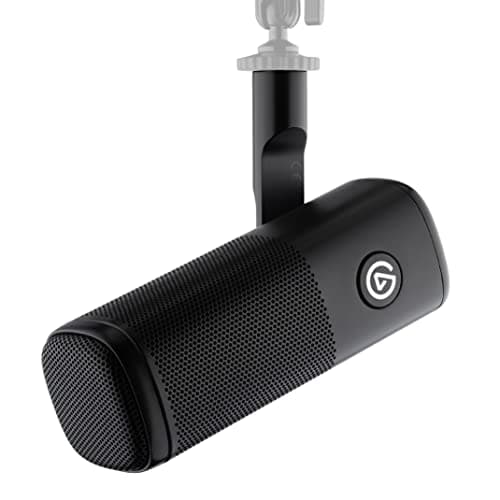
Elgato Wave DX
Elgato · A streaming dynamic that needs no booster
The most sensible streaming dynamic if you want to plug into a modest interface and stop thinking about gain. If you also record music, the `15 kHz` ceiling is a real limit and a wider-band dynamic is the better buy.
Why it is here
- At `-52 dBV/Pa` it is the hottest broadcast-style dynamic here — `7 dB` above an SM7B, so no interface on this site struggles
- Internal pop filter, so nothing extra clamps to your arm
- Light at `440 g`, which any arm holds comfortably
What it costs you
- Response stops at `15 kHz`, so it is a speech microphone and not a music one
- No voicing switches at all
- Voiced for a close, forward streaming sound that is less neutral than an SM7B
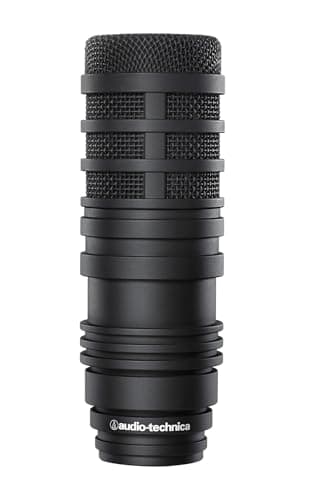
Audio-Technica BP40
Audio-Technica · Tighter pickup than a cardioid in a live room
The pick when your problem is a live-sounding room and a weak preamp at the same time: the narrow pattern and the hot output solve both. Avoid it if you or your guests cannot stay on-axis.
Why it is here
- At -48 dB it is dramatically hotter than an SM7B and needs no booster on anything modern
- Hypercardioid pattern narrows the pickup further than the cardioid competition
- Switchable 100 Hz rolloff at 6 dB/octave for close work
What it costs you
- 632 g needs a serious arm or stand
- Hypercardioid punishes sloppy mic technique — step off-axis and you vanish
- Voiced large and forward, which is not every voice's friend
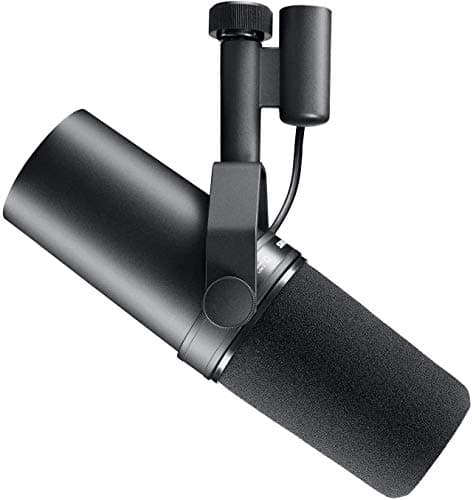
Shure SM7B
Shure · The default upgrade, if your preamp can feed it
Buy it if your interface supplies 60 dB or more of clean gain, or if you are budgeting for a booster alongside it. Buy something else if your only interface is a Scarlett Solo and you are not prepared to add hardware.
Why it is here
- Rejects room and computer-fan noise better than any condenser at any price
- Two voicing switches let one mic cover a thin voice and a boomy one
- Internal shockmount and a yoke that actually holds position on a boom arm
What it costs you
- At -59.0 dBV/Pa it is one of the quietest mics sold, so it demands a loud preamp
- Total cost is the mic plus, very often, a booster
- Heavy enough that a cheap desk arm will droop under it
Audio-Technica AT2035
Audio-Technica · The value condenser with the switches you actually need
The condenser to buy if you are choosing on value: the high-pass filter and the 8 dB quieter noise floor are worth more in a real room than anything else in this price band. Skip it if you have not treated the room, in which case a dynamic is the better purchase.
Why it is here
- 12 dB self-noise against the AT2020's 20 dB is an audible 8 dB of quiet for a small price step
- The 80 Hz high-pass is the single most useful switch on a desk-mounted condenser
- Ships with a real shockmount, not a plastic clip
What it costs you
- Still a condenser, so the room rules apply
- Slightly forward upper midrange that some voices find harsh
- The 10 dB pad is mostly irrelevant for voice work
What we did not pick, and why
- The Shure SM58 wireless and Beta variants. Both appear in the autocomplete suggestions for this query and neither is a studio answer: the wireless system adds a transmitter, a receiver and a battery to a desk recording, and the Beta 58A is a supercardioid stage capsule solving the same stage problem more aggressively.
- The Shure SM7dB and the Electro-Voice RE20. Both are genuine upgrades and both are a long way above the SM58 in price, so they belong in a different conversation: best microphones under $500 ranks that tier, and best broadcast microphones ranks the category on rejection and voicing.
- A USB microphone. Simpler on day one, and it folds the preamp and the converter into the microphone, which is the one part you cannot upgrade later. USB vs XLR microphones has the full argument.
- A cheaper unbranded dynamic. Below the SM58 the specifications stop being published, which means there is nothing to compare. The SM58 is already close to the floor of the category where real figures exist.
- Keeping the SM58 and buying a pop filter and a shockmount instead. Frequently the right answer, and the cheapest one on this page: best pop filters and best boom arms for microphones. If the complaint is plosives and desk thumps rather than tone, start there.
Pair it with
- An interface that can drive whichever you choose. Best audio interfaces under $200, and best inline mic preamps if you land on the SM7B.
- An arm rated for the weight. The BP40 is 632 g and the Wave DX is 440 g, against the SM58's 298 g: best boom arms for microphones.
- A room that is not working against you. Best acoustic panels.
- The tier view, if the budget is the real constraint. Best XLR microphones under $200 and best XLR microphones under $100.
Two head-to-heads settle most of this faster than a roundup can. Rode PodMic vs Shure SM58 is this page's winner against its reference, with the sensitivity and build figures side by side, and Shure SM7B vs Shure SM58 is the honest version of the broadcast upgrade - including what the SM7B costs you in gain.