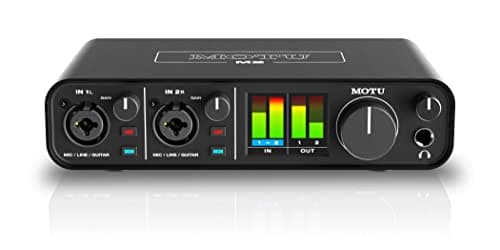
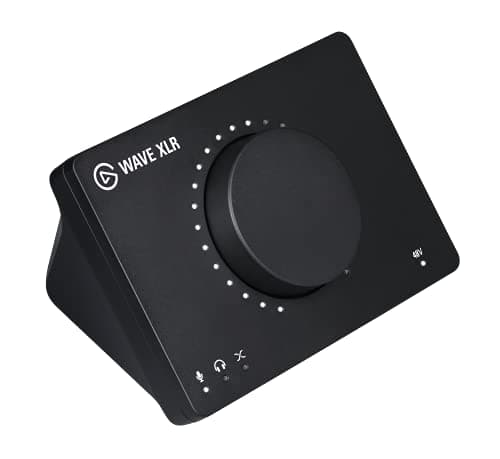
The MOTU M2 is the best Scarlett 2i2 alternative for most people: two inputs for about the same money, -129 dB EIN and full-color metering on the box instead of in software. If you are leaving the 2i2 because it still is not loud enough, only the Elgato Wave XLR at 75 dB and the Vocaster One at 70 dB beat it.
People search for a Scarlett 2i2 alternative for four quite different reasons, and they do not lead to the same box. Two of those reasons have good answers, one has a better answer than any alternative, and one is usually a mistake. Working out which is yours takes about thirty seconds.
If the reason you are here is the second one, read how much clean gain do you need before you buy anything, because the arithmetic usually says the interface is not the thing to replace. An inline booster in front of the 2i2 you already own adds around 25 dB for a fraction of the price of a new interface, and Cloudlifter vs FetHead compares the two that matter.
What the Scarlett 2i2 actually does well
This matters more than it sounds, because an alternative is only an alternative to something specific. Three published properties do the work on the 4th Gen 2i2, and the first is the reason this site keeps recommending it.
- `69 dB` of maximum mic gain. The highest figure of any general-purpose two-input interface at the price, and enough to drive a Shure SM7B at -59.0 dBV/Pa with headroom left over. Most of the boxes on this page do not reach it.
- `120 dB` of dynamic range. Enough that the converters are not the limiting factor in a home studio, which moves the argument to features and feel rather than fidelity.
- Two combo inputs with independent phantom power. A second person, or a microphone and a guitar, without a second purchase.
What it does not have is MIDI, four outputs, a hardware loopback switch, onboard compression or a front-panel meter. Those are the gaps every box below is built to fill, and each one charges you gain, money or channels for it.
How these are ranked
- Published maximum mic gain, because it is the one specification that can rule a microphone out entirely. A manufacturer who does not publish one is marked as such rather than guessed at.
- Published converter figures — EIN, dynamic range, THD+N — taken from the manufacturer's own documentation, linked under Sources.
- Inputs and outputs you will use. A second mic preamp counts. A fourth line output on a desk with one pair of monitors does not.
- What it removes from the shopping list. A box that replaces a separate purchase, such as MIDI or a booster, is worth more than one that duplicates something you own.
- Buyable now. Every pick below had a live listing when this page was written, which is why two interfaces this site rates highly sit in the not-picked list instead.
The seven alternatives, ranked
Ranked best-first for the buyer leaving a 2i2, not by price. Prices update daily, so the figures on the cards are the live ones.
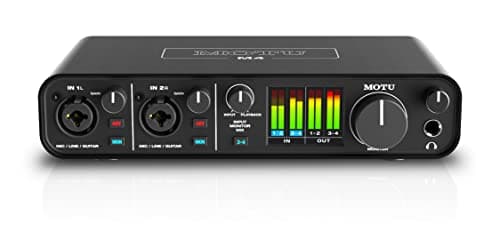
MOTU M2
Top pickMOTU · The best converters and metering at the price
The pick if you care most about conversion quality and want to see your levels without alt-tabbing. If your mic is an SM7B and you want a published gain number you can check against the mic's sensitivity, the 2i2 is the safer buy.
Why it is here
- -129 dB EIN is genuinely quiet, and it shows on low-output dynamics
- Full-color LCD metering on the box is more useful day to day than any software mixer
- Independent phantom power and monitor switching per input
What it costs you
- MOTU does not publish a maximum mic-gain figure the way Focusrite does, so gain headroom is harder to plan around
- No onboard voicing or DSP at all
- Loopback needs the software, not a front-panel switch
Elgato Wave XLR
Elgato · The most gain of any single-channel box, built for streaming
The right box if you stream or record alone with a low-output dynamic and want the gain problem to simply not exist. It is not a general-purpose interface, and it is the wrong buy if you also record instruments.
Why it is here
- `75 dB` of gain drives an SM7B with room to spare and no booster, which is the single most common streaming problem solved outright
- Clipguard catches a shout that would otherwise clip the take
- Capacitive tap-to-mute on the top surface, which is genuinely better than reaching for a key bind
What it costs you
- One microphone input, so a co-host needs a second unit
- The mixing lives in Elgato's software, so it is a Wave Link setup rather than a neutral interface
- No MIDI, no line inputs, no instrument input
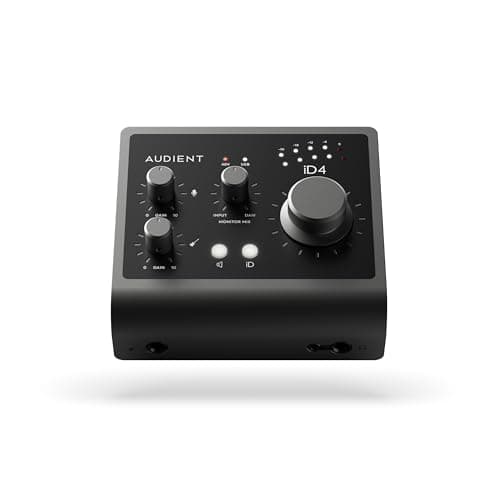
Audient iD4 MKII
Audient · The best-sounding single preamp here
The right box if your mic is a condenser or a hot dynamic and you want the cleanest single channel at this price. If you are buying an SM7B, 58 dB puts you straight back into booster territory.
Why it is here
- -129 dB(A) EIN and 0.0017% THD+N are numbers you would expect a tier up
- The Class A preamp is the same circuit family as Audient's consoles
- Two headphone outputs on a one-input box, which is unusual and useful
What it costs you
- 58 dB is not enough for an SM7B without a booster
- One mic input only
- No onboard DSP or voicing
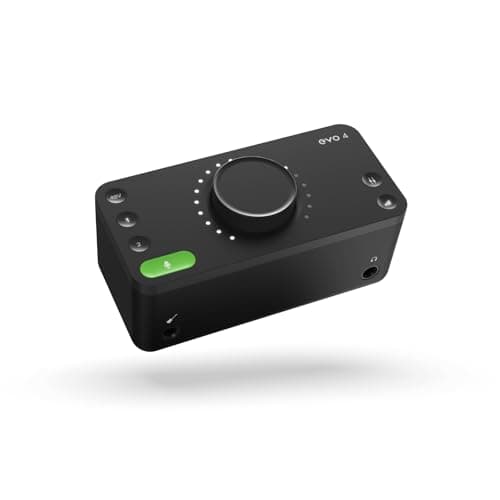
Audient EVO 4
Audient · Anyone who keeps getting gain-staging wrong
The pick for a second host on a budget, or for anyone whose recordings keep coming back too quiet. Not the pick if your mic is an SM7B, where the gain ceiling forces a booster.
Why it is here
- Smartgain removes the single most common beginner mistake in one button
- Two mic preamps at the price of most one-input boxes
- Genuinely small and bus-powered
What it costs you
- 58 dB again falls short of an SM7B's appetite
- Single encoder for everything means more button-pressing than knob-turning
- Plastic build
MOTU M4
MOTU · Four channels, MIDI and the best converters here
The pick if you want MOTU's conversion plus MIDI and a couple of extra line inputs. If you only ever record one or two microphones and do not need MIDI, the M2 does the same job for less.
Why it is here
- 60 dB of published gain and `-129 dBu` EIN is a genuinely quiet channel, and unlike the M2 the figure is published
- MIDI in and out on a box this size saves a separate interface if you play keys
- Full-color LCD metering for all four channels, which is more useful daily than any software mixer
What it costs you
- 60 dB is enough for an SM7B but without much headroom to spare
- Two of the four inputs are line-only, so it is not a four-microphone box
- No onboard voicing or DSP at all
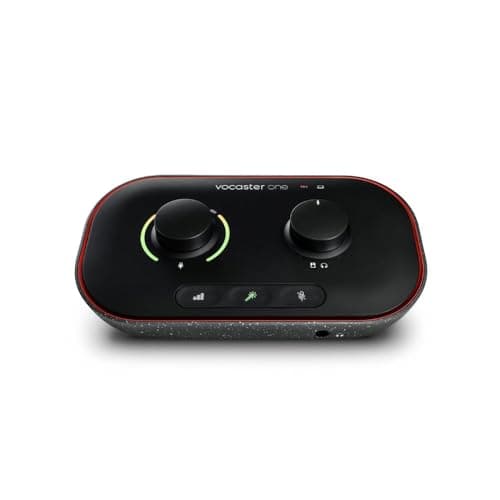
Focusrite Vocaster One
Focusrite · A solo host who does not want to set levels
The pick for a solo podcaster who wants the gear to get out of the way. If you record music as well as speech, a general-purpose interface with the same gain is the better buy.
Why it is here
- `70 dB` of gain means any microphone on this site works without a booster
- Auto Gain removes the single most common beginner mistake in one button press
- Stereo loopback plus phone and camera connections, which is the actual podcast workflow
What it costs you
- 24-bit / 48 kHz only, and no instrument input — it is a speech box and nothing else
- The three Enhance presets are printed into the recording
- One microphone input; a co-host means the Vocaster Two
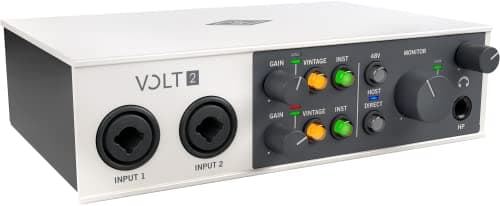
Universal Audio Volt 2
Universal Audio · A hardware color option on the way in
Buy it if you want character on the way in and your mic is a condenser or a hot dynamic. With a low-output broadcast dynamic, 55 dB means a booster, and that changes the price comparison entirely.
Why it is here
- Vintage mode is a real analog-style color, not a plug-in you could add later
- Two combo inputs and a clean, legible front panel
- The UA software bundle is worth actual money
What it costs you
- 55 dB is the lowest gain ceiling in this group and the least SM7B-friendly
- 112 dB dynamic range trails the Focusrite and MOTU converters
- Vintage mode is a commitment printed into the recording
What we did not pick, and why
- The Focusrite Scarlett 4i4. The same 69 dB of gain plus MIDI and loopback, which makes it a step up inside the family rather than an alternative to it. It is ranked in best audio interfaces under $500.
- The SSL 2+ MKII. 64 dB of gain, two headphone outputs and the 4K switch make it the right box for recording with someone else in the room, but it had no buyable listing when this page was written. SSL 2+ MKII vs Audient iD4 has the argument for when it returns.
- The 16-bit floor. The M-Audio M-Track Duo and the Behringer UMC22 undercut everything here, and both convert at 16-bit. That is a real ceiling on quiet sources rather than a spec-sheet quibble — see are cheap audio interfaces worth it.
- Anything that does not publish a gain figure. The UMC204HD and the UR22C are competent boxes with genuinely useful features, and neither manufacturer states a maximum mic gain. With a quiet dynamic that is a gamble, as UMC204HD vs Steinberg UR22C explains.
- The Thunderbolt tier. Lower round-trip latency, several times the price, and no benefit at all to someone recording speech. Are Thunderbolt audio interfaces worth it is the honest answer.
Pair it with
- A microphone the box can actually drive. If you are going down the gain ladder, go up the sensitivity ladder: best Rode PodMic alternatives ranks broadcast dynamics by output level, and three of them are hot enough for a 58 dB preamp.
- A booster, if you are keeping a quiet microphone. Best preamps and boosters for the SM7B applies to any low-output dynamic, not only the Shure.
- Monitors, through the balanced outputs. Every pick here has them and a laptop headphone jack does not — do I need an audio interface for studio monitors.
- Cables that are not the weak link. Best XLR cables, including the honest answer about when the expensive one is worth it.
If you have already narrowed it to two boxes, the head-to-head pages finish the job faster than a ranking can. Scarlett 2i2 vs MOTU M2 is this page's top recommendation against its reference, Volt 2 vs Scarlett 2i2 is analog color against clean gain, and Elgato Wave XLR vs Scarlett 2i2 is the one to read if streaming is the job.