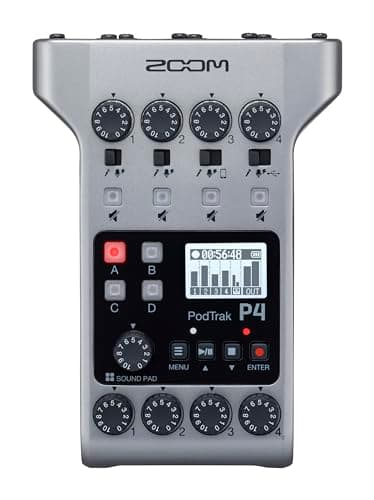
The Zoom PodTrak P4 is the best RodeCaster Pro II alternative for a multi-guest show: four microphone preamps at a published 70 dB, four independent headphone outputs and standalone recording to SD card, which is the RodeCaster's core job at a fraction of the outlay. The budget pick is the Focusrite Vocaster One at a published 70 dB with Auto Gain - a single-channel box, so it only applies if the honest answer is that you record alone and bought a console for a studio you do not run.
First, credit where it is due. The RodeCaster Pro II publishes 76 dB of preamp gain and -131.5 dBV EIN - the quietest and hottest preamps of anything in this registry - across nine assignable channels with six physical faders, and it records 24-bit fixed or 32-bit float WAV, or MP3, to its own storage with no computer attached. There is nothing on this page that matches that specification, and nothing that matches what it does in a room with four people and no engineer.
There is a sixth reason that is not in that table, because the answer is not a box. If your recordings sound thin or roomy, no console or interface in this registry will change that - the RodeCaster's preamps are already the quietest here. Best acoustic panels and best broadcast microphones are where that money belongs, and does an audio interface improve sound quality is the honest version of the question.
What the RodeCaster Pro II actually does well
- `76 dB` of gain and `-131.5 dBV` EIN. Those are the best published preamp figures in this registry by a clear margin, and they mean an SM7B at -59.0 dBV/Pa is driven cleanly with headroom to spare and no booster anywhere in the chain.
- Nine assignable channels and six physical faders. Phone calls, Bluetooth, USB, computer audio and four microphones, all mixed by hand while you record. No interface on this page does that without a computer in the loop.
- It records without a computer. 24-bit fixed or 32-bit float WAV, or MP3, straight to its own storage. 32-bit float in particular means a guest who shouts is recoverable rather than clipped.
- It removes post-production, not just gear. If your real constraint is editing hours rather than money, a console that commits processing live is a legitimate purchase and the cheapest one on this page is not a saving.
What it does not give you is MIDI, balanced line inputs for a synth, a small footprint, or a price anywhere near the rest of this list. Four of the five alternatives below are a step down in preamp specification and all five are a step down in what the machine does for you; what they buy back is money, desk space or a feature the console does not have at all.
Read the preamp column before the gain column, because this is where the category misleads people. The Scarlett 4i4 and the MOTU M4 are four-input boxes with two microphone preamps each - the other inputs are balanced line, which is correct for a synth and useless for a third guest. Only the PodTrak P4 matches the RodeCaster on four microphones with four separate headphone feeds, and it is the cheapest box on this page.
How these are ranked
- Microphone preamp count, stated separately from input count. The RodeCaster is bought for multi-guest recording, so an alternative that cannot take four microphones has to be honest about who it is for.
- Independent headphone feeds. Four people with live microphones need four feeds, and a single output split four ways means nobody can turn their own voice down - which is the usual reason guests drift off-mic.
- Published maximum mic gain. 60 to 75 dB here, against the RodeCaster's 76 dB. All of these drive a bare SM7B except the M4, whose 60 dB is adequate rather than generous.
- What it does that the RodeCaster cannot. MIDI, balanced line inputs and better conversion are real reasons to switch rather than merely to save money, and they are weighted as such.
- Buyable now, with a live listing and a price from the daily price check when this page was written.
The five alternatives, ranked
The first is the functional replacement; the next two are DAW-centered interfaces; the last two are single-channel boxes for a solo host. Each card says which it is.
Zoom PodTrak P4
Top pickZoom · Four mics, four headphone outs, battery power
The best value in group podcast recording: four hot preamps and four headphone feeds is the whole job. Step up to the RodeCaster Pro II only if you need live mixing rather than multitrack capture.
Why it is here
- 70 dB of gain feeds four SM7Bs, which nothing else at this price does
- Four headphone outputs with individual level control — the actual bottleneck in group recording
- Runs on AA batteries, so it records anywhere
What it costs you
- No faders, no onboard EQ or compression
- Only 2 channels reach the computer over USB, so live-streaming four separate mics is out
- Plastic build and a small screen
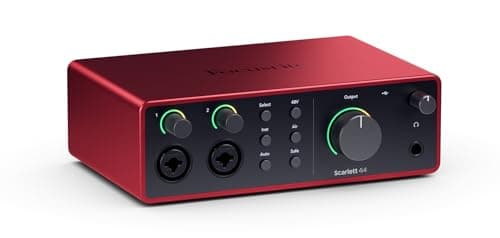
Focusrite Scarlett 4i4 (4th Gen)
Focusrite · The most gain, plus MIDI and loopback
The most complete interface under $500 for someone who records voice and plays keys and streams. If you do none of those extra things, the 2i2 has identical gain for less money.
Why it is here
- `69 dB` of gain, the same as the 2i2, so no microphone on this site needs a booster
- MIDI and loopback in one box — the two features that usually force a second purchase
- Four line outputs, so monitors and a separate headphone amp can both be fed
What it costs you
- Costs meaningfully more than the 2i2 for features a solo voice recordist may never touch
- Still only two mic preamps despite the four-in name
- Larger footprint than the desktop boxes
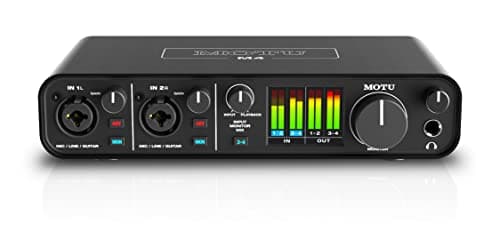
MOTU M4
MOTU · Four channels, MIDI and the best converters here
The pick if you want MOTU's conversion plus MIDI and a couple of extra line inputs. If you only ever record one or two microphones and do not need MIDI, the M2 does the same job for less.
Why it is here
- 60 dB of published gain and `-129 dBu` EIN is a genuinely quiet channel, and unlike the M2 the figure is published
- MIDI in and out on a box this size saves a separate interface if you play keys
- Full-color LCD metering for all four channels, which is more useful daily than any software mixer
What it costs you
- 60 dB is enough for an SM7B but without much headroom to spare
- Two of the four inputs are line-only, so it is not a four-microphone box
- No onboard voicing or DSP at all
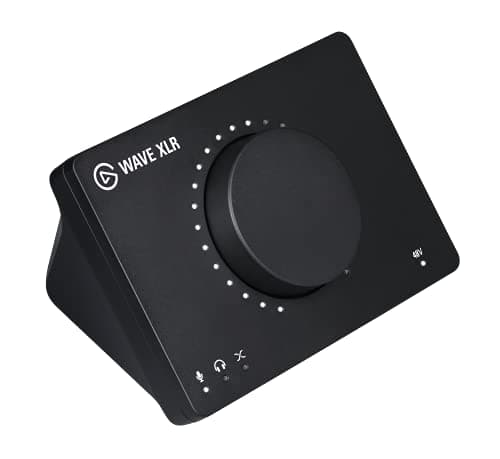
Elgato Wave XLR
Elgato · The most gain of any single-channel box, built for streaming
The right box if you stream or record alone with a low-output dynamic and want the gain problem to simply not exist. It is not a general-purpose interface, and it is the wrong buy if you also record instruments.
Why it is here
- `75 dB` of gain drives an SM7B with room to spare and no booster, which is the single most common streaming problem solved outright
- Clipguard catches a shout that would otherwise clip the take
- Capacitive tap-to-mute on the top surface, which is genuinely better than reaching for a key bind
What it costs you
- One microphone input, so a co-host needs a second unit
- The mixing lives in Elgato's software, so it is a Wave Link setup rather than a neutral interface
- No MIDI, no line inputs, no instrument input
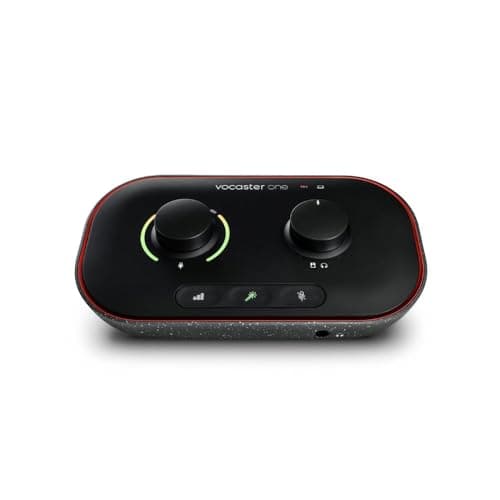
Focusrite Vocaster One
Focusrite · A solo host who does not want to set levels
The pick for a solo podcaster who wants the gear to get out of the way. If you record music as well as speech, a general-purpose interface with the same gain is the better buy.
Why it is here
- `70 dB` of gain means any microphone on this site works without a booster
- Auto Gain removes the single most common beginner mistake in one button press
- Stereo loopback plus phone and camera connections, which is the actual podcast workflow
What it costs you
- 24-bit / 48 kHz only, and no instrument input — it is a speech box and nothing else
- The three Enhance presets are printed into the recording
- One microphone input; a co-host means the Vocaster Two
What we did not pick, and why
- The RodeCaster Duo and RodeCaster Video. Both appear in the autocomplete suggestions for this query, and both are Rode's own narrower versions of the same console rather than an alternative to it. If you want this machine with fewer channels, buy it from Rode.
- An analog mixer into a two-input interface. The cheapest way to get four microphones into a computer, and it commits you to one stereo mix - so a guest who clipped or sat too far back cannot be fixed separately in the edit. Audio interface vs mixer has the argument.
- Two interfaces at once. Technically more channels, and a clock-drift problem you do not want in the middle of a multi-person recording. Can you use two audio interfaces at once.
- An eight-channel interface. A real answer for a band and far more rack space, gain staging and money than a four-voice show needs.
- Keeping the RodeCaster and changing the workflow. Often the right answer. If you own one and the complaint is that you are not using the faders, record multitrack to the SD card and mix later - the machine does that too, and you have already paid for it.
Pair it with
- Microphones every one of these can drive. Best broadcast microphones, and best Shure SM58 alternatives if you are buying four seats on a budget.
- One set of closed-back headphones per guest. Best headphones for podcasting.
- The table layout four microphones actually need. Four-person podcast setup.
- The channel-count view of the same shelf. Best 4-channel audio interfaces.
RodeCaster Pro II vs Zoom PodTrak P4 is the head-to-head between this page's reference and its winner, with the gain and channel figures side by side. If the show is one or two voices rather than four, best audio interfaces for podcasting is the better page to start from.