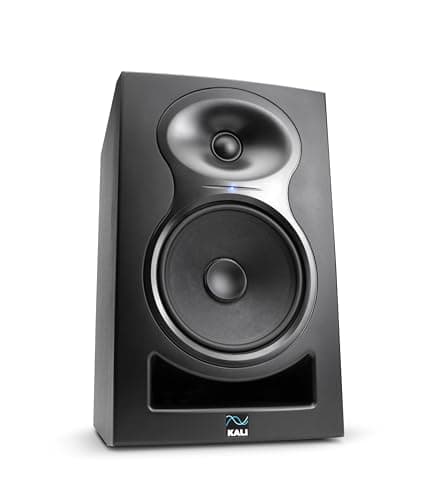
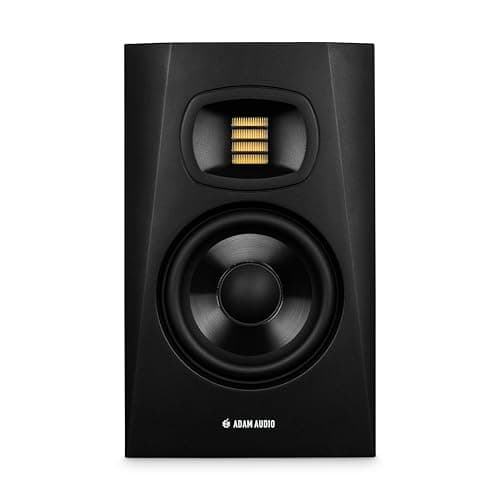
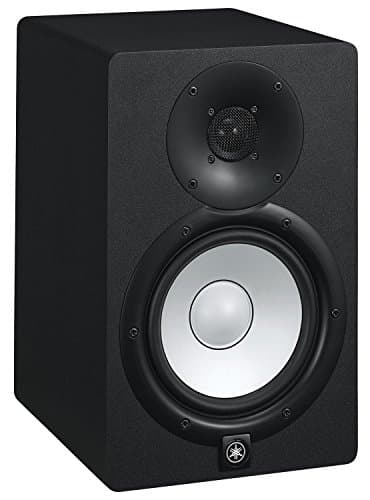
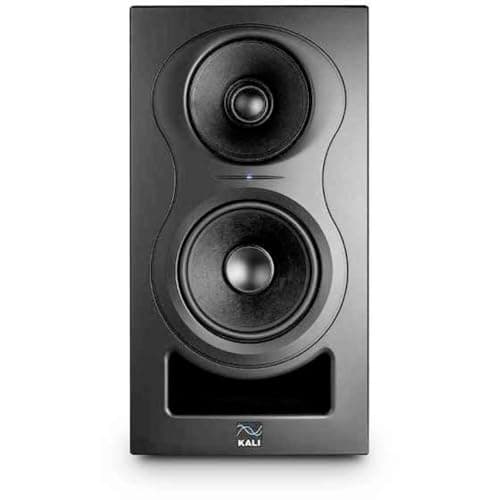
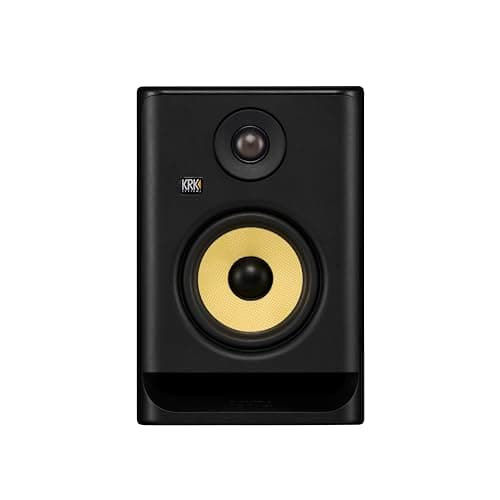
The Kali Audio LP-6 V2 is the best Yamaha HS5 alternative for most rooms: 47 Hz at +/-3 dB is real low end rather than a marketing figure, and the boundary EQ switches on the back are the only honest answer to a speaker that has to live near a wall. Set those switches correctly or it is worse than an HS5.
Almost everyone searching for an HS5 alternative is reacting to the same thing: the HS5 publishes 74 Hz at -3 dB, and that number looks poor next to rivals quoting figures in the forties. It is worth knowing what you are comparing before you spend anything, because most of those rivals are quoting a different tolerance.
There is one reason that is not on that list, because the answer is not a speaker: if your mixes translate badly, or the low end sounds different every time you move your head, the room is the fault and no monitor fixes it. Best studio monitors for an untreated room ranks the same category on room tolerance, and best bass traps is the purchase that makes any of these speakers tell you the truth.
What the Yamaha HS5 actually does well
Three things, and the first one is the reason it keeps getting recommended for small rooms despite the specification people complain about.
- It publishes an honest limit. 74 Hz at -3 dB is a tight tolerance, and a tight tolerance is a hard number. Most rivals quote -6 dB or -10 dB, where the same cabinet can claim 20 Hz more reach without moving a single driver.
- A flat, unflattering midrange. The vocal range is where a podcast, a voiceover and a mix all live, and the HS5 does not sweeten it. That is the entire job of a monitor.
- A cabinet small enough to sit at ear height on a real desk. A 5-inch two-way in a bedroom excites fewer room modes than a 6.5-inch three-way, which is a genuine acoustic advantage and not a consolation prize.
What it does not give you is anything below about 74 Hz, any placement correction, or any forgiveness. Every alternative here buys one of those back, and four of the five do it with a bigger woofer — which in an untreated room is a trade, not an upgrade.
How these are ranked
- Published response with its tolerance. A figure without a tolerance is not a specification, and no pick here is ranked above another on a looser measurement.
- Whether the extra low end is usable in a small room. A 6.5-inch woofer in an untreated bedroom excites modes an HS5 never touches, so reach only counts when the room or the boundary EQ can handle it.
- Placement correction. Analog boundary switches or onboard DSP matter more than a few hertz, because almost nobody has textbook placement.
- Amplifier headroom. Published power and max SPL, so the speaker is clean at the level you actually work at.
- Buyable now, with a live listing when this page was written. The ranking is for someone replacing or stepping up from an HS5, not a price order.
The five alternatives, ranked
The Rokit 5 G5 is the only one that sits in the same price bracket as the HS5; the rest are a step up in money as well as in cabinet size.
Kali Audio LP-6 V2
Top pickKali Audio · The most low end per dollar, with boundary EQ
The best value here if you set the boundary EQ honestly and have corner traps in. In a bare bedroom with the switches left at default, the extra low end makes your mixes worse, not better, and the HS5 is the wiser buy.
Why it is here
- 47 Hz at +/-3 dB is real low end, not a marketing figure
- Boundary EQ switches on the back are the only honest answer to a speaker jammed against a wall
- 115 dB max SPL means huge headroom for a desk speaker
What it costs you
- That low-end reach is a liability in an untreated room — you will chase room modes, not mix decisions
- 6.5-inch driver in a small room needs the boundary EQ set correctly or it is worse than an HS5
- Paper cone is more fragile than the alternatives
Adam Audio T5V
Adam Audio · Detail at the top, from a ribbon tweeter
Buy it if your work is voice and acoustic material where sibilance and reverb decisions matter, and you will listen at moderate levels. If you mix loud, or find bright speakers tiring, the HS5 is the safer reference.
Why it is here
- The ribbon tweeter resolves reverb tails and sibilance detail a dome cannot
- 45 Hz from a 5-inch cabinet is excellent
- Response to 25 kHz means no audible top-end rolloff at all
What it costs you
- That top-end detail is fatiguing over a long session until you adapt to it
- 20 W on the tweeter is modest if you mix loud
- Ribbon tweeters are less robust than domes if you clip them
Yamaha HS7
Yamaha · The HS voicing with usable low end
The upgrade once the room has bass traps in the corners. Bought before the treatment, it will simply show you your room's problems louder — which is why the HS5 is the better first monitor in a bare room.
Why it is here
- The same flat voicing as the HS5 with meaningfully more low-frequency reach
- 95 W means it stays clean at the level you actually mix at
- 2 kHz crossover keeps the vocal range on one driver
What it costs you
- A 6.5-inch woofer in an untreated bedroom excites room modes the HS5 never touches
- Needs more distance from the wall and from you than most desks allow
- Costs and weighs noticeably more than the HS5
Kali Audio IN-5
Kali Audio · A coincident three-way at a two-way price
The pick if you sit close, move around while working and want a stable stereo image — that is exactly what coincident drivers buy. If your room is untreated, spend the difference on panels first; the IN-5 will not out-engineer your walls.
Why it is here
- The coincident mid and tweeter share an acoustic center, so the image does not move as you do
- Crossing over at 280 Hz keeps the woofer out of the vocal range entirely
- 160 W tri-amped, with the same boundary EQ as the LP-6
What it costs you
- Three-way complexity in a small room is often solving a problem the room is causing
- Deep cabinet needs a proper stand, not a desk edge
- Meaningfully more money than the LP-6 for the same published bandwidth
KRK Rokit 5 G5
KRK · Onboard DSP room correction presets
Reasonable if the DSP presets genuinely match your placement and you cross-check mixes on headphones. As a sole reference, the flatter HS5 or 305P MkII will teach you more about your own mixes.
Why it is here
- Publishes its response with a tolerance — `54 Hz to 30 kHz, +/-3 dB` — which the previous generation did not
- Onboard DSP gives three voicing modes and 25 boundary settings without external hardware
- Kevlar woofer and silk-dome tweeter are physically tough
What it costs you
- `104 dB` max SPL is the lowest headroom in the 5-inch group here
- The Rokit voicing is historically flattering rather than flat — mixes translate less predictably
- `54 Hz` qualified at `+/-3 dB` is less low-end reach than the unqualified figures rivals quote
What we did not pick, and why
- The JBL 305P MkII, which is the natural fifth answer here — 49 Hz at +/-3 dB and a waveguide that gives the widest sweet spot at the price. It had no buyable listing when this page was written, so it is not ranked, but HS5 vs JBL 305P MkII has the full comparison for when it returns.
- An `8-inch` monitor. More reach again, and in a room under about 12 feet across it mostly buys you room modes you then have to treat. 5-inch vs 8-inch studio monitors is the honest version of that decision.
- A subwoofer. It is the cheapest way to hear below 74 Hz and the fastest way to make an untreated room unmixable. Do you need a subwoofer in a home studio says when it is reasonable.
- Headphones instead. A legitimate answer in a room you cannot treat or play loudly in, and a different page: studio monitors vs headphones for mixing.
Pair it with
- Stands or pads, before a bigger speaker. Getting the tweeter on axis and the cabinet off the desk changes more than 20 Hz of reach does — best studio monitor stands and monitor isolation pads vs stands.
- Corner traps, if you are buying a `6.5-inch` woofer. The LP-6, the IN-5 and the HS7 all reach into the region where small rooms misbehave: best bass traps.
- Placement you have measured, not guessed. Studio monitor placement covers the distances and the rear-port clearance these cabinets need.
- Balanced outputs to feed them. Every monitor here takes TRS or XLR, which a laptop headphone jack does not provide — best Scarlett 2i2 alternatives if the interface is the next purchase.
If you have narrowed it to two pairs, the head-to-head pages close it out faster. HS5 vs HS7 is the in-family step, HS5 vs Kali LP-6 is this page's top pick against its reference, Adam T5V vs HS5 is ribbon detail against a flat dome, and KRK Rokit 5 vs HS5 is DSP correction against a fixed honest voicing.