The purchase that changes a home recording most per dollar is the one almost nobody makes first: an ATS Acoustics 2-inch panel at NRC 0.95, hung behind or in front of the microphone. It is also the budget pick here, because it is the cheapest item on the page. The microphone comes second - the Audio-Technica AT2035, 12 dB SPL of self-noise with a 80 Hz high-pass and a -10 dB pad - and the interface third, the Focusrite Scarlett 2i2 with 69 dB of gain. Prices come from the daily price check and each button carries its own date.
Every other version of this list starts with the microphone, and that order is why so many home recordings sound the same way: a good capsule faithfully reproducing a bad room. The physics is not controversial. Move a microphone 12 inches closer to a bare wall and the reflection arriving at the capsule changes the recorded tone more than swapping a $150 microphone for a $400 one does. Buy the panel first and the cheap microphone sounds better; buy the expensive microphone first and it reproduces your drywall in more detail. This page is ordered accordingly, and every item on it is a product we rank in its own category elsewhere on the site.
The order of the last three is the one worth arguing about, and the argument turns on what you are making. If you are recording spoken word, the headphones outrank the monitors: you need to hear plosives and sibilance while you record and you are not making stereo decisions. If you are recording music, the monitors move up, because a mix made entirely on one pair of headphones develops characteristic errors in the low end - which is what how to mix low end on headphones exists to counteract. The boom arm is last on the list and first in daily satisfaction, which is a different metric.
The six purchases, in order
Each card carries the published figure with its source, the live price with the date it was checked, and the reason the item sits where it does in the order.
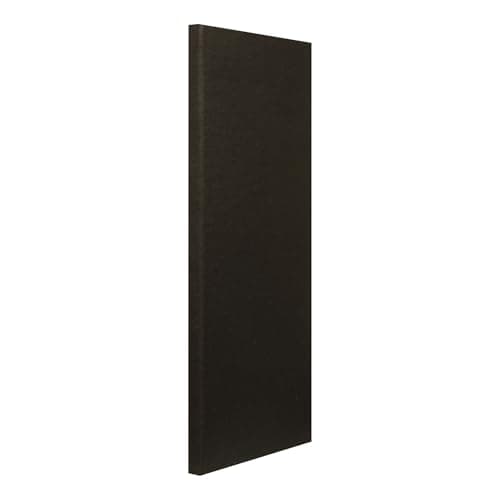
ATS Acoustics Panel (2-inch)
Top pickATS Acoustics · The value finished panel
The best value in a finished panel for flutter echo and first reflections, and the money saved buys the depth that actually changes the room. Read its own `125 Hz` figure before you buy four of them to fix boxiness: at `0.12` it will not, and the 4-inch version of the same panel reaches `0.65`.
Why it is here
- Mineral-wool core at a price close to foam kits
- NRC 0.95 is within a rounding error of panels costing twice as much
- Publishes its figure at `125 Hz` as well as its NRC, which is the honest way to describe a thin panel
What it costs you
- `0.12` at `125 Hz` is the 2-inch depth limitation stated plainly — this is a high-frequency device
- Edges are softer than Primacoustic's resin-hardened ones
- Not fire rated, which rules it out of some rented rooms
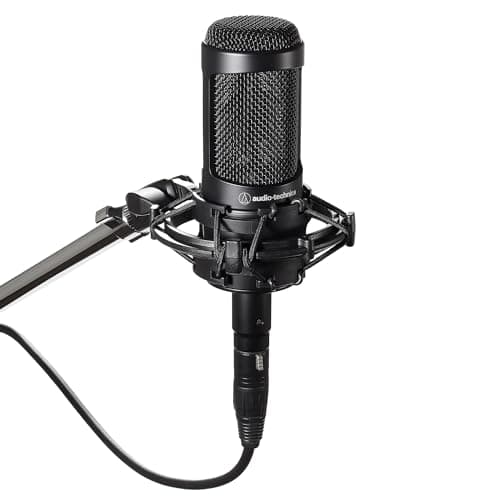
Audio-Technica AT2035
Audio-Technica · The value condenser with the switches you actually need
The condenser to buy if you are choosing on value: the high-pass filter and the 8 dB quieter noise floor are worth more in a real room than anything else in this price band. Skip it if you have not treated the room, in which case a dynamic is the better purchase.
Why it is here
- 12 dB self-noise against the AT2020's 20 dB is an audible 8 dB of quiet for a small price step
- The 80 Hz high-pass is the single most useful switch on a desk-mounted condenser
- Ships with a real shockmount, not a plastic clip
What it costs you
- Still a condenser, so the room rules apply
- Slightly forward upper midrange that some voices find harsh
- The 10 dB pad is mostly irrelevant for voice work
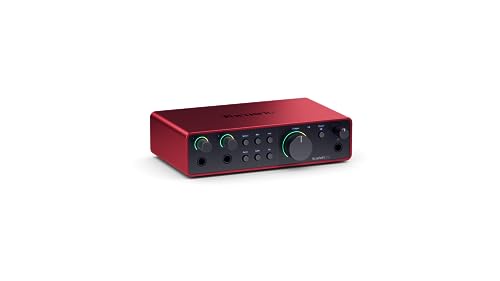
Focusrite Scarlett 2i2 (4th Gen)
Focusrite · The most gain per dollar in a two-input box
The default answer for someone buying an SM7B or PodMic: it supplies enough clean gain that you never need a booster, which makes it the cheaper total purchase even when it is not the cheaper box. Look elsewhere only if you need MIDI or four outputs.
Why it is here
- 69 dB is the most gain of any interface at this price, and enough for an SM7B with headroom to spare
- 120 dB dynamic range means the converters are not the weak link
- Two inputs, so a second person does not mean a second purchase
What it costs you
- Air mode is a fixed voicing, not an EQ you can dial
- Plastic-and-metal build feels less solid than the SSL or Audient competition
- No MIDI, which matters if you also play keys
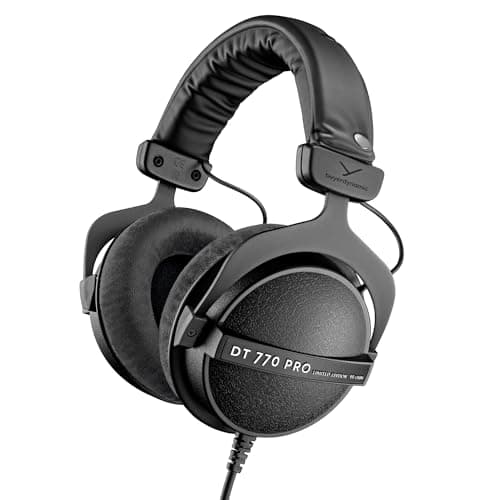
Beyerdynamic DT 770 Pro (80 ohm)
Beyerdynamic · Tracking with a live mic in the room
The right headphone for recording, where leakage is the problem you are solving. For mixing decisions, an open-back pair will tell you more truth about depth and reverb.
Why it is here
- Closed-back, so nothing leaks into an open microphone two feet away
- 80 ohms drives properly from any interface headphone output on this site
- Every wear part is a user-replaceable spare, which is why these last a decade
What it costs you
- A lifted top end that flatters detail and misleads on sibilance decisions
- Closed-back soundstage narrows your sense of reverb depth
- Velour pads get warm over a long session
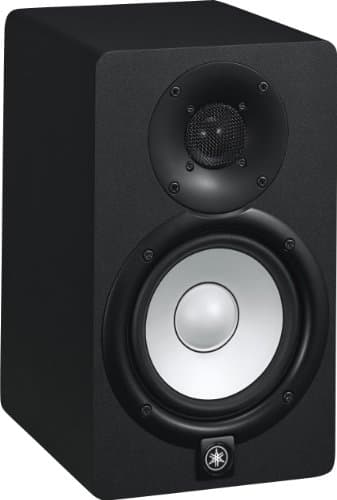
Yamaha HS5
Yamaha · The flat midrange reference for a small room
The right monitor for an untreated or lightly treated small room, precisely because it does not pretend to have low end your room could not reproduce honestly anyway. If you need to hear below 74 Hz, add a treated room before you add a bigger speaker.
Why it is here
- The honest -3 dB figure of 74 Hz tells you what it will not do, which is rarer than it should be
- Midrange is flat and unflattering, which is the entire job of a monitor
- Small enough to sit at ear height on a desk without dominating the room
What it costs you
- Nothing below about 74 Hz, so you mix low end by trust rather than by ear
- Unforgiving — a rough mix sounds rough, which some people hate
- Rear port needs clearance from the wall
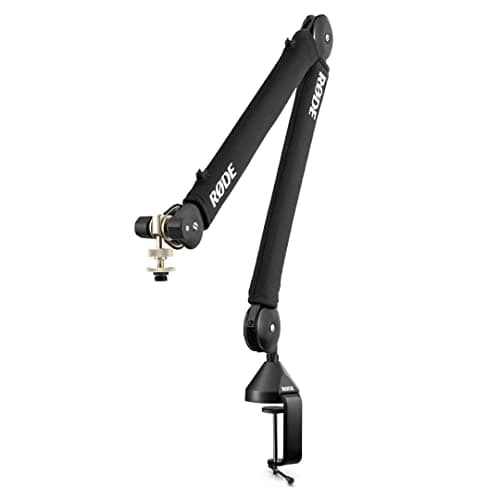
Rode PSA1+
Rode · The quietest arm that holds a heavy mic
The right arm for a broadcast dynamic: quiet, and rated for the weight you will actually hang on it. If the arm appearing on camera is your problem, a low-profile arm solves that instead.
Why it is here
- Damped springs and a neoprene sleeve mean it does not creak or ping into a live mic
- 1.2 kg capacity covers an SM7B with a booster and a pop filter hanging off it
- Internal cable routing keeps the XLR out of the shot and out of the way
What it costs you
- 94 g minimum means a very light mic will not hold position
- Arcs up and over, so it can sit in a webcam frame
- Costs more than most of the mics people mount on it
Buying it in stages
- Stage one - the panel and the microphone. Two panels at the first reflection points and one condenser gets you a usable recording in a spare room. Best acoustic panels and best condenser microphones for a home studio are the full rankings.
- Stage two - the interface. Without it the XLR microphone does not connect to anything, so in practice it arrives with the microphone. Best audio interfaces for a home studio covers the alternatives at every price.
- Stage three - headphones. Closed-back, so what you are monitoring does not arrive on the take. Best closed-back headphones for recording.
- Stage four - the arm. A damped arm removes desk and keyboard noise that no amount of post-processing fully fixes. Best boom arms for microphones.
- Stage five - monitors, and more treatment. In that order, because a monitor in an untreated room shows you the room. Best studio monitors for an untreated room is the honest version of this step.
What we did not pick, and why
- A USB microphone. Cheaper and simpler, and it ends your upgrade path on the day you buy it. Upgrading from USB to XLR is the comparison in full.
- The Shure SM7B as the first microphone. A better microphone that needs 60 dB or more of clean gain, which turns a one-item purchase into two. Is the Shure SM7B worth it answers it properly.
- Acoustic foam instead of mineral wool. At 3 inch thickness foam absorbs 0.23 at 125 Hz against mineral fiber's 0.53. Acoustic foam vs mineral wool panels has the figures.
- A mixer. A mixer solves a live-sound problem. Audio interface vs mixer explains why it is the wrong tool for a recording rig.
- A desk stand instead of an arm. It will work and it will transmit everything that touches the desk. Boom arm vs desk stand covers the trade.
How these are ranked
- Effect on the recording per dollar. The ordering principle of the whole page, and the reason absorption is first.
- A published figure behind every pick. NRC, self-noise, gain, impedance, response, load rating - each with a source.
- No redundant purchases. Nothing on the list exists to compensate for something else on the list.
- Upgrade path preserved. Every item here is still useful after you replace the item above it.
- Buyable now, with a live Amazon listing and a price from the daily price check at the time this page was written.
Pair it with
- The diagnostic version of this page. Home studio upgrade path, which starts from the symptom rather than the shopping list.
- The cheapest viable rig. Home studio on a budget.
- The vocal-specific version. What you need to record vocals at home.
- A cable and a pop filter to finish it. Best home studio accessories under $100.
If you can only buy two things this month, buy the panel and the microphone, and record into whatever you already own. If you can only buy one, buy the panel. That is a strange recommendation for a site that makes its money on gear links, and it is the one the published absorption figures support: NRC 0.95 on the wall behind you changes every recording you make from now on, and no microphone upgrade can undo a room you have not touched.