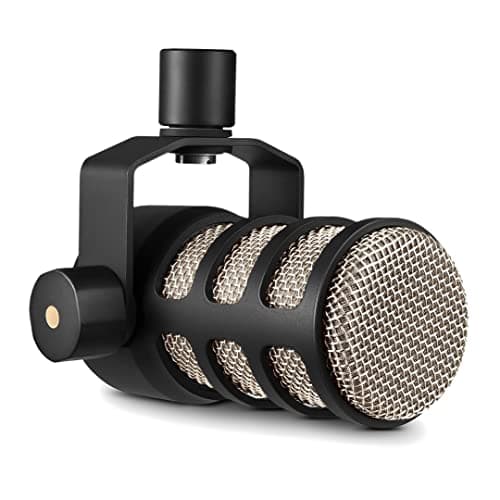
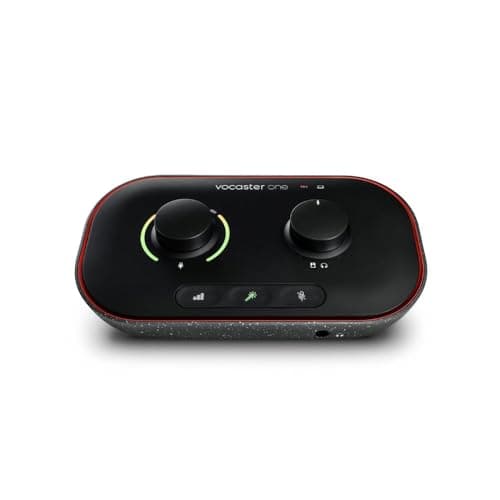
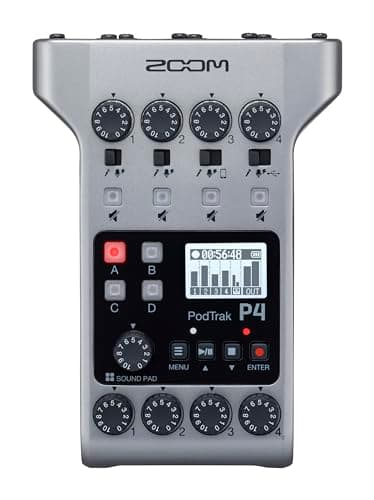
The Rode PodMic is the piece of podcast gear to buy first: -57 dBV/Pa of sensitivity, which is hot enough that no interface on this site needs a booster to drive it, with an internal pop filter and shockmount already built in. The budget pick is the Focusrite Vocaster One, the cheapest way to get that microphone into a computer with enough gain and automatic level setting. If your show has guests in the room, the Zoom PodTrak P4 replaces the interface with four preamps and four headphone feeds. Prices come from the daily price check and each button carries its own date.
Podcast gear lists are usually long, and the length is the problem. A show needs exactly four functions covered - capture the voice, get it into a computer, hear yourself while you do it, and stop the room from arriving with you - plus two pieces of hardware that make the first function repeatable day after day. Everything else is production, not gear. So this page is six items, each one the pick from its own ranking elsewhere on the site, ordered by what breaks first if you leave it out.
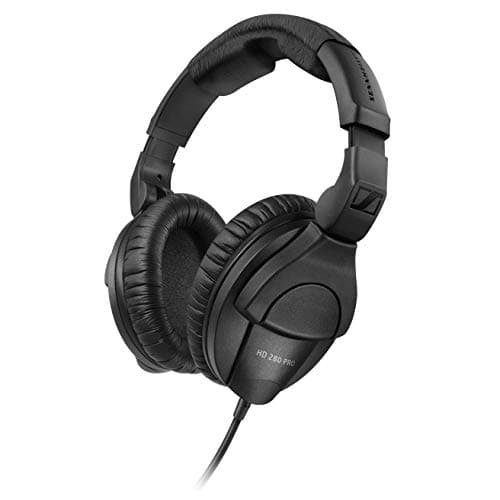
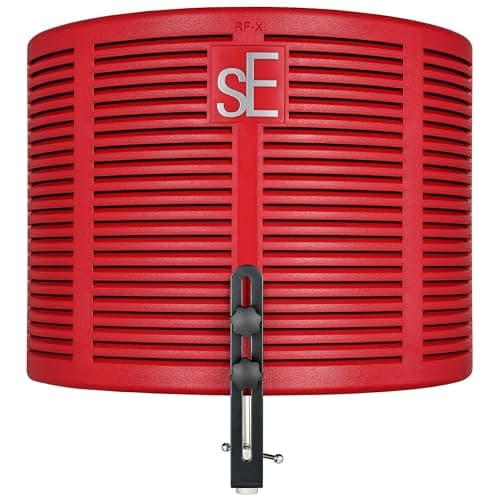
The HD 280 Pro is on this list for one number that almost nobody else in the category publishes: 32 dB of ambient attenuation. Isolation is the whole job of podcast headphones - you are sitting 4 inches from a live microphone with a guest's voice in your ears - and most manufacturers simply do not state a figure. Where a published number exists, it belongs in the ranking. The RF-X is the last item for the opposite reason: it is the one purchase here that a pair of wall panels does better, and it earns its place only because a rented room or a shared space may not allow anything fixed to a wall.
The six pieces, in order
Each card carries the published figure with its source, the live price with the date it was checked, and who the item is for. Two of them are alternatives rather than additions - read the interface and recorder cards together.
Rode PodMic
Top pickRode · The best value in a broadcast dynamic
The pick for most people upgrading from a USB mic: it gets you 90 percent of the broadcast-dynamic sound without the booster arithmetic. Choose the SM7B instead if your voice is already bass-heavy and you want the bass-rolloff switch.
Why it is here
- At -57 dBV/Pa it needs about 2 dB less gain than an SM7B, which is enough to matter on a 58 dB interface
- Internal pop filter means one less thing clamped to your arm
- All-metal body at a fraction of the SM7B's price
What it costs you
- Voiced with more low-mid weight than the SM7B, so a boomy voice can get boomier
- No voicing switches, so you fix tone in the DAW rather than on the mic
- Still low enough output that a 55 dB interface will be working hard
Focusrite Vocaster One
Focusrite · A solo host who does not want to set levels
The pick for a solo podcaster who wants the gear to get out of the way. If you record music as well as speech, a general-purpose interface with the same gain is the better buy.
Why it is here
- `70 dB` of gain means any microphone on this site works without a booster
- Auto Gain removes the single most common beginner mistake in one button press
- Stereo loopback plus phone and camera connections, which is the actual podcast workflow
What it costs you
- 24-bit / 48 kHz only, and no instrument input — it is a speech box and nothing else
- The three Enhance presets are printed into the recording
- One microphone input; a co-host means the Vocaster Two
Zoom PodTrak P4
Zoom · Four mics, four headphone outs, battery power
The best value in group podcast recording: four hot preamps and four headphone feeds is the whole job. Step up to the RodeCaster Pro II only if you need live mixing rather than multitrack capture.
Why it is here
- 70 dB of gain feeds four SM7Bs, which nothing else at this price does
- Four headphone outputs with individual level control — the actual bottleneck in group recording
- Runs on AA batteries, so it records anywhere
What it costs you
- No faders, no onboard EQ or compression
- Only 2 channels reach the computer over USB, so live-streaming four separate mics is out
- Plastic build and a small screen
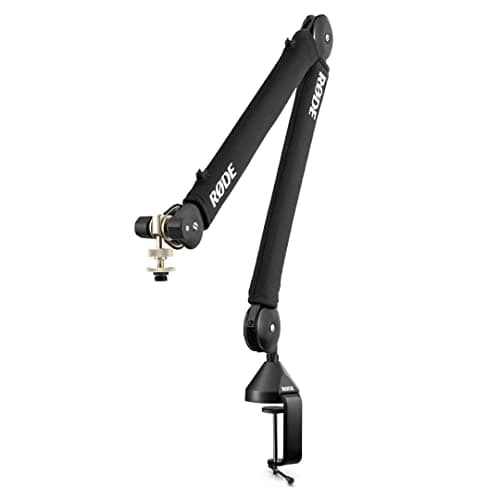
Rode PSA1+
Rode · The quietest arm that holds a heavy mic
The right arm for a broadcast dynamic: quiet, and rated for the weight you will actually hang on it. If the arm appearing on camera is your problem, a low-profile arm solves that instead.
Why it is here
- Damped springs and a neoprene sleeve mean it does not creak or ping into a live mic
- 1.2 kg capacity covers an SM7B with a booster and a pop filter hanging off it
- Internal cable routing keeps the XLR out of the shot and out of the way
What it costs you
- 94 g minimum means a very light mic will not hold position
- Arcs up and over, so it can sit in a webcam frame
- Costs more than most of the mics people mount on it
Sennheiser HD 280 Pro
Sennheiser · The only published isolation figure in the category
Buy them when leakage is the actual problem — a loud headphone mix, a noisy room, a condenser two feet away. Do not buy them as your only pair if you also mix, because the voicing will mislead you.
Why it is here
- 32 dB of attenuation is the highest published figure on this page, and almost nobody else publishes one at all
- 64 ohms with a 113 dB maximum SPL plays loud from any interface output on this site
- Costs a fraction of the Beyerdynamic picks while isolating better than either
What it costs you
- Strong clamping force that most people find uncomfortable before the second hour
- Mid-forward and bass-shy voicing — these are a tracking tool, not a mixing reference
- The coiled cable is captive, so a cable fault is a repair rather than a swap
sE Electronics RF-X
sE Electronics · The most absorptive portable shield
Worth it if you cannot fix anything to the walls — a rented room, a shared space. If you can hang two panels, panels at the first reflection points do more for less, and leave your stand alone.
Why it is here
- Four layers with an air gap is a real absorber, not a foam semicircle
- Reduces the rear-wall reflection that makes untreated vocal takes sound hollow
- Mounts on a normal stand with the mic inside it
What it costs you
- Five pounds hung on a mic stand needs a heavy base or it tips
- Treats one reflection path; the ceiling and the floor are untouched
- Makes the mic position fussier to set
Solo show or guests in the room
- Solo, recording into a computer. PodMic plus Vocaster One, which sets your level automatically and has stereo loopback for anything you play into the show.
- Two hosts at one desk. Two microphones and a two-input interface. Two-person podcast setup has the wiring and the headphone problem solved.
- Three or four people in a room. The PodTrak P4: four preamps at up to 70 dB, four independent headphone outputs and battery power. Four-person podcast setup is the full build, and RodeCaster Pro II vs Zoom PodTrak P4 is the step above it.
- Remote guests. Record your own side locally through the interface and let the platform handle theirs. The gear on this page does not change.
- Recording away from the desk. The PodTrak runs on batteries and records to an SD card, which is the only item here that works with no computer at all.
What we did not pick, and why
- The Shure SM7B. The better microphone and a two-part purchase: at -59 dBV/Pa it needs 60 dB or more of clean gain or a booster. Best audio interfaces for the Shure SM7B is the arithmetic.
- The RodeCaster Pro II. A live mixing console that is genuinely excellent and considerably more than a home show needs on day one. RodeCaster Pro II alternatives covers the cheaper routes.
- A mixer. Audio interface vs mixer: a mixer gives you one stereo file and no way to fix one person's level afterwards.
- A shock mount. The PodMic has an internal shockmount, and the damped arm handles the rest. Two solutions to one problem is one too many.
- Acoustic foam tiles. 0.23 absorption at 125 Hz for 3 inch wedges. If you can hang anything on a wall, best acoustic panels is the purchase that works.
How these are ranked
- What breaks first if the item is missing. The ordering principle: a show with no microphone has no episode.
- A published figure behind every pick. Sensitivity, gain range, attenuation, load rating - each with a source.
- Total cost, not item cost. A microphone that needs a booster is a two-item purchase and is ranked as one.
- Repeatability. Gear that makes episode forty sound like episode one ranks above gear that sounds marginally better once.
- Buyable now, with a live Amazon listing and a price from the daily price check at the time this page was written.
Pair it with
- The recording workflow itself. How to record a podcast at home.
- The microphone ranking in full. Best XLR microphones for podcasting.
- The interface ranking in full. Best audio interfaces for podcasting.
- The cable, filter and stand. Best home studio accessories under $100.
The most common mistake in this category is not buying the wrong microphone - it is buying four pieces of gear and no absorption. A PodMic at 4 inches in a bare room still records the bare room behind your voice, quieter than a condenser would but audibly. One panel, or the RF-X if nothing can go on the wall, is what makes the rest of this list sound like a studio rather than a spare bedroom.